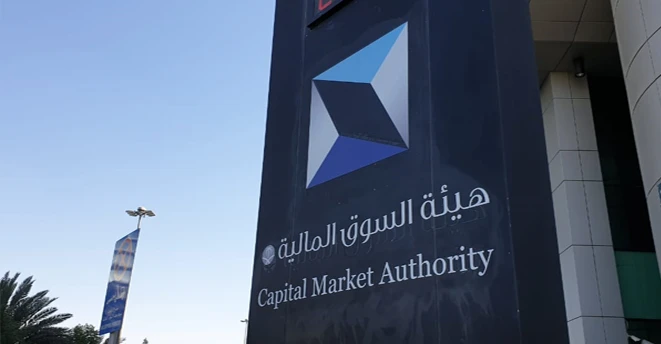
RIYADH: Saudi Arabia’s proposed limits on borrowing for overseas securities trades could protect investors and reduce forced selling during market downturns as foreign-market activity continues to grow, financial experts have told Arab News.
The Capital Market Authority is proposing that investors provide at least 50 percent of the value of a margin-financed transaction themselves. Brokers would have to monitor each position daily and ensure the investor’s margin remains at no less than 25 percent of its current value.
In simple terms, an investor providing SR100,000 ($26,625) could initially purchase securities worth up to SR200,000, with the remaining amount financed by the broker.
The proposed rules come as Saudi investors’ trading in international markets grows, with activity through locally licensed institutions reaching hundreds of billions of riyals. The CMA is strengthening oversight as access to global markets expands.
“Overall, the proposals should strengthen investor protection and market stability, at the cost of lower trading volumes, reduced broker margin income and some loss of speculative activity,” Aseel Al-Aranki, head of financial market analysis at CG Invest, told Arab News.
Forced-selling risks
The 25 percent maintenance requirement is intended to give brokers a buffer against losses. However, Al-Aranki said an investor using the maximum permitted leverage could reach that threshold if the value of the position fell by about one-third.
“Because the test is daily, calls can follow sharp moves quickly, so margin investors will need spare cash or unencumbered assets, and highly geared speculative strategies become far less viable,” she said.
If an investor cannot provide additional cash or collateral after a margin call, the broker may sell part of the position to restore the required coverage.
The proposal would also prevent borrowed money from being used to purchase leveraged exchange-traded funds and securities, instruments linked to commodities or metals, and volatility indices.
Margin financing would also be prohibited for shares in overseas-listed companies whose accumulated losses have reached 50 percent or more of their capital.
Al-Aranki said lower leverage should reduce the threat of multiple investors being forced to sell simultaneously during a downturn, limiting the risk of a chain of liquidations.
She cautioned, however, that some investors seeking higher levels of borrowing could move to offshore brokers or unlicensed platforms. Enforcement and competitive offerings from licensed institutions would therefore be important to keep activity within the regulated market, she added.
Foreign-market activity
The proposed controls come as Saudi investors increasingly access international markets through locally licensed institutions.
Purchases and sales executed by Saudi capital market institutions in foreign markets totaled about SR939 billion during the year to the end of March, according to Al-Eqtisadiah’s analysis of CMA data.
The authority's statistical bulletin showed that foreign-market trades reached SR264.4 billion in the first quarter alone. US markets accounted for SR241.9 billion of that activity, up from SR173.8 billion in the same period of 2025.
Clients’ holdings of securities listed overseas also increased by 71 percent year on year to SR36.5 billion at the end of the quarter.
“Trading frequency is rising in step with market access and financial literacy. Saudi trading in US stocks has now grown year-on-year for seven consecutive quarters,” said Ahmad Chreim, a global financial markets expert.
“That reflects a maturing retail and institutional investor base that is comfortable with international platforms, all channeled through CMA-licensed local institutions. Activity is happening inside a regulated, transparent perimeter,” he added.
The planned rules would also require brokers to determine whether overseas trading is suitable for a client before providing the service. The assessment would not need to be repeated for every transaction unless the client’s circumstances changed materially.
Brokers would also need separate written permission before lending a client’s securities and would have to disclose benefits received for directing orders to particular execution venues.
The CMA is receiving feedback on the proposal until Oct. 27 and said the final provisions are intended to take effect on Nov. 1.