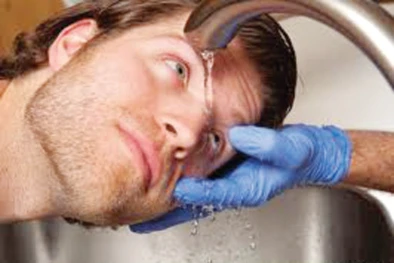
A chemical burns occurs when a toxic substance contacts the body. Most chemical burns are caused by strong acids or strong alkalis. The eyes are particularly vulnerable to chemical burns if the substance is splashed or thrown at the victim. Fumes can also cause severe burns to airway and respiratory tract if a victim had inhaled the fumes. The first step in dealing with a victim of a chemical burn is to ensure your safety and the safety of the bystanders.
Be careful when you approach the victim so as not to expose yourself to the dangerous substance. Consider wearing some type of protective clothing as a barrier between you and the chemical substance. Remember that exposure risk is also possible when cleaning up following a chemical incident.
The emergency care of a chemical burn is basically the same as that for a thermal burn. To stop the burning process, remove any chemical from the patient. Remember that a dry powder chemical may become active when exposed to water and damage the skin more when it is wet than dry. Always brush away dry chemicals from the skin and clothing before flushing with large amounts of water.
Immediately begin to flush the burned area with large amounts of water. Take extreme caution not to contaminate any uninjured areas. Do not direct a forceful stream of water at the patient, as this may cause secondary damage to the skin. A showering effect over the victim is the preferred method to wash away chemical exposure. Actively flood the area for at least 15 to 20 minutes after the victim says the burning has stopped. If an eye is involved, hold the eyelid open while flooding the eye with a gentle stream of water away from the unaffected side.
While dealing with chemical burns can be overwhelming, some simple procedures and safety measures can protect both you and the victim from further injury. The best treatment, though, is to prevent the injury from happening in the first place. Be sure to secure any chemical compounds that you may have in your home. Things such as bleach, concrete mix, oven cleaner, toilet bowl cleaner, and swimming pool chlorinators can create potentially dangerous and tragic situations.
Kenneth D’Alessandro is EMS (emergency medical service) program adviser at the office of the director general of EMS administration, Saudi Red Crescent Authority.
[email protected]
Caring for chemical burns