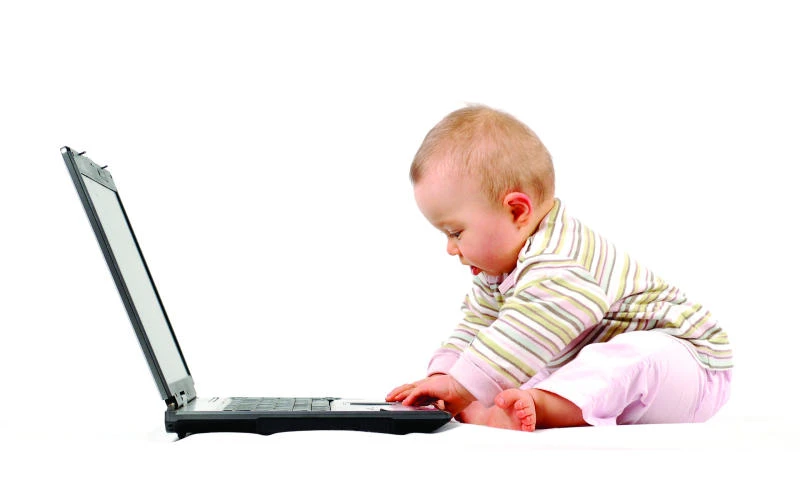
It’s no mistake that advanced technological products have engulfed our society. You can barely find a household that doesn’t have electronic gadgets such as tablets or smart phones. Take family gatherings for example, there is barely any interaction anymore due to the excessive use of smart phones and other electronic devices. Each family member is distracted and well into the addiction. As adults, it is seemingly difficult to comprehend this mass addiction but it’s the tech-age, who should take the blame?
It’s understandable that adults use electronics for business purposes and other reasons, but what about children? It’s cute to see the reaction of a baby listen to Psy’s “Gangnam Style” or react with grandparents on an Internet call, but what about the other times when a tablet or smart phone is in the hands of a child? There are over 10,000 applications for smartphones and tablets and with such a plethora of applications, one wonders if it’s right to keep such devices in the hands of young ones without supervision and guidance. Young mothers nowadays are concerned about the right amount of technology suitable for a child to be exposed to.
Many parents allow their children to use these technological devices for varying reasons, including keeping their children at bay, or more specifically occupied during an outing, while others use them for educational purposes.
Alaa Redwan is a stay-at-home mother of two daughters, a 7-year-old and a 3-year-old. She’s against the use of any tablet or smart phones and believes they cause greater harm to her daughters’ social lives.
“I’m totally against my daughters using these devices. I prefer they interact with people face-to-face and get exposed to normal everyday activities such as sports for example. The only time I allow their usage is when their cousins come over (occasionally) during holidays.”
When asked about the different applications, which she deems appropriate for her daughters to use, she replied that some are not age-friendly.
“I don’t want my children to be exposed to at such a young age to certain ideas and beliefs that are not age appropriate, as I fear they will not understand some of the implications behind these applications. I want my daughters to read books from actual paper books just like my mother did with me as a child. If I expose them to an e-book for example, they won’t understand or appreciate the feel of paper and the sense of excitement and imagination attached to that experience.”
It’s an ongoing struggle to follow technological trends and yet try to limit their overuse.
Children’s upbringing has changed dramatically since the previous generations. We no longer have afternoon cartoons on Saudi 1 and 2 channels to look forward to; instead we have an abundance of TV channels as well as series and movies, which are also available on tablets and smart phones.
This generation of children is by far more technologically savvy, yet, where do we draw the line? Is it even possible to do so?
Dr. Haya Zedan, an assistant professor of public health at the Saudi Electronic University, a graduate of Nottingham University in the UK and a fellow of the Royal Society of Public Health in the UK as well as a mother of two has a keen interest in this topic. As a public health specialist, she believes that delegating an electronic device to children might isolate them from their parents and surroundings.
“The child might grow up lacking awareness, visually isolated and develop physical laziness, due to the excessive amount of time spent on a tablet or smartphone. Electronic screens also affect children one way or another without any exception. If a child does not have some type of control over the use of these devices, he/she will suffer from lack of interaction with other children and might develop delayed speech and social skills.”
Zedan advises parents to establish time limits for the use of electronic devices. In addition, she cautions that parents must be firm and decisive in order to monitor the time their child uses a device.
Technological devices are invading our children’s minds