- Digital passport links animal health, movement and genetic data to better manage livestock and natural pastures
RIYADH: Saudi Arabia is pioneering a new approach to livestock management and environmental protection through its camel passport initiative, placing animal health, ecosystem preservation and sustainability at the heart of the strategy.
The initiative establishes a unified digital identity for each camel, enabling authorities to track health records, monitor movement and grazing patterns, and conduct genetic analysis. By improving disease surveillance, supporting pasture management and strengthening knowledge of camel breeds, the system is designed to protect livestock while helping preserve fragile desert ecosystems.
“The camel passport improves livestock management efficiency, raises data quality, supports data-driven decision-making, strengthens food and biosecurity, preserves natural resources, boosts sector competitiveness globally, and drives innovation in livestock management,” Dr. Ali Alshaikhi, assistant deputy for livestock and fisheries at the Ministry of Environment, Water and Agriculture, told Arab News.
“It aligns with Saudi Vision 2030 by promoting modern technology to develop a sustainable agricultural sector,” he explained. Alshaikhi, who specializes in national food security, sustainable aquaculture and veterinary health, said the initiative addresses longstanding gaps in camel data and monitoring.
“The launch helps address several challenges facing the sector, most notably the lack of integrated camel data across different entities and the difficulty of tracking camel movement during international participation,” he explained that the camel passport serves as an official document for entry and exit during external events.
“It also helps raise the efficiency of health monitoring, enables rapid response to diseases, and provides an accurate database to support planning and decision making,” he stated.
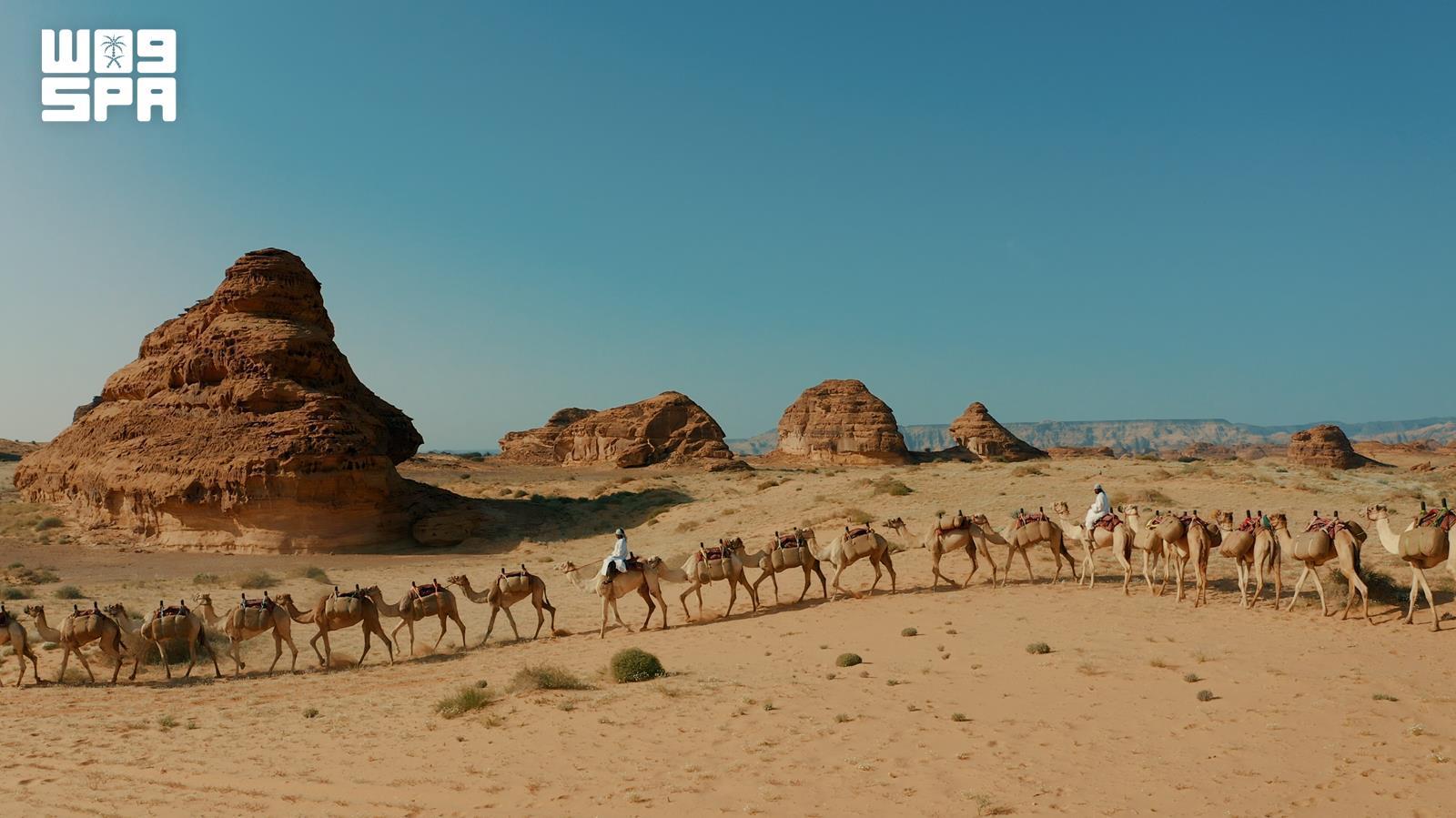
The initiative comes as Saudi Arabia continues efforts to deepen scientific understanding of camels while preserving their cultural and economic significance.
Each year on World Camel Day, observed on June 22, the Ministry of Environment, Water and Agriculture leads initiatives highlighting the camel’s importance as both a symbol of heritage and a contributor to sustainable development.
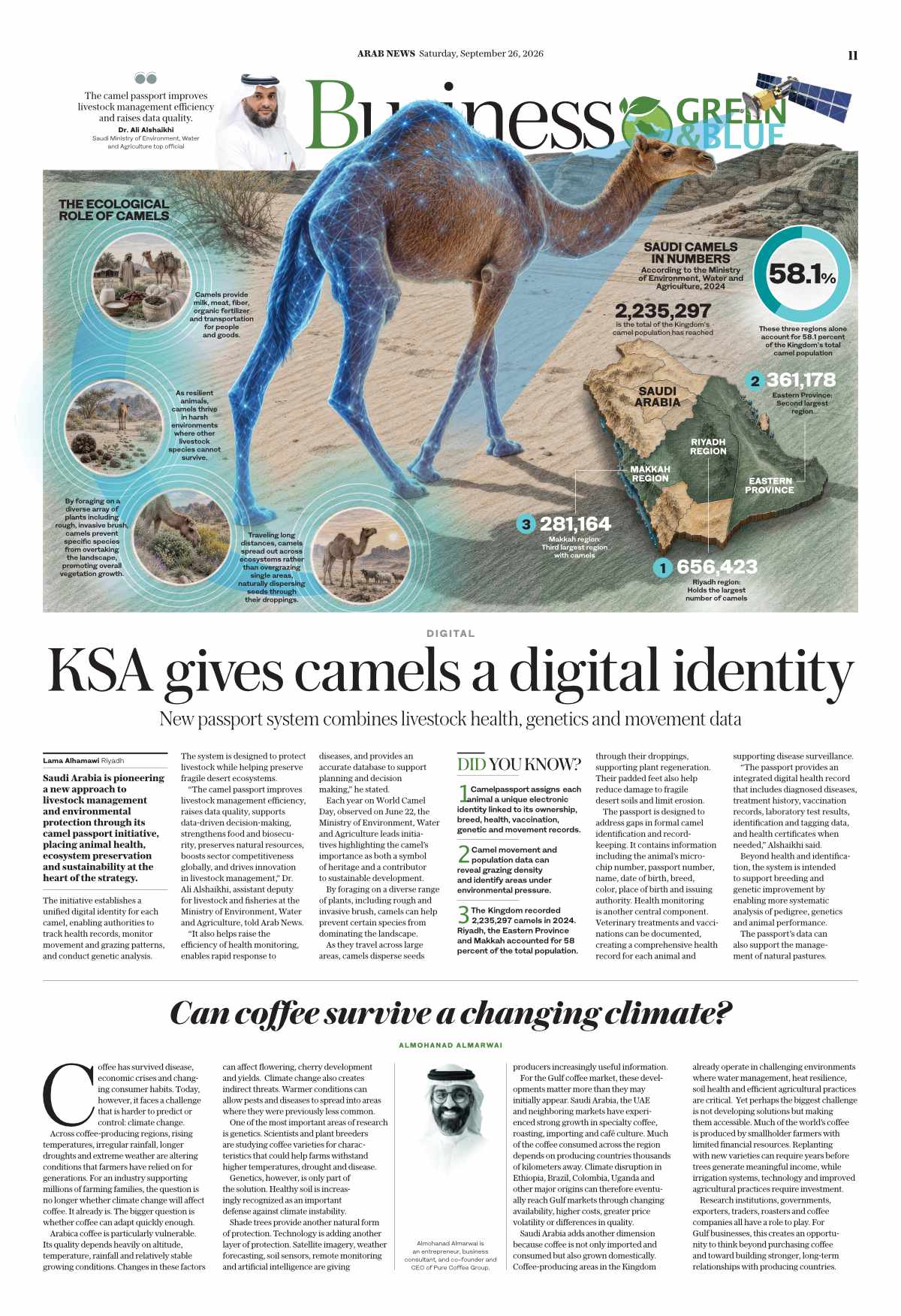
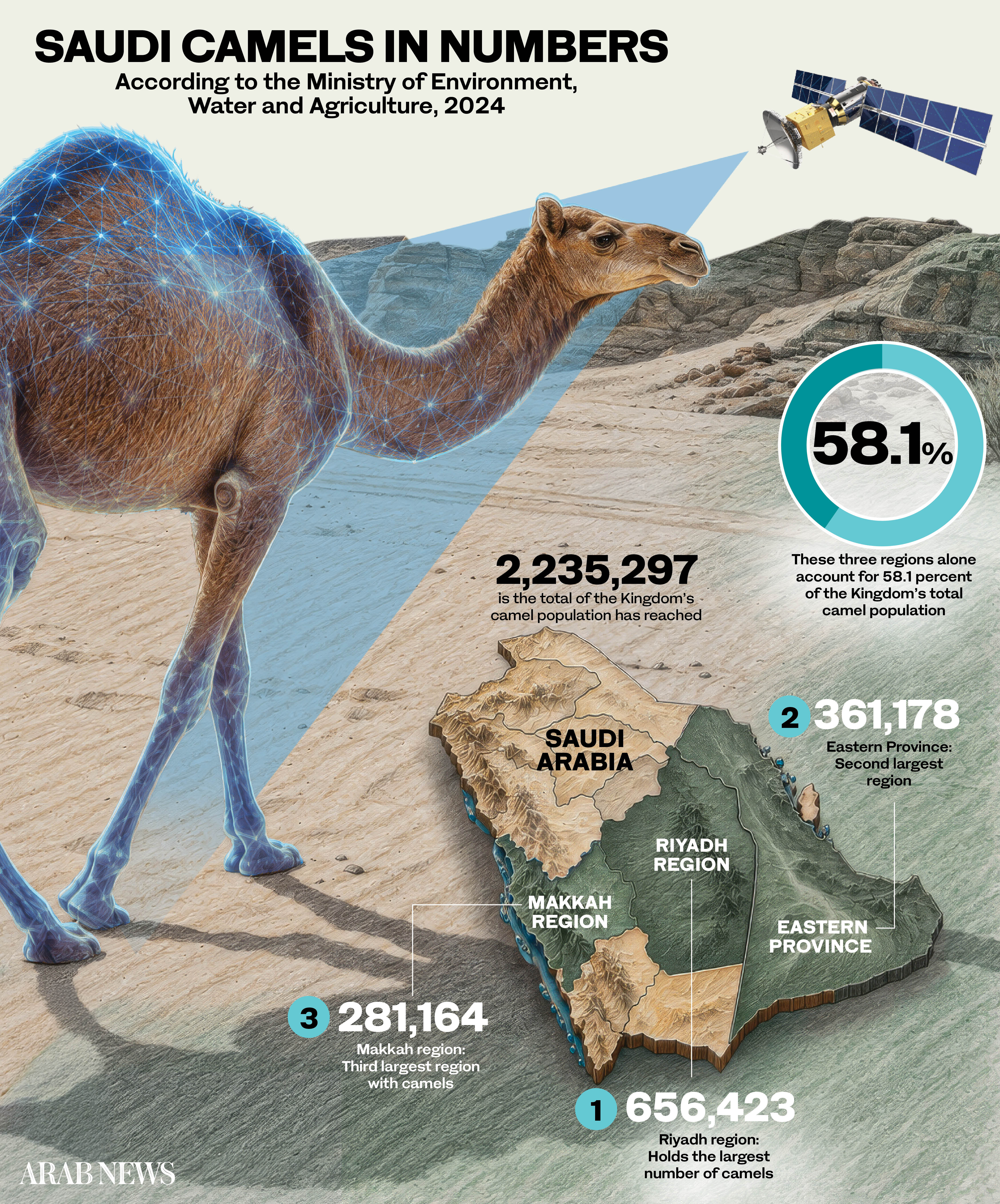
According to the ministry’s 2024 studies, Saudi Arabia’s camel population reached 2,235,297. Riyadh had the largest population at 656,423, followed by the Eastern Province with 361,178 and the Makkah region with 281,164.
Together, the three regions accounted for 58.1 percent of the Kingdom’s total camel population in 2024.
Camels and the ecosystem
Understanding the environmental significance of the camel helps illustrate the broader role of the passport initiative.
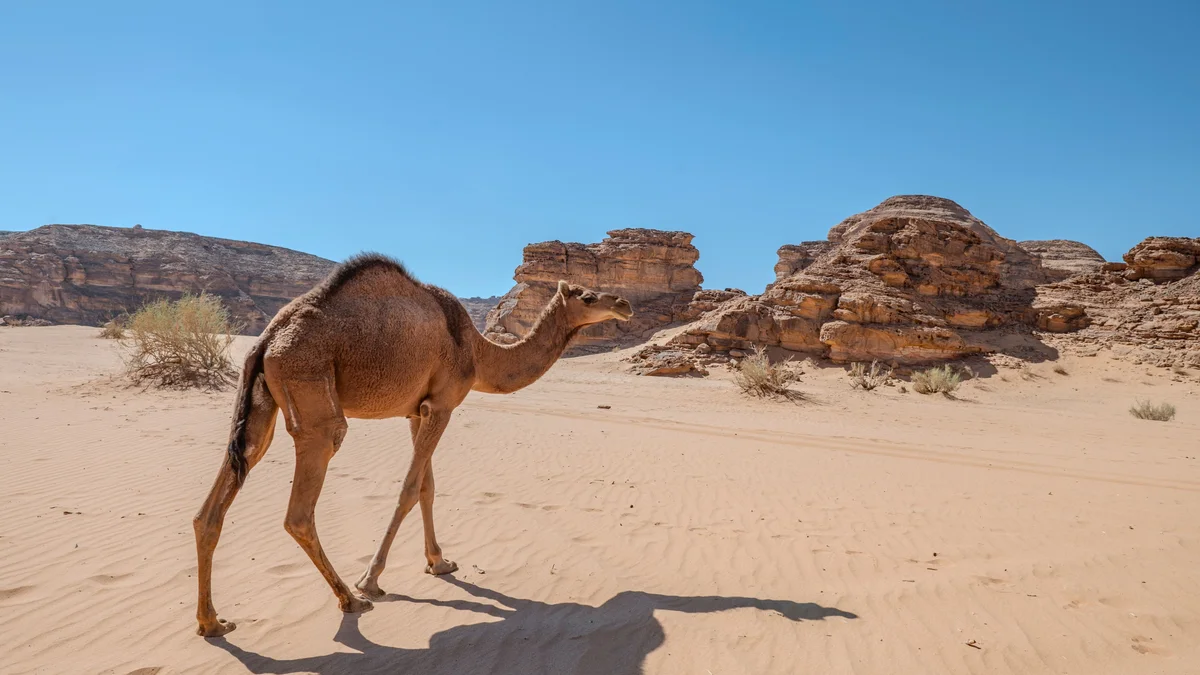
According to the World Wildlife Fund, camels contribute to sustainable ecosystems and biodiversity, particularly in arid environments. In addition to providing milk, meat, fiber, organic fertilizer and transportation, the animals can thrive in conditions where other livestock species struggle to survive.
Their feeding habits can also influence vegetation. By foraging on a diverse range of plants, including rough and invasive brush, camels can help prevent certain species from dominating the landscape.
As they travel across large areas, camels disperse seeds through their droppings, supporting plant regeneration. Their padded feet also help reduce damage to fragile desert soils and limit erosion.
Because camels require relatively little water and can consume vegetation that other livestock cannot, they can reduce competition for scarce resources and coexist with other species in arid environments.
The Food and Agriculture Organization of the UN also recognizes the contribution of camelids to food security, nutrition and economic development, alongside their cultural and social importance to communities around the world, particularly in Saudi Arabia.
In 2024, the Kingdom concluded its presidency of the International Year of Camelids, an initiative launched by the FAO to highlight the cultural, economic and social significance of camelids.
During its presidency, Saudi Arabia hosted more than 50 local and international events, funded 15 specialized research grants and held 18 strategic meetings aimed at advancing the sector.
The Kingdom has since reaffirmed its commitment to increasing global awareness of camels and supporting further research and development.
A digital identity for every camel
That commitment culminated in the official launch of the camel passport in 2026.
“The launch of the camel passport coincides with the outcomes of the International Year of Camelids and represents a qualitative step within the ministry’s digital transformation efforts in the livestock sector,” Alshaikhi explained.
“It aims to establish a unified digital identity for each camel to enhance data accuracy and ease of tracking throughout its lifecycle,” he added.
The passport is designed to address gaps in formal camel identification and record-keeping. It contains information including the animal’s microchip number, passport number, name, date of birth, breed, color, place of birth and issuing authority.
“The system links each camel to a unique electronic identification number. Through this ID, ownership data, transfer history, pedigree information via reference laboratories and genomics, and breeding data are recorded, enhancing the reliability of ownership data and supporting breed preservation.”
Health monitoring is another central component. Veterinary treatments and vaccinations can be documented, creating a comprehensive health record for each animal and supporting disease surveillance and faster responses to outbreaks.
“The passport provides an integrated digital health record that includes diagnosed diseases, treatment history, vaccination records, laboratory test results, identification and tagging data, and health certificates when needed,” Alshaikhi said.
Asked how accurate health records can help protect local wildlife from disease outbreaks, he stated: “Maintaining accurate health records strengthens the biosecurity system and preserves biodiversity through early disease detection, contact tracing during outbreaks, rapid quarantine enforcement, preventing disease transmission between livestock and wildlife, and supporting national epidemiological surveillance programs.”

The passport also includes a visual record, with photographs taken from both the right and left sides of the camel to help document its appearance and condition.
Beyond health and identification, the system is intended to support breeding and genetic improvement by enabling more systematic analysis of pedigree, genetics and animal performance.
The FAO has highlighted the need for further research to improve camel breeding systems, noting that camelids have historically received less scientific attention than other livestock. Reliable statistics and accurate record-keeping are important to maintaining healthy and sustainable populations.
Tracking movement and grazing
The passport’s data can also support the management of natural pastures and help authorities better understand grazing pressure.
“Tracking data supports efforts to protect natural pastures and mitigate overgrazing by providing key indicators to analyze movement patterns, identify grazing density, regulate movement via tagging records, locate high-pressure grazing zones, and accurately count camel populations in reserves,” Alshaikhi stated.
Such information can help build a clearer picture of how camel populations interact with fragile desert environments while supporting more informed decisions on livestock management and conservation.
Although camel breeders and farmers possess extensive practical knowledge of the animals, scientific research can provide a deeper understanding of their biology, breeding and wider ecological role. The International Year of Camelids helped bring greater attention to these research gaps and the need for continued scientific work.
Supporting herders
For the initiative to succeed, the digital system must also be accessible to the people who manage camels on the ground.
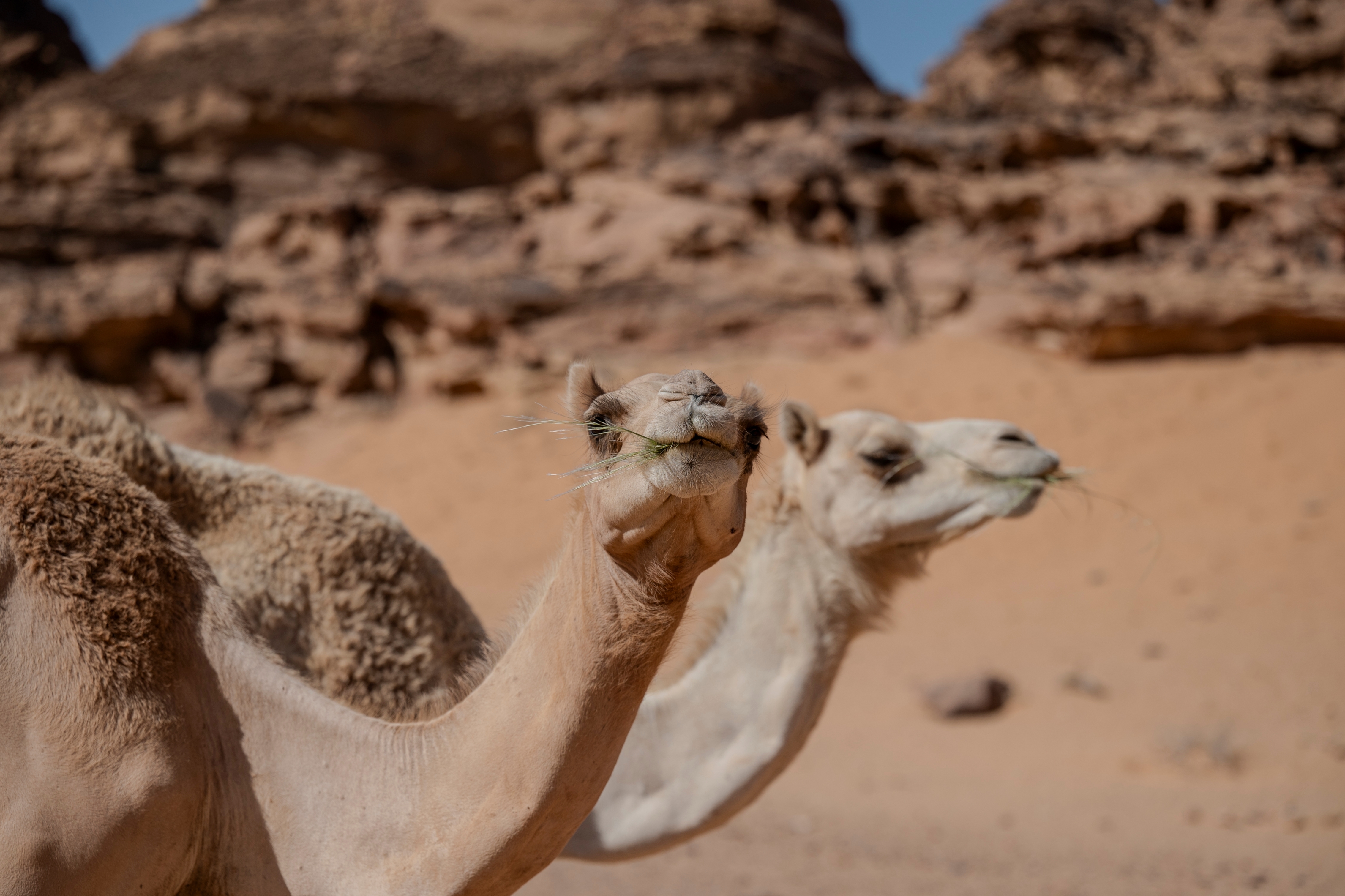
According to Alshaikhi, the ministry has taken steps to help traditional herders use the passport and benefit from its services.
“The ministry simplifies procedures for herders through user-friendly digital platforms, tagging services, awareness programs, digital training, technical support via official channels, and integration with other electronic services to streamline administrative tasks,” he stated.
Alshaikhi stated that the camel passport “will ensure governed participation in international events, raise the quality and accuracy of national statistics, prove ownership, enhance biosecurity and disease control, and support genetic improvement programs and local breed preservation.”
By bringing identification, health monitoring, movement tracking and genetic information into a single system, the camel passport provides Saudi Arabia with a more structured way to manage one of its most culturally significant livestock species.
Its wider environmental value lies in the data it generates. Better understanding of camel movements, health and populations can support pasture management, disease control and genetic preservation, helping reduce pressure on fragile ecosystems while strengthening the long-term sustainability of the sector.