- Show features local and international artists, rare historical manuscripts
- Inspired by the legacy of iconic journeys, notably travels of Ibn Battuta
RIYADH: The concept of travel extends beyond simply moving from one place to another; it encompasses the interplay of time, land, sea, and weather.
It serves as a cognitive experience that engages mind and body, shaped by the bonds that bring people together and the exchange of experience that shape and reshape our understanding of the world.
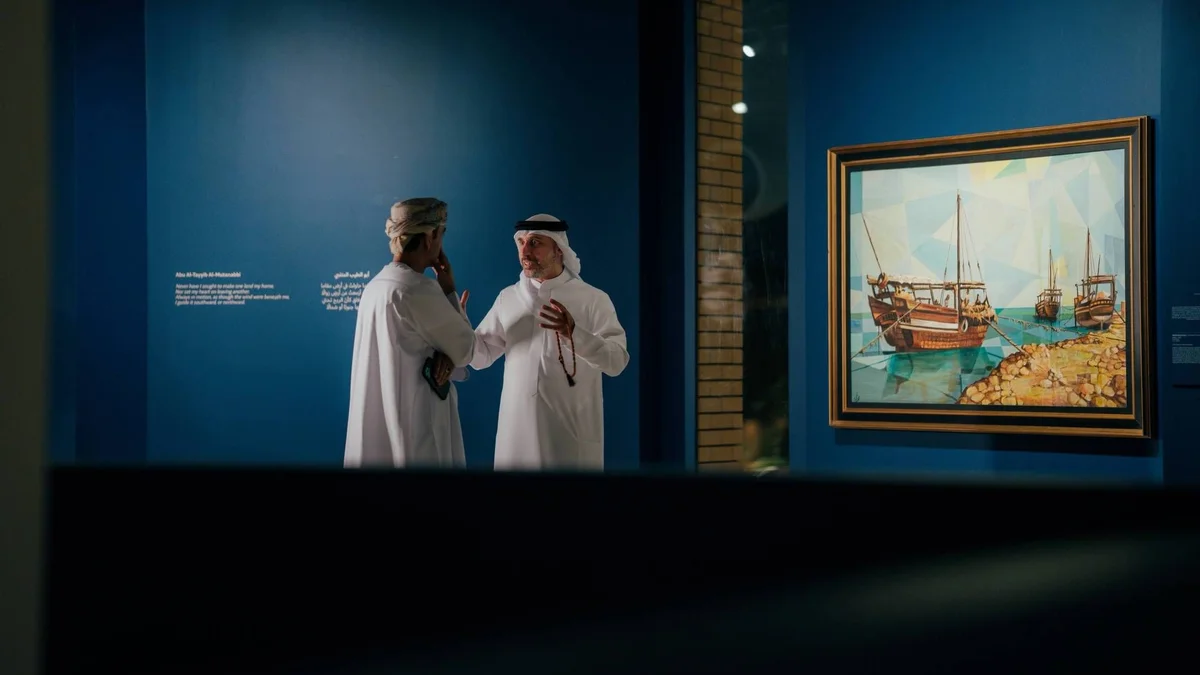
From this striking perspective, an art exhibition in the Saudi capital explores the theme of travel in its many manifestations. The Misk Art Institute has launched its exhibition “Along the Way” at the Prince Faisal bin Fahd Arts Hall in Riyadh running through March 31, 2027.
The exhibition presents a comprehensive experience that brings together 34 artists from Saudi Arabia and the world, along with a display of rare historical manuscripts.
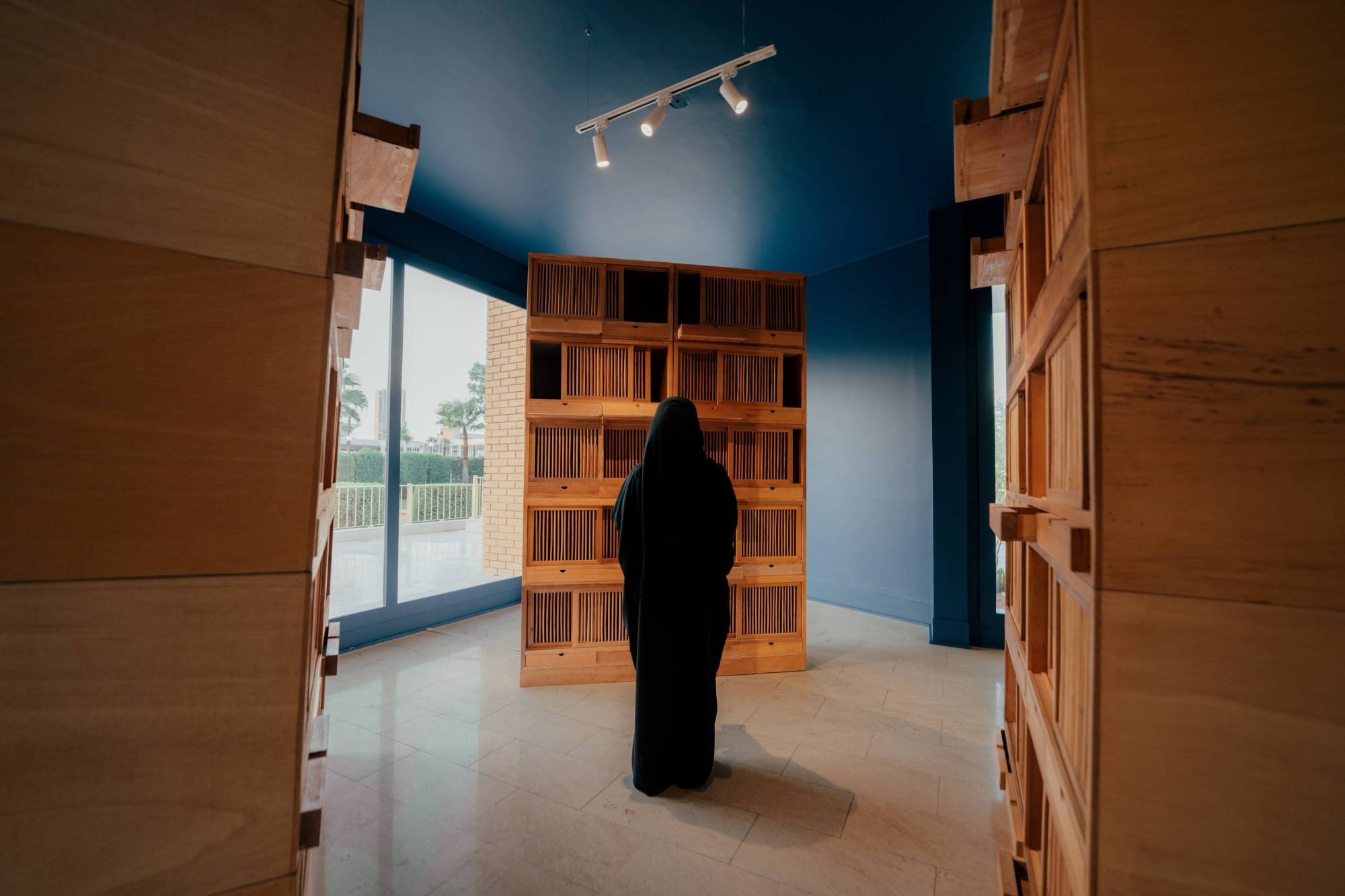
Inspired by the legacy of historical journeys, notably the travels of Ibn Battuta, “Along the Way” brings together 34 artists and 69 artworks, based on a perspective that views travel as a physical and intellectual act, both external and internal at the same time.
In this context, travel carries a symbolic dimension, as it becomes a journey during which the self is shaken and reshaped, with each step offering an opportunity for renewal.
The works selected for the exhibition range from painting and photography to sculpture, digital practices, and archival materials, including rare manuscripts.
Through these works, movement is embodied in landscapes, language, memory, and cosmological perspectives, as well as in the evolution of bodies and the transformation of historical narratives. In this context, cartography becomes an open and interpretive act, shaped by lived experience, transcending fixed coordinates.
Travel as an emotional and shared experience
The exhibition brings together the works of more than 30 artists, alongside historical archival materials, exploring travel as an emotional, shared and intellectual experience, spanning journeys, landscape, memory, communities and inner worlds.
Visitors reflect how movement becomes a source of knowledge and how it transforms people’s perspectives and reshapes their connection to the world, as the exhibition gives them the opportunity to trace its paths and discover the power of movement to chart new maps of experience.
The exhibition also redefines the concept of travel as a journey of transformation and self-discovery, drawing on the spirit of Ibn Battuta’s travels through artistic themes that explore maps, knowledge, finding one’s way, emotional cartography, and nature as a living map, presented through diverse installations and visual works.
The exhibition features prominent historical artifacts, including the manuscripts of “The Book of Fixed Stars” by Abd Al-Rahman Al-Sufi and “Nuzhat Al-Qulub” by Al-Qazwini, as well as a copper astronomical disc that reflects the contributions of Islamic civilization to the sciences of navigation and geography.
The exhibition serves as a bridge between Arab and Islamic heritage and contemporary visual languages, affirming the role of art as a space for dialogue and reflection and redefining the meaning of the journey.
It also explores the idea of gaining knowledge through travel. The artworks treat cartography as both subject and method, breaking its conventions open so that they produce new forms in which paths loop back upon themselves and place is reimagined through what are called “emotional cartographies,” which blend human experience with emotional insight.
The idea extends to poetic maps, grounded on a mythical and symbolic understanding and on a reading of space through relations rather than geometry, so that travel itself becomes an act of expression.
The exhibition arranges the artworks in a series of transit points, inviting visitors to pause and reposition themselves in relation to the works and to one another.
In this way, the exhibition embodies its central idea that travel is a path to knowledge, where every gesture, every image, and every archival fragment constitute a coordinate on a constantly expanding map of consciousness.
Movement through space becomes a cognitive act, transforming the external journey into an internal one that leads to broader awareness and deeper understanding.
This article was first published in Asharq Al-Awsat.