- Pakistani designers experiment with traditional styles to create a fashion time capsule
- Offer variety of choices for brides by opting for retro looks with modern aesthetics
ISLAMABAD: If it’s been a while since you called your mother or grandmother, now might be a good time to amend that. With Pakistan’s fashion scene witnessing a retro reboot, you could save a few thousands or more by digging into their almirahs and staking claim to those gorgeous, embroidered outfits from the 70s.
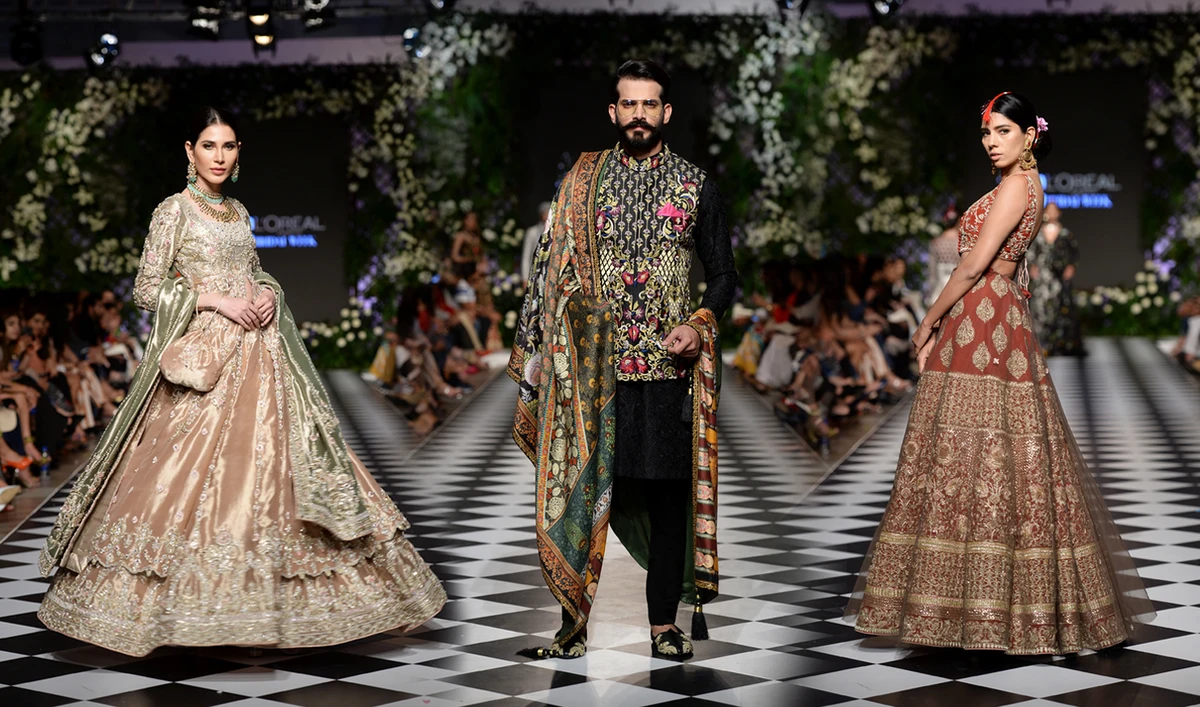
Traditional ensembles are making a comeback in a big way — as was evident during the L’Oreal Bridal Week (LBW) organized by the Pakistan Fashion Design Council in August this year — with sartorially-savvy shoppers opting to invest in pieces that would last them a lifetime instead of “trends” that are just as good as the next Instagram story.
Long-length and short-length shirts in hues of red and orange, infused with authentic gota embroidery, featured heavily on the runways at the LBW as designers showcased their best for the would-be brides and others in attendance, who were looking to make more-informed choices for the upcoming wedding season from November to February.
Fabrics with metallic undertones were the go-to choice for designers like Rema and Shehrbano, Faraz Manan, Zainab Salman and Nida Azwer who paired the light-reflecting materials with tulles and silk organza to produce delightful concoctions in peaches, pinks, greens and greys.
Omar Farooq’s grooms seemed to have got the memo, too, as they showcased looks which were created with similar materials in heavy silk shawls and stoles; while Hussain Rehar proved his mettle by using metal embroidery to create beautiful and intricately-crafted designs.
Usually thrown at the far end of the spectrum as the least favored choice of color, especially by South Asian brides, black seems to be having its moment in the sun with designers urging attendees to have a rethink. The color dominated the ramps populated by models displaying the works of Ali Xeeshan, Misha Lakhani and Nomi Ansari. Ansari, who is known for his love for color, used black as a backdrop to build on his bold and unprocessed creations. Others, like Nickie Nina, used it with equal finesse to add the x-factor to an otherwise mundane ensemble by using it on a dupatta’s borders.
Various shades of ivory were the second most popular choice of designers such as Manan, Rehar and Lakhani who seem to be having their ears to the ground. Usually underrated, all-white creations are being sought after by fashionistas opting to be the cynosure of both night and day-time events.
Keep an eye out for sleek silhouettes and low backs which will be everywhere this wedding season. With traditional cuts more in style than ever, designers embraced the looks on saree blouses, lehenga cholis and long, pishwas shirts.
It was a wrap at the LBW with the dupatta – designers revived the often-undervalued piece of fabric by making them an important part of the overall aesthetic. With contrasting colors, intricate and light-weight work and yards and yards of fabric, it would be no surprise if the dupatta becomes the statement accessory of this year’s wedding season.