- Two of the world’s most prestigious museums collaborate on exhibition running until January
RIYADH: On Sept. 26, Washington DC’s celebrated Smithsonian Institution opens the doors on “From the Louvre: Masterpieces of Islamic Art.”
The exhibition, which runs until Jan. 18 at the Smithsonian’s National Museum of Asian Art, marks the first time the renowned Paris museum has loaned these 26 masterfully-crafted Islamic artworks from its permanent collection to another institution.
Against the backdrop of America’s 250th anniversary, the exhibition “can be seen as a sort of gesture of friendship between France and the United States,” Souraya Noujaim, director of the Islamic art department at the Louvre, tells Arab News.
“The inception of the exhibition was really to illustrate the enduring collaboration between our two institutions, which goes back at least 120 years,” says Simon Rettig, associate curator for the Arts of the Islamic World at the NMAA, who co-curated the exhibition with Noujaim. “It started when the museum in Washington was not even built yet.”
The teams were able to select from the 18,000 plus objects held by the Louvre’s Islamic Arts Department. In the exhibition’s title, the organizers stress, “Islamic” refers to nations or civilizations in which Islam is or was the dominant religion, rather than to the religion itself. And, Rettig explains, “art” should also be understood in its broader context.
“When you think of art, you think of an oil on canvas, or you think of a sculpture,” he says. “What the exhibition shows is that art is much more than that. It can be objects; utilitarian objects that have a function. All the works that are presenting in the exhibition are masterpieces, but they had an original function that has been pushed aside, and we look at these objects as real artworks. Which is a good thing.”
Here each curator discusses four of their favorite pieces from the exhibition.
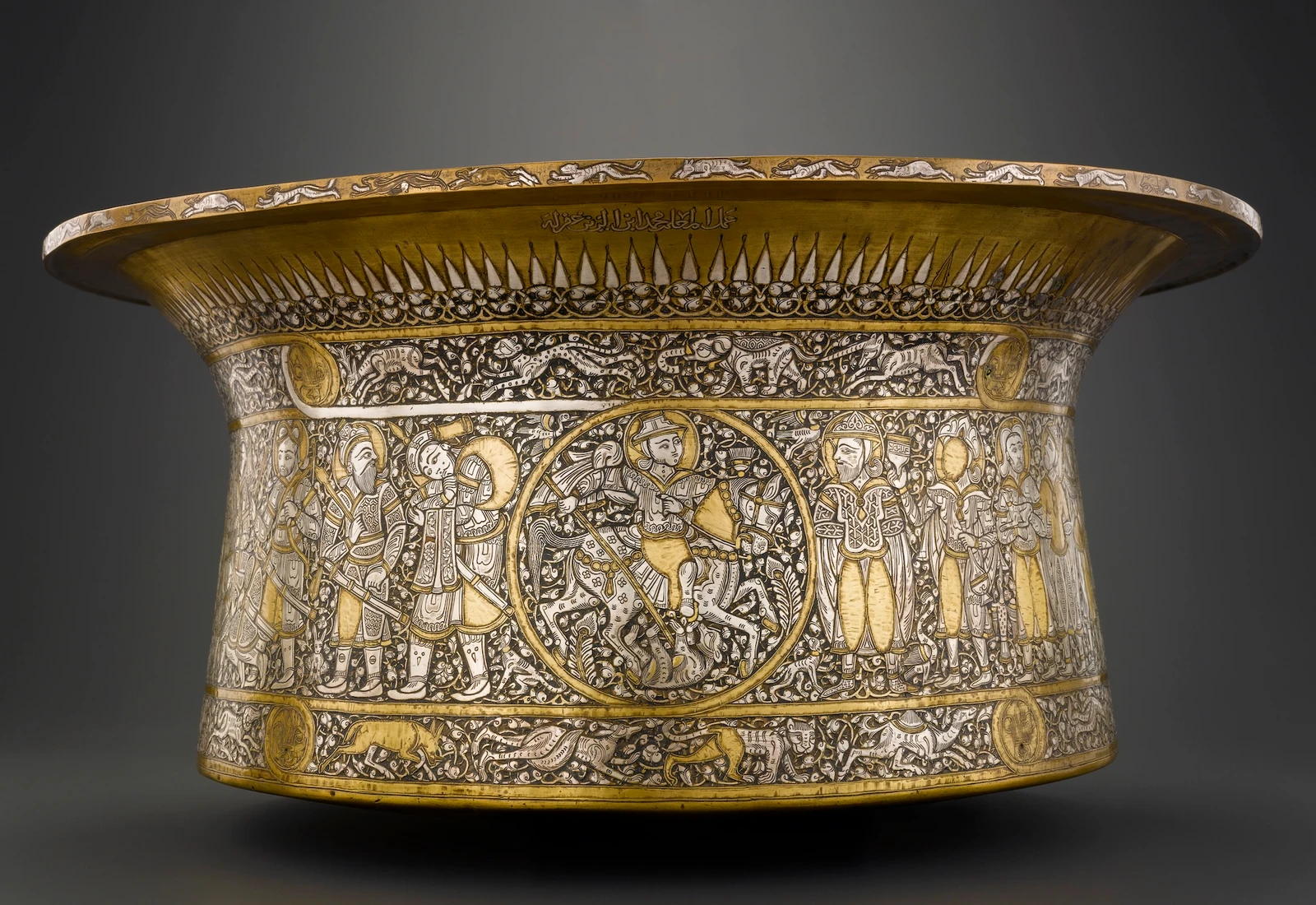
Basin, known as the Baptistery of Saint Louis
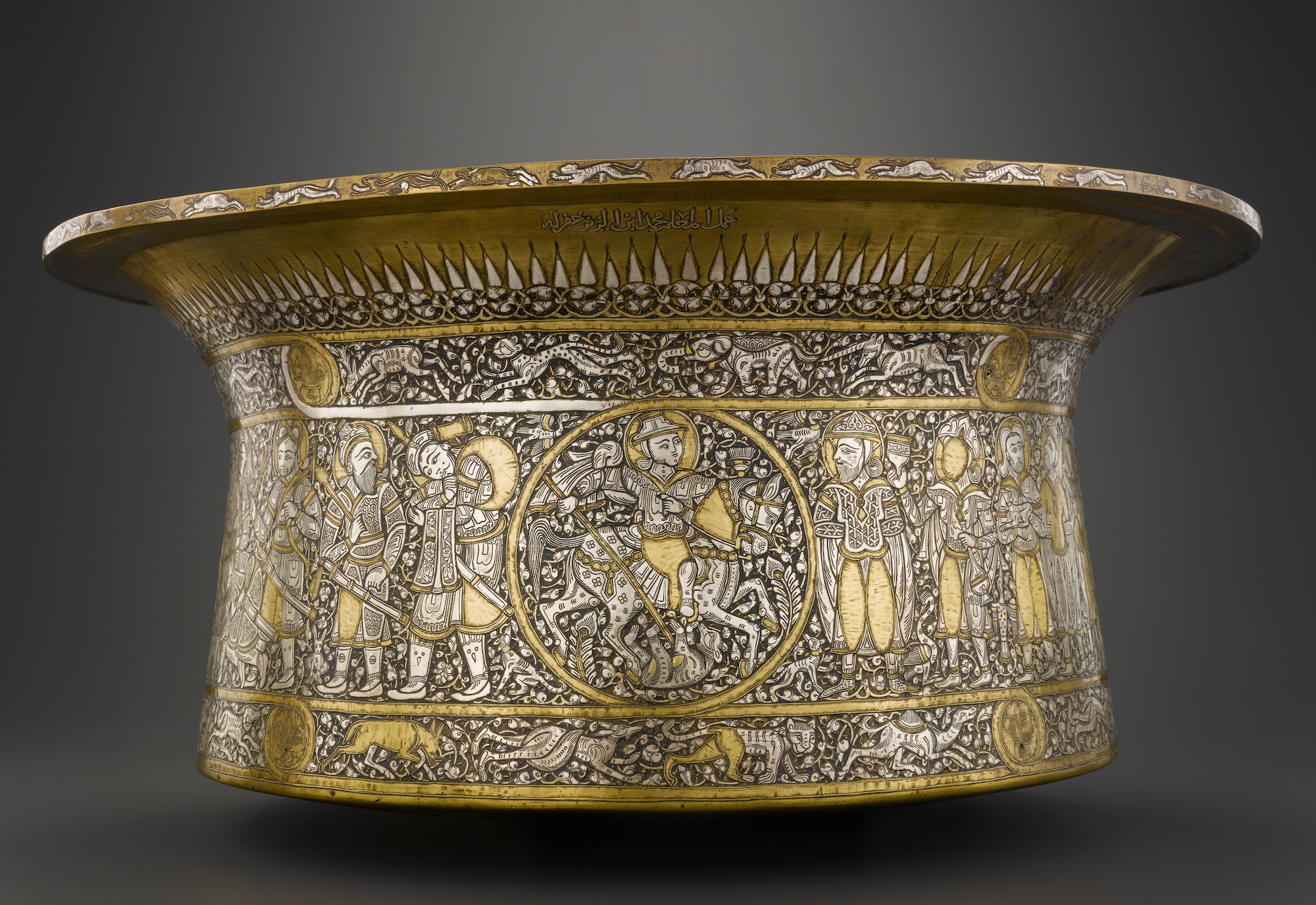
It’s an object from Egypt or Syria, from the Mamluk dynasty, that has a little bit of mystery. It was crafted during the first part of the 14th century, and it’s completely covered with engraved encrusted decoration, gold, silver, and black compound as well. And it's very special in terms of conservation — extremely good conservation. — SN
Cup with poetic inscription in Persian
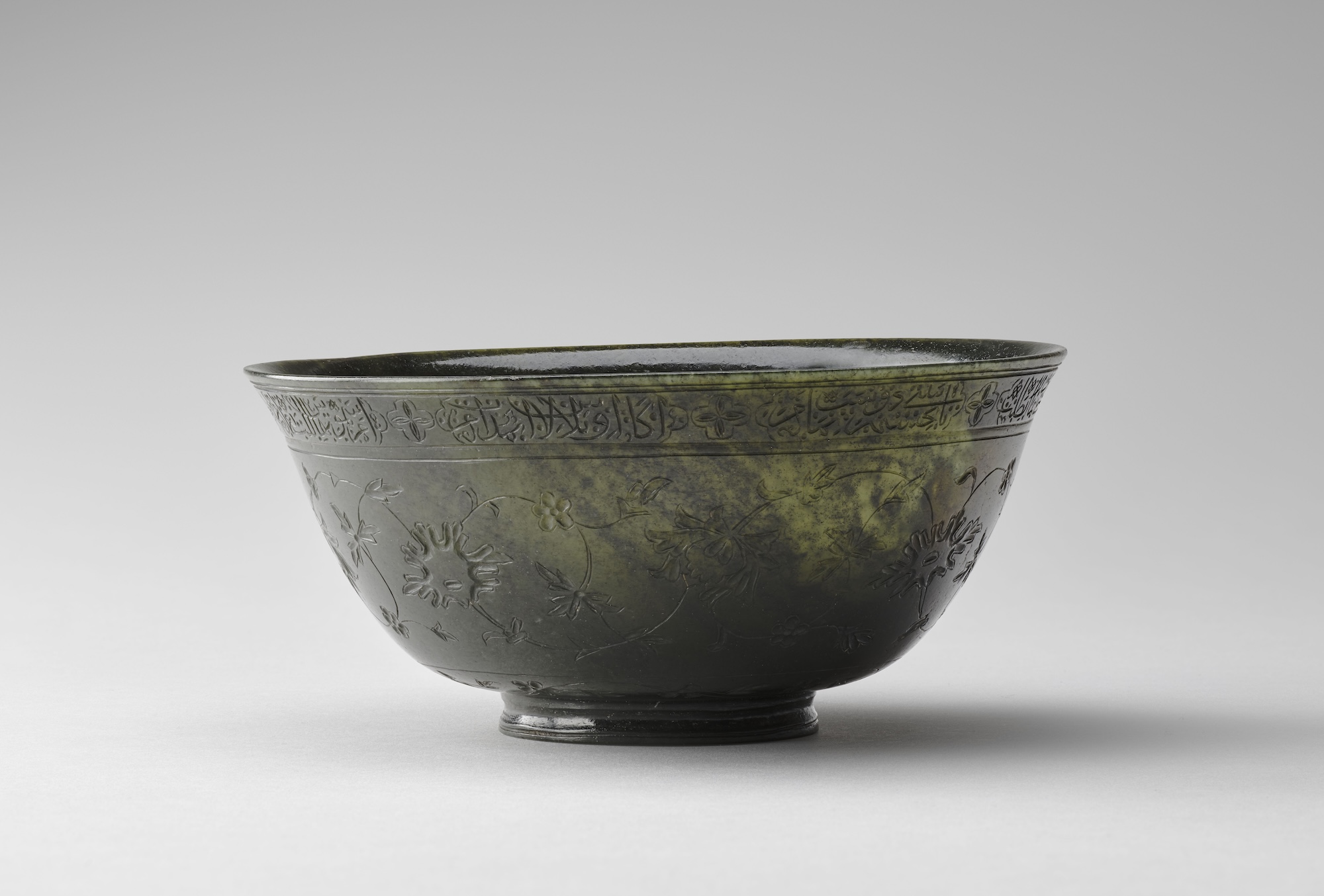
This is my personal favorite. It comes from Eastern Iran or Afghanistan during the Timurid dynasty; it’s engraved jade — nephrite — with traces of gold, and it has a poem on its edge. The little jade cup has a very interesting story — the material itself. Jade was praised not only in China, but also in Islamic lands. The shape itself is definitely very Chinese.
I'm not defining Islamic art through this, but this is what touched me about Islamic art: a kind of simplicity, an elegance, and a lot of light. The cup is nearly translucent. A very, very excellent quality of jade. I would call it a “speaking object.” — SN
Beaker with polo players
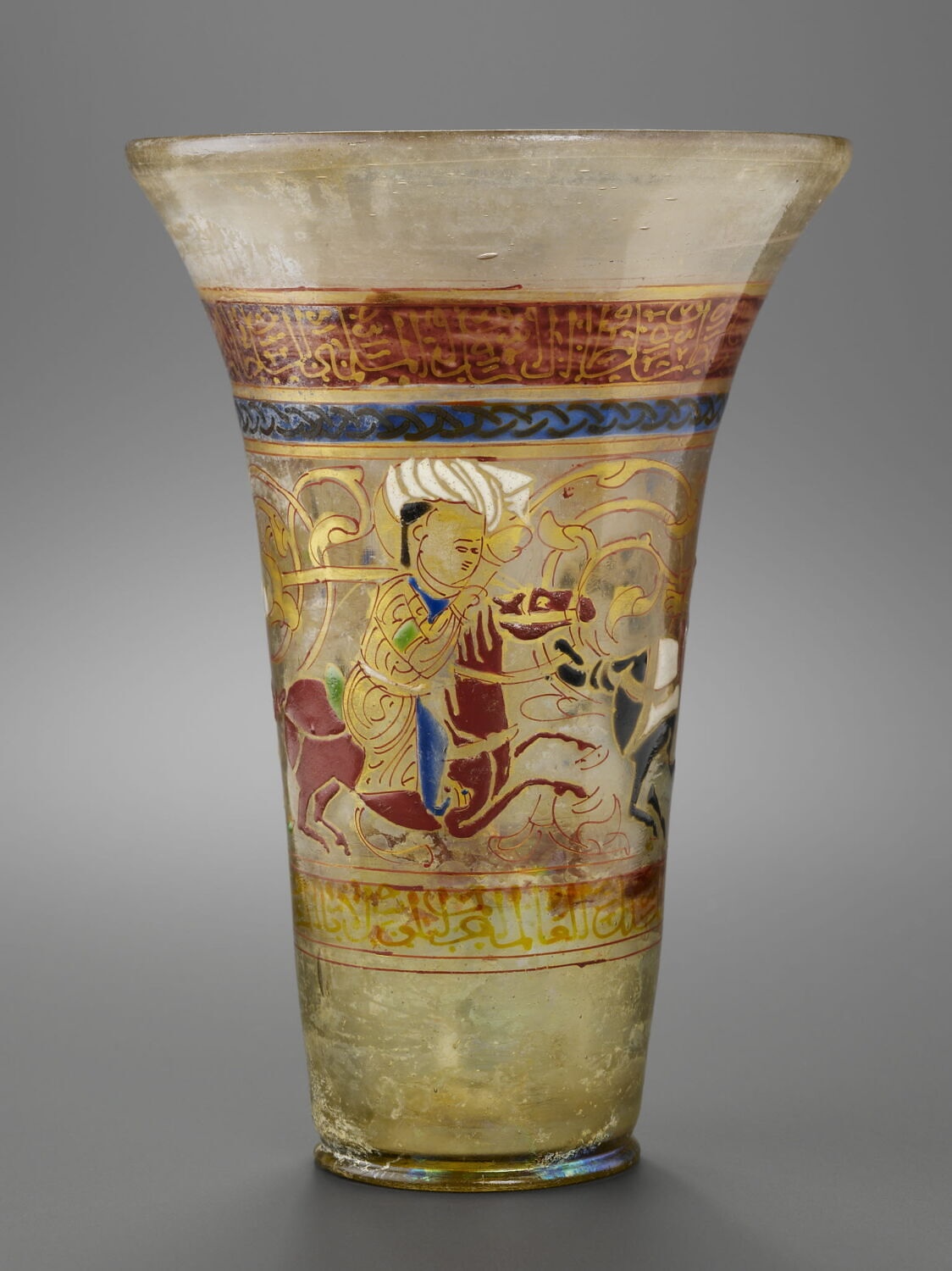
This comes from Syria, from around 1250 CE, during the Ayyubid dynasty. It’s made from gilded and enameled glass. It was actually found in a church in Italy. There's a lot of mystery here — isn't that so interesting? As much as we researched, it’s not very well documented. — SN
Plate with peacock
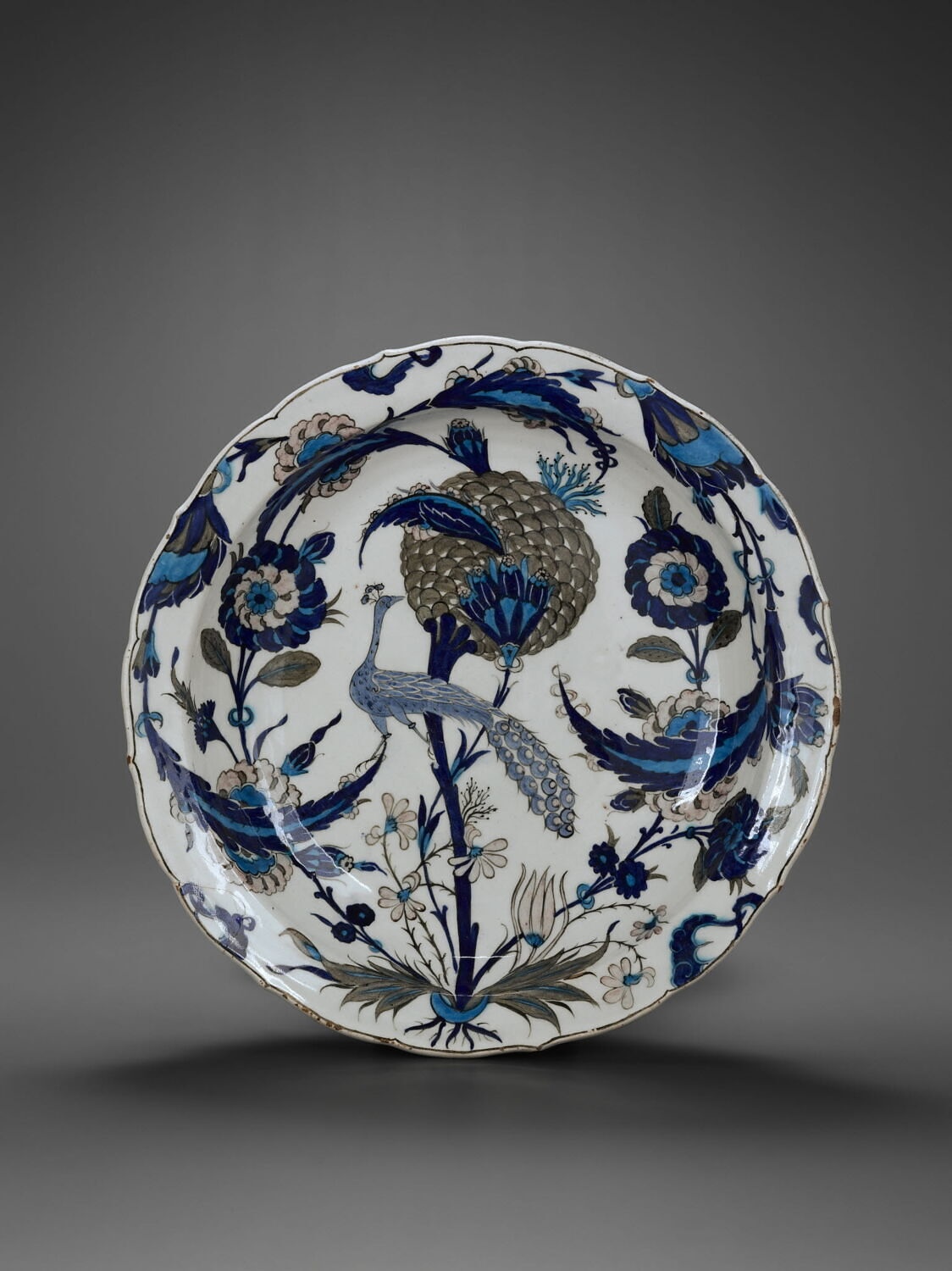
This stone-paste body is painted under transparent glaze—it is a large dish decorated with a peacock from the Ottoman dynasty. It comes from Iznik in Turkiye. — SN
Peacock, part of an automaton
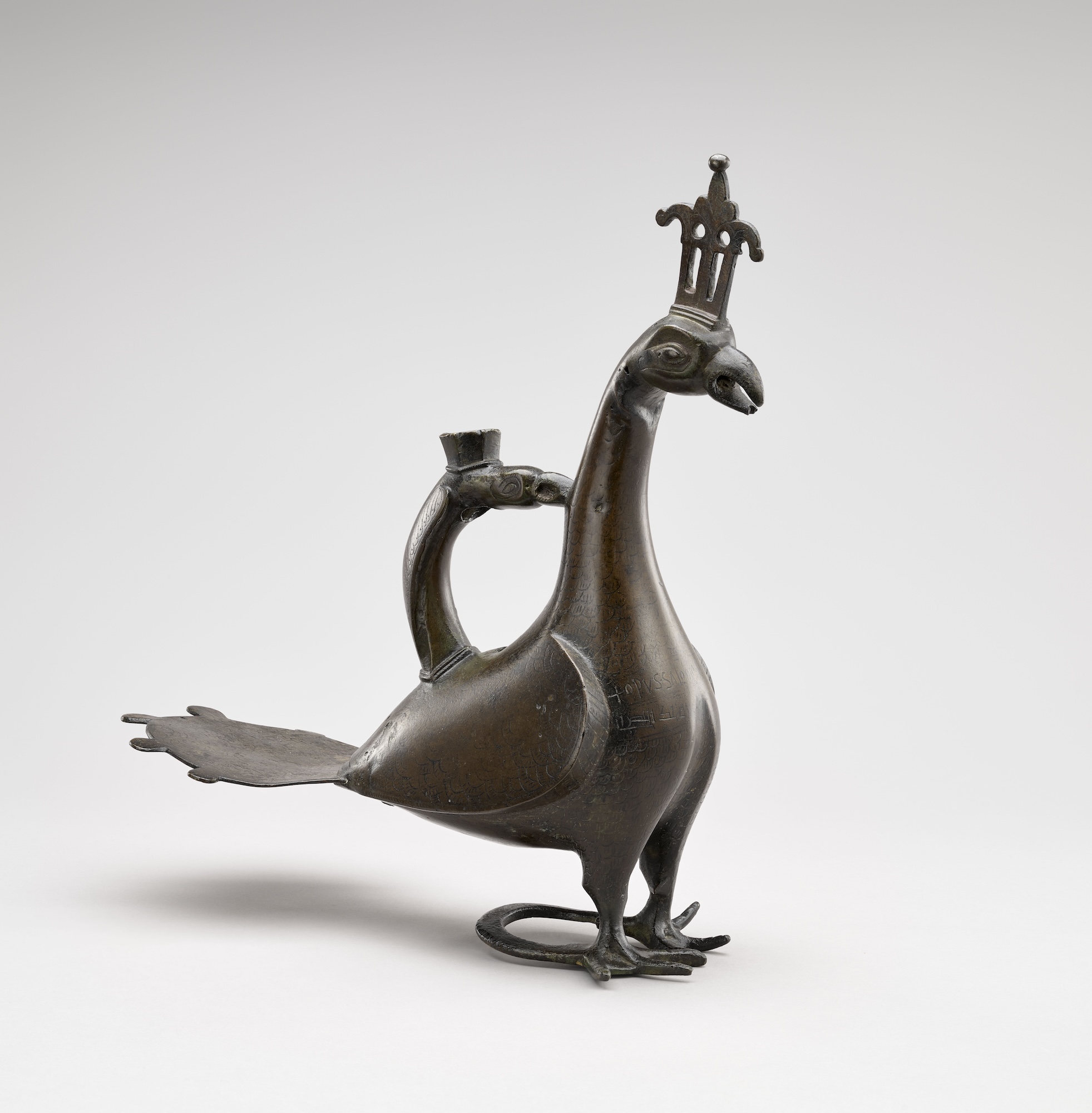
This was created during the Umayyad dynasty. It comes from Spain — probably Cordoba. It’s another peacock, but this one is a very heavy object made from molded and engraved brass that was crafted around the turn of the 11th century. — SR
Dagger with horse head
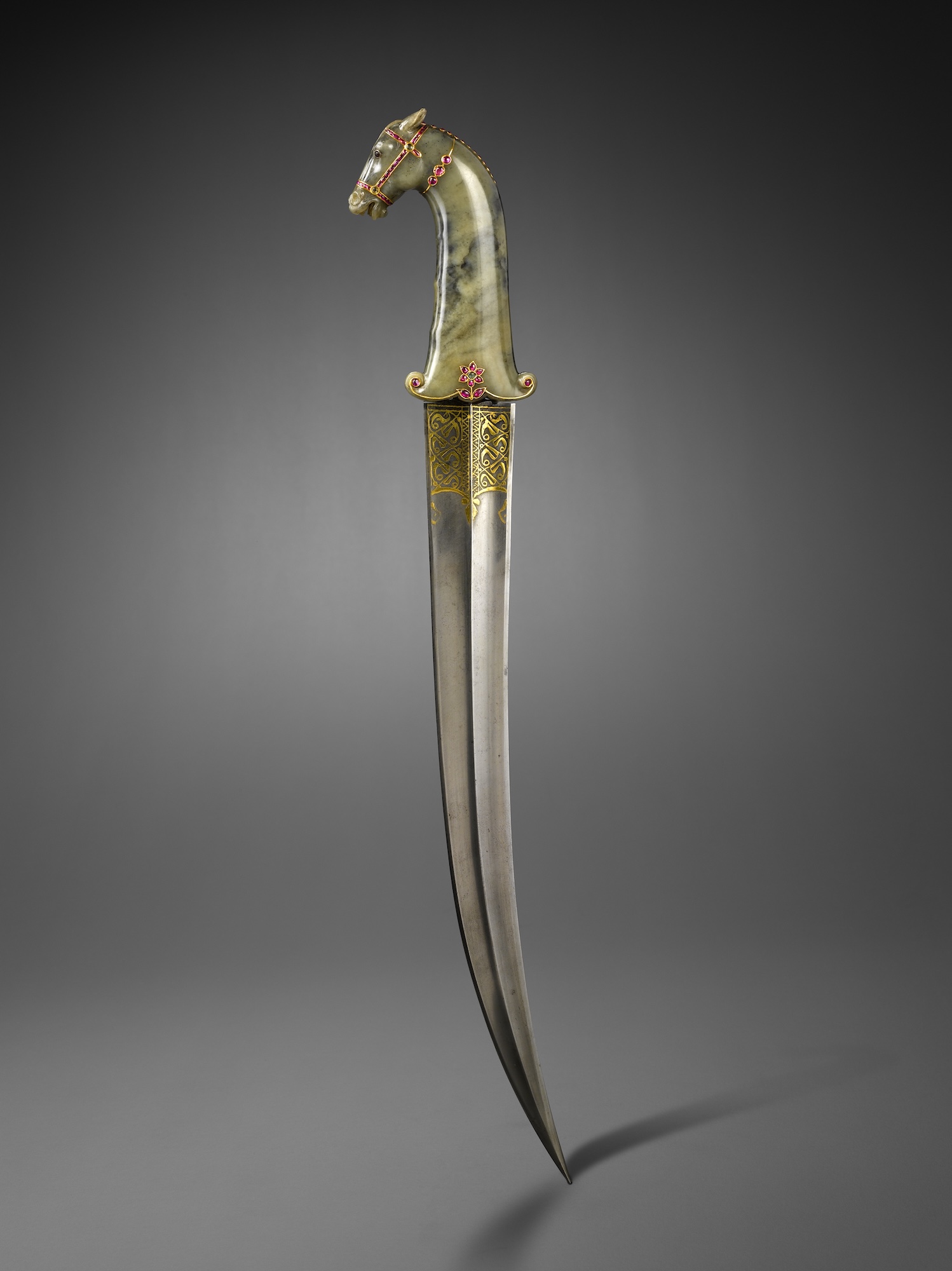
This dagger is made of jade, rubies, emeralds, and gold. It’s from India, but it may be a good way to talk about Saudi Arabia, too — the best horses in the world would come from Arabia, and the emperors had many stallions. The Mughals would give names to their favorite horses, and would even have portraits of them. The portrait on this dagger — which is in a jade that is sort of whitish, with black veins — is very detailed; it's almost like you can see the hair of the horse in the wind; almost animated.
This is a very precious, high-quality object that was probably intended for the emperor, or a prince, or a very high-ranking member of the court, who would have received it as a gift from the emperor himself. — SR
Portrait of Fath Ali Shah Qajar
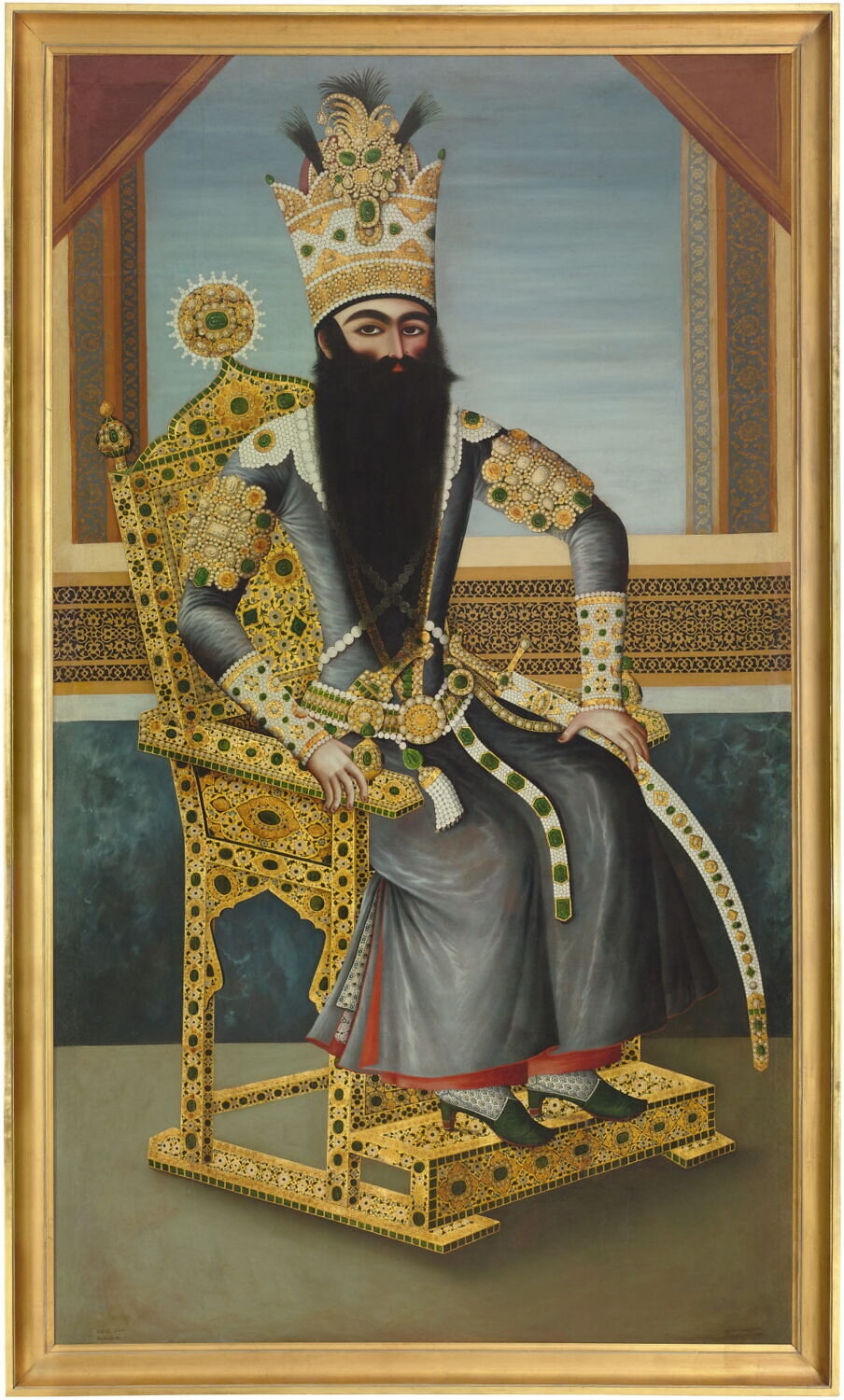
This is the youngest object in the exhibition. It’s an oil on canvas from Iran, made in the early 20th century and attributed to Mihr Ali. Fath Ali Shah Qajar was a ruler from the Qajar dynasty, which ruled between 1785 and 1925. There’s something very unique about Persian portraiture. And that king with his huge pointy black beard is literally covered with jewels; gold and pearls and rubies and emeralds. He's sitting on a gold throne. It's larger than normal size; the Shah of Iran sent his own portrait to Napoleon. It’s a sort of visual propaganda, part of how they exerted power. — SR
Bowl from Susa, Iran
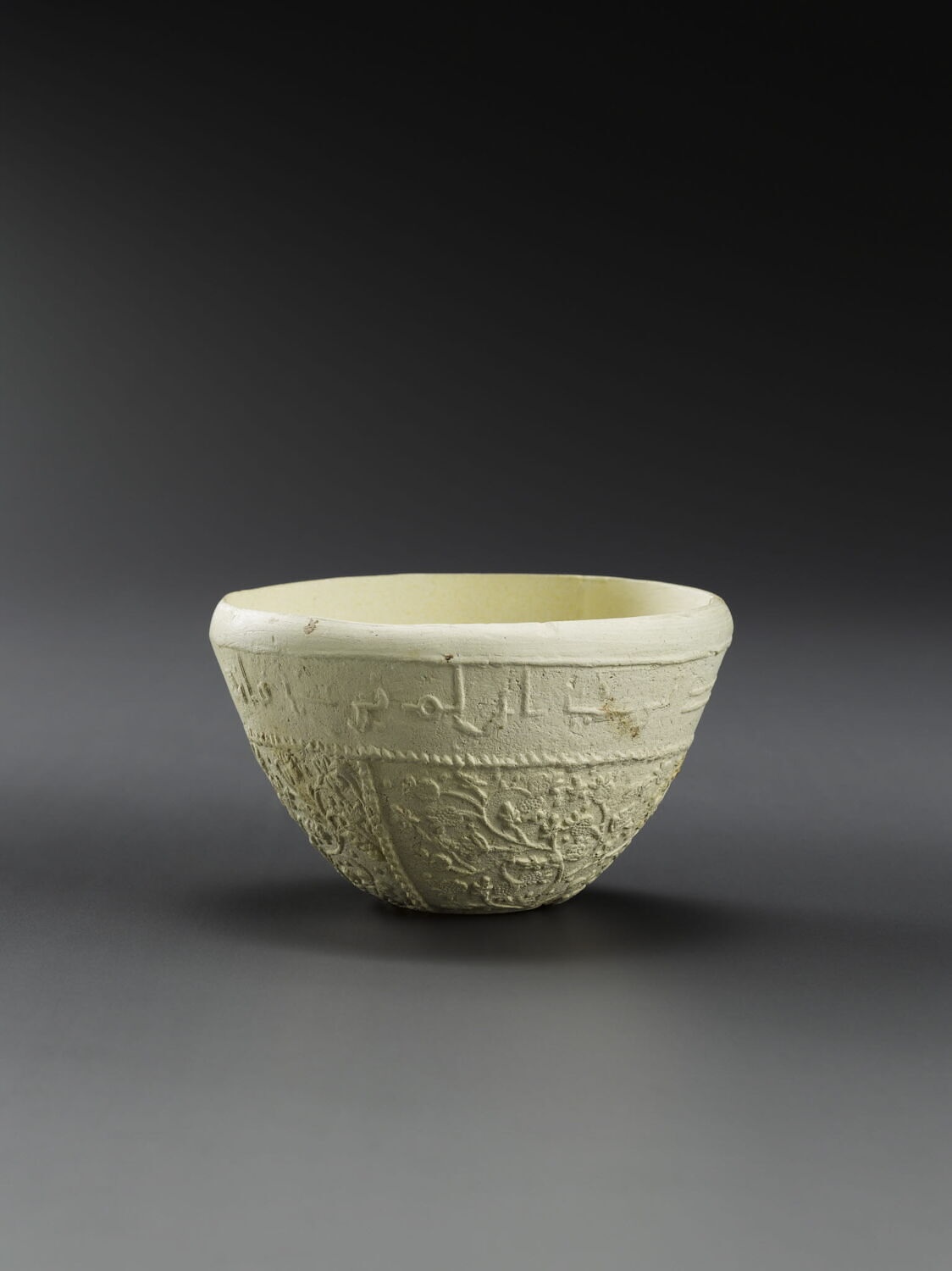
This molded, unglazed earthenware bowl dates back to 600-800 CE. I consider this to be the holy grail of Islamic art. It’s the piece that inspired me to study Islamic art. It comes from the most modest material — and it’s meant to be like this: unglazed. But it shows you that sophistication can be seen in simplicity. I think that’s part of something we’ve forgotten: Not everything that shines must be gold. — SR