- 2 Israeli journalists were barred from post-match press conference following chaotic Republic of Ireland media session ahead of UEFA Nations League match against Israel
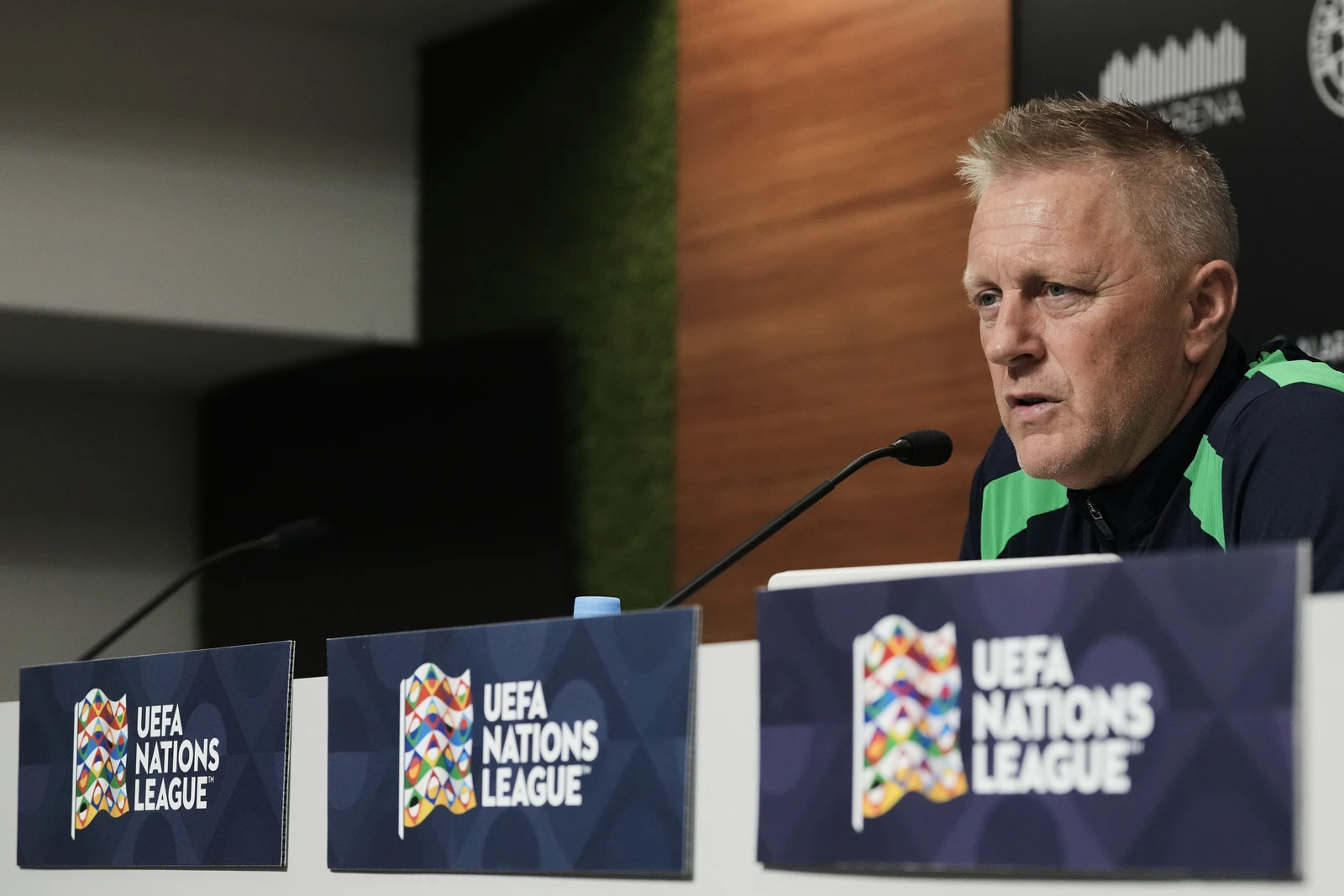
- Ireland manager Heimir Hallgrimsson suggested UEFA should reconsider future matches between the 2 teams due to difficulties
LONDON: Two Israeli journalists were barred from attending a post-match press conference following a chaotic Republic of Ireland media session ahead of the team’s UEFA Nations League match against Israel.
UEFA confirmed the restriction before Ireland’s second match against Israel, a 1-1 draw played behind closed doors at a neutral venue in Serbia, Sky News reported.
The decision followed a tense pre-match news conference on Saturday that ended abruptly after an Israeli journalist said that Irish players had called Israeli players “monkeys” during Ireland’s 3-0 victory over Israel in Hungary a week earlier.
“Your players called our players monkeys during the match,” the journalist said in a video shared on Sunday by BBC Sport on social media.
Kieran Crowley, the Football Association of Ireland’s communications officer, denied the allegation, calling it “completely untrue,” before ending the news conference.
Sky News reported that the term cited by the journalist was not associated with antisemitic or anti-Israeli abuse.
Serbian police were later called after an Israeli journalist alleged that an FAI press officer had taken away a microphone. The journalist reportedly described the incident as an assault.
Another Israeli journalist asked Heimir Hallgrimsson, the Republic of Ireland’s manager, about an incident on board a FlyDubai flight to Israel earlier in the week.
Before Hallgrimsson could respond, Crowley asked the journalist to limit questions to football and the upcoming match. The journalist continued, prompting Crowley to intervene again.
“We respected your questions at the last press conference, but we are doing football questions today,” Crowley said, referring to Israeli journalists’ pointed questions about calls to boycott the first leg of the European match.
Hallgrimsson later described the exchange as a “verbal attack.”
The two Ireland-Israel matches were played amid heightened political tension over the war in Gaza. Ireland’s two matches against Israel prompted calls in Ireland for a boycott, including from members of the public and former players.
The first match, played on Sept. 27, went ahead despite boycott calls and ended in a 3-0 Ireland victory. Afterward, Israeli supporters were accused in media reports of directing racist chants at Ireland forward Adam Idah and were filmed raising military slogans.
Ireland players and staff again bowed their heads on Sunday, Oct. 4, during the Israeli national anthem, wore black armbands in memory of those killed in Gaza, and declined to shake hands with Israeli players.
The Israeli government criticized the gesture, accusing the Ireland team of “moral blindness.”
Hallgrimsson said UEFA should reconsider scheduling matches between the two teams.
Asked by RTE Sport whether Ireland and Israel should be paired again, Hallgrimsson said: “No, they shouldn’t. That’s not ours to decide — that’s UEFA who decides that.”
He added: “I wouldn’t wish any national team to go through what we’ve gone through in these two weeks, so maybe UEFA just needs to step in and do something.”
Tensions reportedly continued during Sunday’s match. Irish media said Ireland fitness coach Damien Doyle was spat on by an Israeli player as the teams entered the tunnel at halftime.
Hallgrimsson said he was aware of an allegation but did not witness the incident and declined further comment.