- Netanyahu’s calls for renewed military action against Iran come as he struggles to secure a new governing coalition
- Escalating settler violence and military operations raise fresh concerns about the prospects for a future Palestinian state
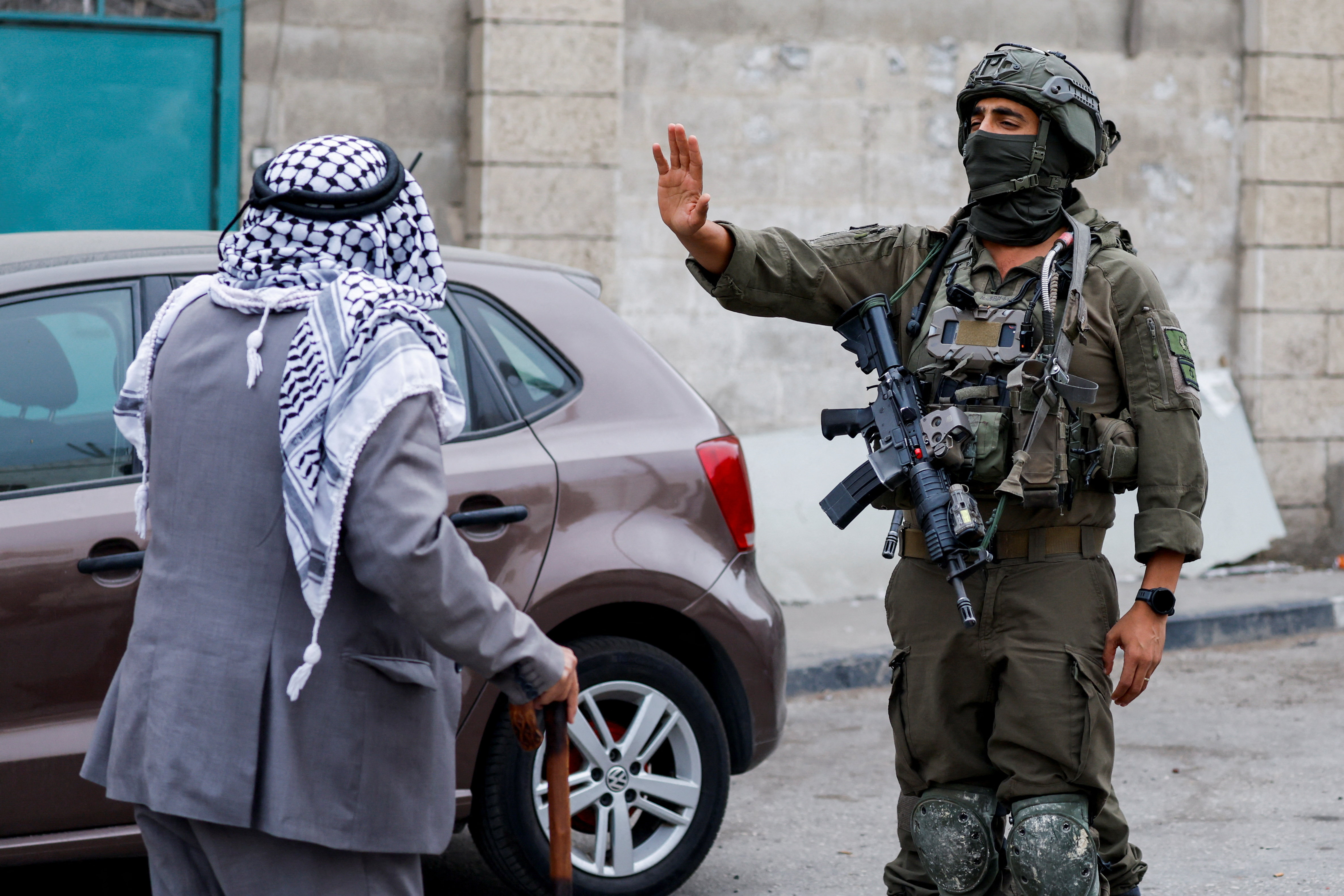
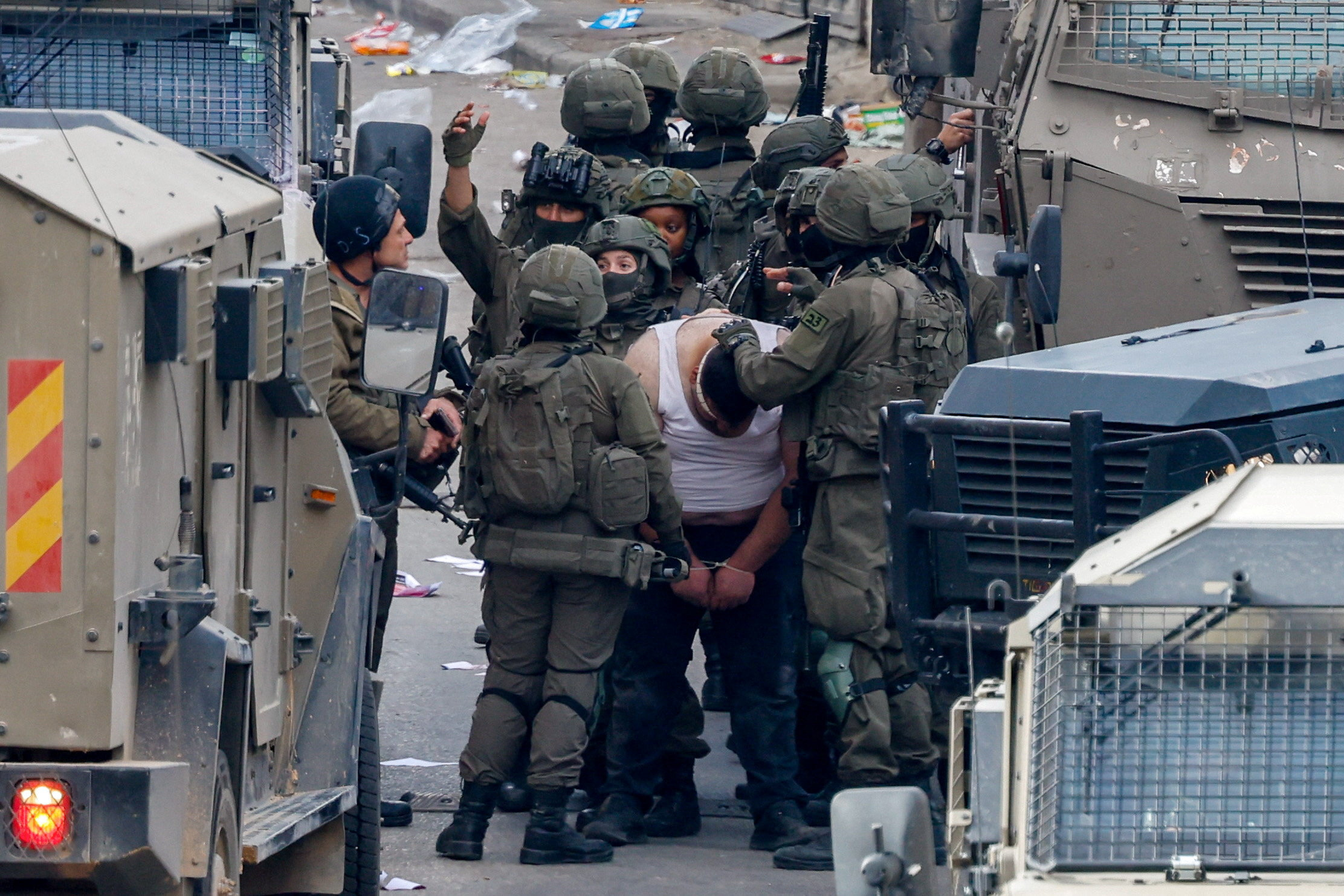
LONDON: On any other day, perhaps, the deployment of Israeli troops into villages, towns and refugee camps in the occupied West Bank on Monday might have attracted greater attention on Israeli news sites.
The military operation in Al-Amari refugee camp in particular, during which tear gas and stun grenades were fired and dozens of Palestinians were held for interrogation, drew the attention of international media.
But across much of the Israeli press, from the left-leaning Haaretz to the conservative Jerusalem Post, the latest incursion into Palestinian territory and its potential implications for the viability of a future Palestinian state received little attention.
Instead, the Israeli media were preoccupied with Benjamin Netanyahu’s efforts to form a government and return to office as Israel’s next prime minister, and the measures he appears prepared to consider to achieve that.
The Israeli military generally describes such raids as preventive counterterrorism operations aimed at dismantling Hamas and Palestinian Islamic Jihad cells, seizing weapons and disrupting attack plots, including in areas where Palestinian Authority security forces exercise limited control.
However, for a prime minister who has long made national security central to his political platform, some observers suggest the raids in Al-Amari and Netanyahu’s reported attempts to persuade the US to resume bombing Iran may reflect overlapping political and strategic considerations.
“Both seem to be true,” Sarah Yerkes, acting co-director of the Middle East Program at the Carnegie Endowment for International Peace, told Arab News.
“Netanyahu’s political future is hanging by a thread and he needs to do everything he can right now to convince the right-wing parties who are in the midst of coalition building that they need him to stick around.
“But this also reflects the Netanyahu government’s longstanding policy of annexation by stealth. They are once again ‘creating facts on the ground’ that make it much harder to undo during any future negotiation process.”
It is almost exactly nine months since Israel and the US launched their joint surprise attack on Iran, triggering a regional conflict that saw Tehran retaliate by attacking America’s Gulf allies and disrupting the global economy by effectively closing the Strait of Hormuz.
Against the backdrop of the stalled conflict with Iran, the subsequent Israeli invasion and occupation of a “buffer zone” in Lebanon, and the ongoing violence in Gaza, Netanyahu has failed to secure a renewed electoral mandate to govern.
Israel’s election on Oct. 27 ended with the Netanyahu bloc holding 53 seats in the Knesset — eight short of the majority needed to form a government. Opposition leader Gadi Eisenkot’s bloc has 48 seats but, with the backing of Arab parties, has been invited by President Isaac Herzog to build a coalition and form the next government.
Intensive negotiations are now underway and, with his political future uncertain, Netanyahu, long known as “Mr. Security,” has again placed national security concerns at the forefront of the political debate.
“Netanyahu, especially since the election, has become an agent of chaos,” Ahron Bregman, a senior teaching fellow in the Department of War Studies at King’s College London and a former major in the Israeli army, told Arab News.
“His primary goal is to prevent the opposition from forming a coalition without him. One method he employs is to create a sense of urgency and emphasise external threats, whether real or imagined.”
Reports emerged last week that Netanyahu has been pressing US President Donald Trump to renew attacks on Iran, citing claims that Tehran has advanced chemical and biological weapons programs.
Such claims are particularly sensitive in a region where the US-led invasion of Iraq in 2003 was justified in part by subsequently discredited allegations concerning weapons of mass destruction.
On Nov. 18, The New York Times, citing US and Israeli officials, reported that Netanyahu was “pressing hard for the US to join his country in a four- to seven-day campaign of airstrikes against Iran.”
It added that Roman Gofman, the director of Israel’s intelligence agency Mossad, had held talks in Washington with his counterpart at the CIA, and that “other top Israeli officials, including Shlomi Binder, the director of military intelligence, have advocated a resumption of operations in discussions with American counterparts.”
Netanyahu and his allies, however, maintain that the urgency of their calls for renewed military action is driven by intelligence assessments rather than domestic political considerations.
According to Israeli and Western officials cited by CBS News, the prime minister’s office has raised concerns about the pace at which Tehran is rebuilding its ballistic missile production capabilities and fortifying underground nuclear sites, including Mount Pickaxe.
Israeli officials reportedly fear that the window of opportunity to target these facilities could soon close.
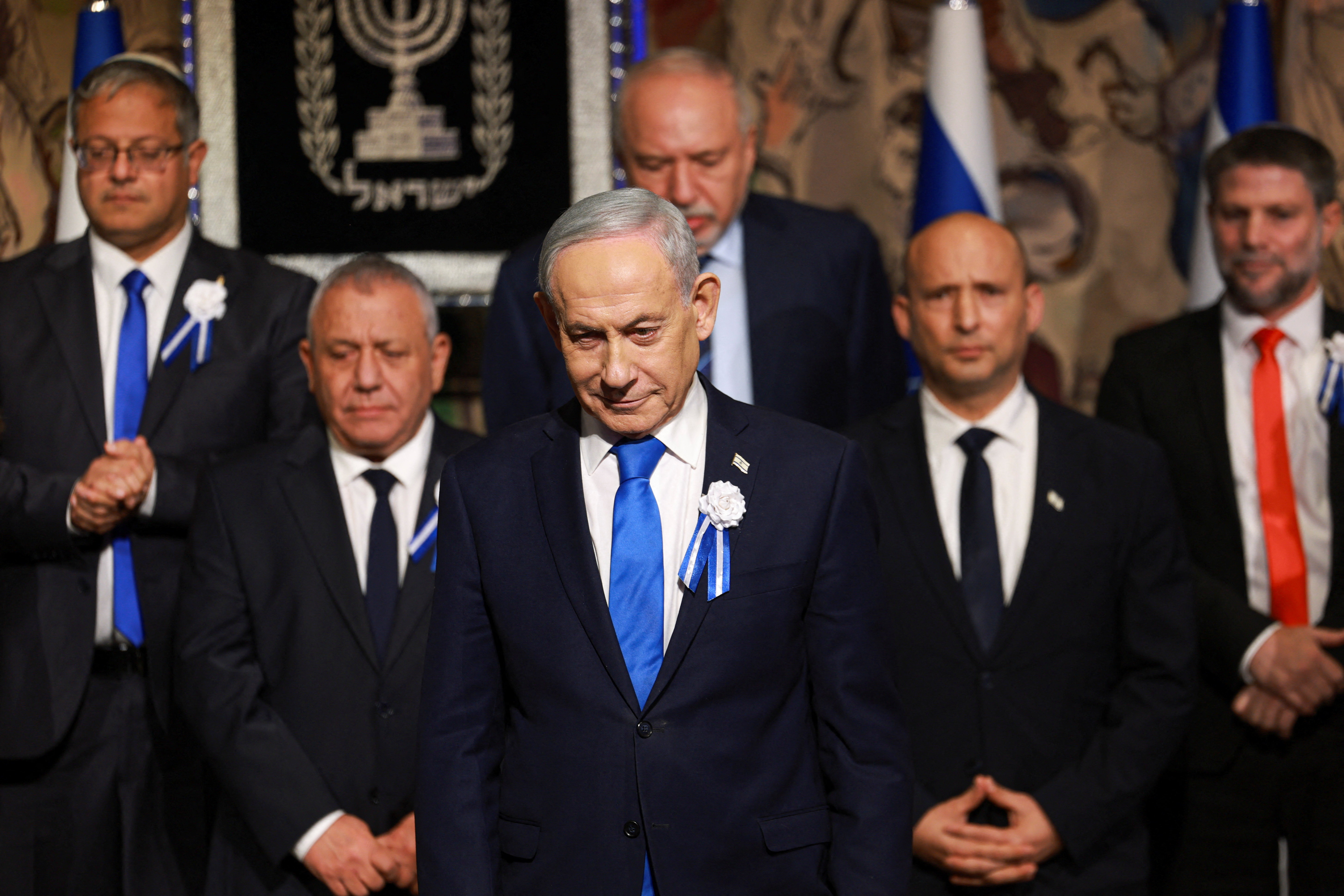
Speaking at a Likud faction meeting on Monday, Netanyahu rejected suggestions that he was manufacturing a crisis, accusing political rivals of minimizing genuine security threats for partisan gain.
However, also on Monday, The Times of Israel reported that researchers within Mossad had assessed that there was “no immediate need for military action against Iran,” a position echoed by Netanyahu’s rival Eisenkot and the Israeli military’s chief of staff.
In an editorial on Nov. 24, Haaretz concluded that, despite the continuing threat posed to Israel by Iran’s missiles and nuclear program, Israel currently “has no justification for another war with Iran.”
It continued: “One cannot sever the defense-related debate from the political reality or ignore the possibility that political considerations are influencing Netanyahu’s decisions.”
Even before the election, “there was concern that military moves against Iran were meant to provoke an Iranian response that would create an emergency allowing the election to be postponed.
“Now, we cannot rule out the possibility — an idea also noted by leaders of the change bloc — that the motive for going to war would be an attempt to impose ‘unity.’ Everything so as not to lose power.”
It remains unclear whether Trump will agree to Netanyahu’s reported request. The US president is said to be undecided.
Netanyahu, Bregman said, “prefers to act on Iran, which, for sure, will stop the process of forming a new government. But to do that, he depends on Trump’s shifting moods.
“In contrast, when it comes to the West Bank, he is less reliant on Trump. His inaction regarding the ongoing situation there — including the harassment of innocent Palestinians — suggests that he is complicit in it, and this is his way of creating a sense of urgency.”
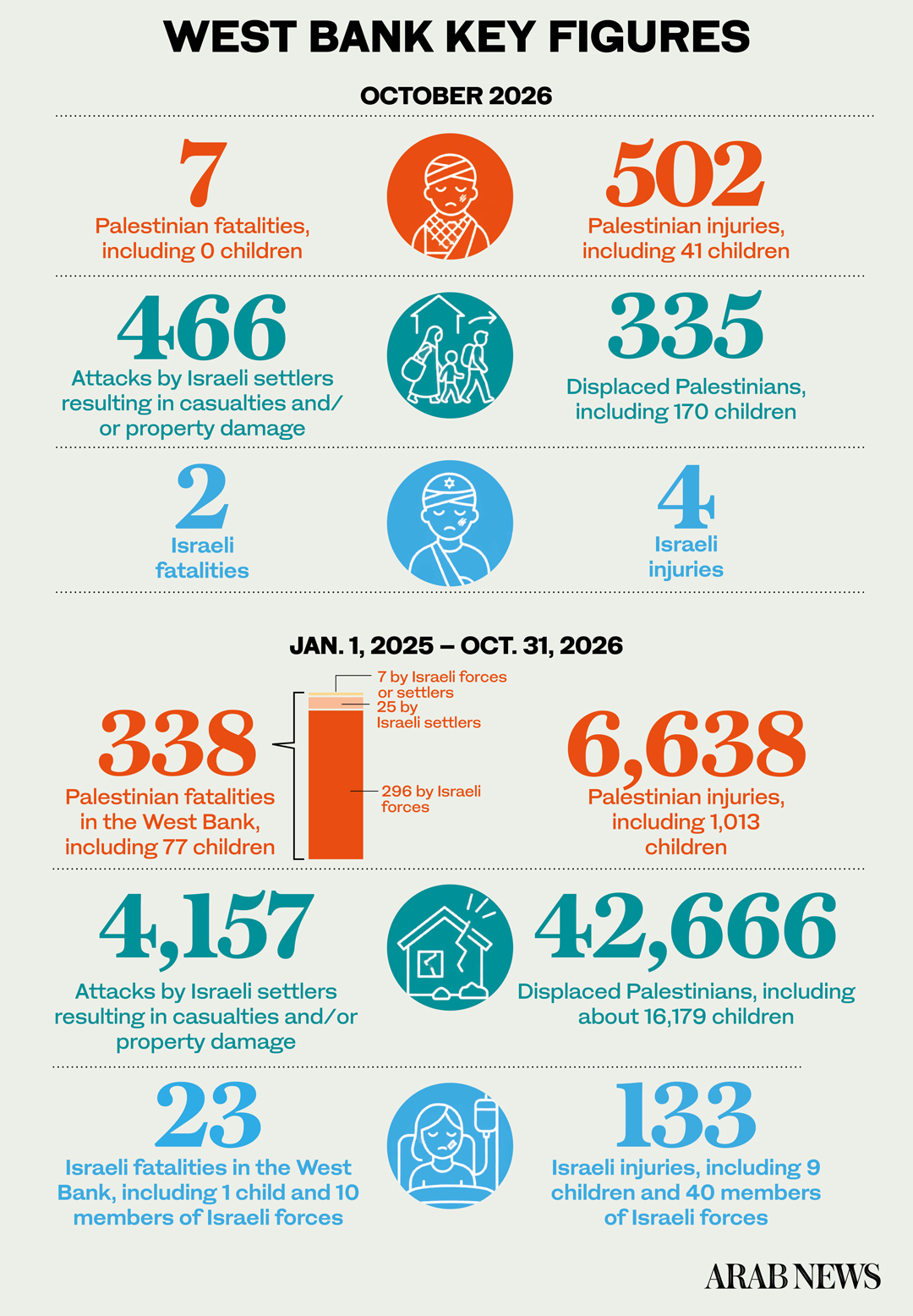
On Nov. 24, The Jerusalem Post reported that, according to previously undisclosed internal Israeli military data, “nationalist crime” by settlers in the West Bank had increased by approximately 42 percent in 2026 so far compared with the whole of 2025, “while politicians watch from the sidelines.”
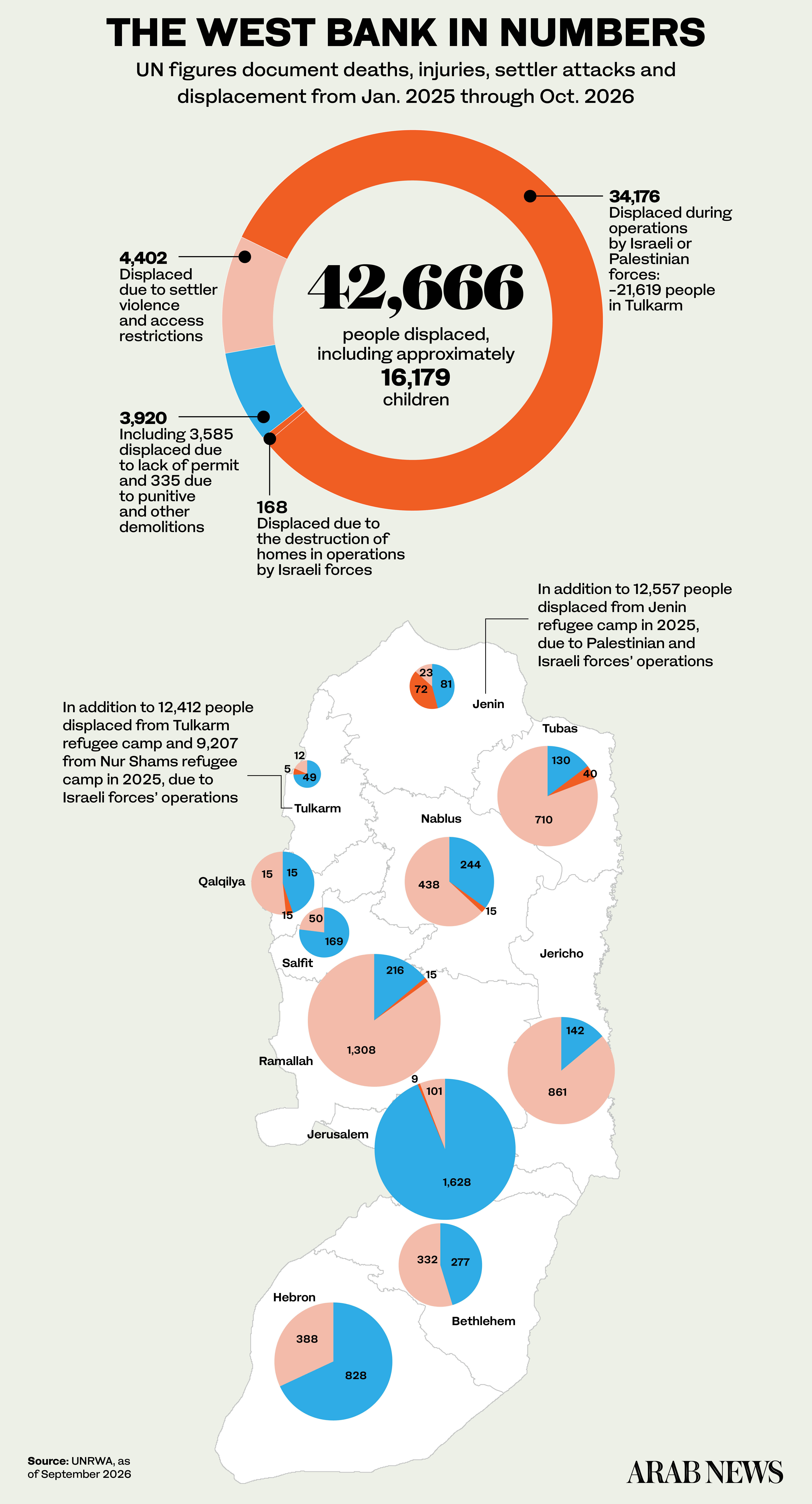
The increase in violence against Palestinians is also reflected in figures released on Nov. 20 by the UN Office for the Coordination of Humanitarian Affairs, which said the number of attacks on Palestinian olive farms this year “exceeds that recorded in any previous olive harvest season.”
More than 400 Israeli settler attacks linked to the Palestinian olive harvest had resulted in casualties or property damage, including damage to more than 4,000 trees and saplings.
Settler violence, OCHA added, “has extended to Areas A and B, where Palestinians faced fewer such attacks in previous years,” while “solidarity activists, journalists and diplomats have also been attacked, and over 25,000 kilograms of produce have been vandalized or stolen.”
The “Elimination Project,” run by B’Tselem, the Israeli Information Center for Human Rights in the Occupied Territories, documents what the organization describes as “Israel’s systematic dismantling of Palestinian collective life in the West Bank … as part of a comprehensive mechanism of elimination that works to dismantle the conditions for continued Palestinian existence in the West Bank, while deepening Jewish control and supremacy in an irreversible manner.”
A series of charts compiled by B’Tselem documents increases in Palestinian deaths, settler violence, the establishment of outposts, home demolitions, the displacement of communities and the number of “movement obstacles” in the West Bank — including checkpoints, permanent gates and earth mounds.
“What we are witnessing on the ground is an escalation in settler attacks across the West Bank, backed by the Israeli military and the state, alongside widespread demolitions of Palestinian homes by Israeli authorities throughout the West Bank,” Yair Dvir, spokesperson for B’Tselem, told Arab News.
“The military operation in Al-Amari refugee camp should also be understood in the broader context of Israeli policy aimed at dismantling Palestinian collective life in the West Bank and deepening Israeli control and Jewish-Israeli presence throughout the territory.”
Israel, said Bregman, “is actively implementing ethnic cleansing in the West Bank and is pursuing the annexation of this land.
“It is naive to think that only a small group of young individuals, No’ar HaGva’ot, or Hilltop Youth, as these thugs are known, are responsible for the horrific events we witness in the West Bank. In reality, the military, backed by the government, plays a significant role in the ethnic cleansing.
“The civilized world must impose apartheid-style sanctions on Israel to stop these war crimes. It is beyond belief that we see horrific attacks on Palestinians, including such ‘military operations’ as in the Al-Amari refugee camp, while the world remains silent.”