- Report by Medecins Sans Frontieres draws on observations by teams supporting emergency and trauma care at hospitals in Tyre and Nabatiyeh between March and June
- It describes a June 1 strike that injured 127 people, including 39 healthcare workers, the most medical staff hurt by a single attack in the period covered by the report
LONDON: Israeli attacks in southern Lebanon during an escalation in fighting this year killed and maimed civilians, damaged medical facilities and disrupted emergency care, according to a newly published report by the humanitarian charity, Medecins Sans Frontieres.
Titled “No One Is Spared,” it drew on observations by the organization’s teams who were supporting emergency and trauma care at Jabal Amel Hospital in Tyre and Najdeh Al-Shaabiyeh Hospital in Nabatiyeh between March and June.
The charity said its workers witnessed the toll on children, the elderly and entire families as hospitals struggled to cope with waves of casualties.
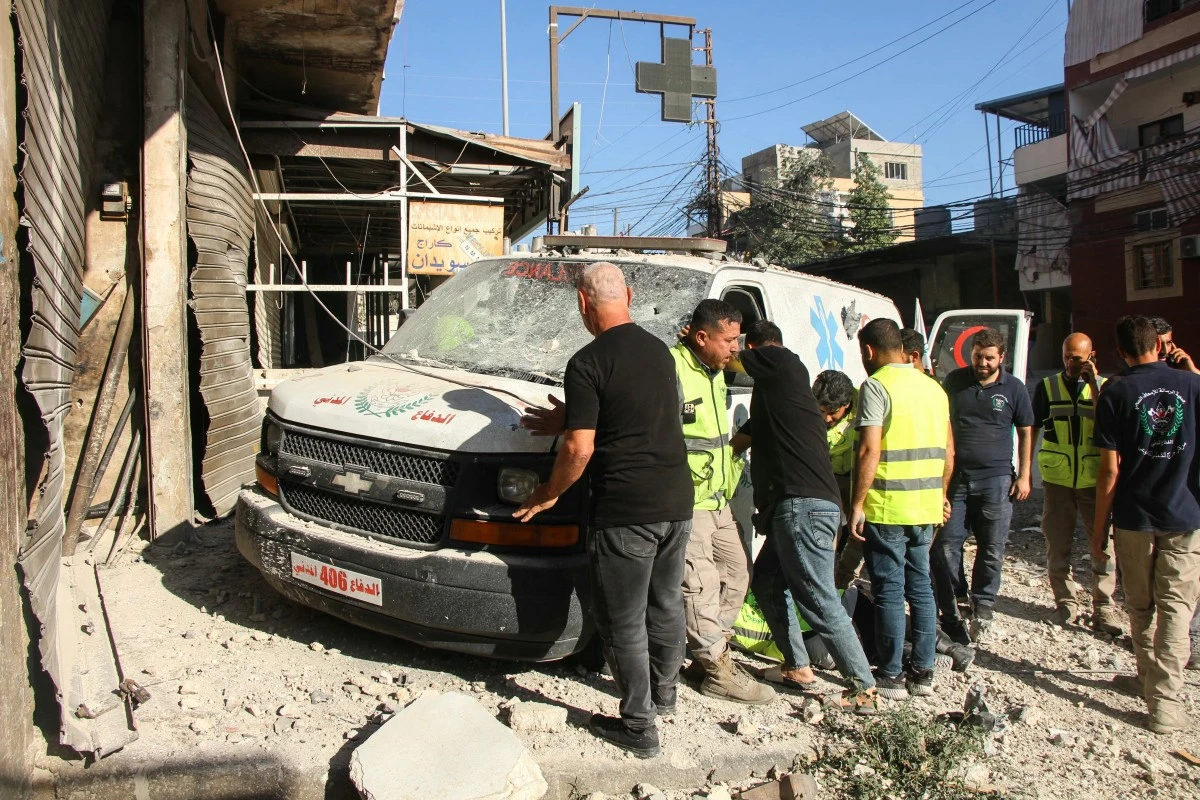
It also documented strikes that hit or landed dangerously close to hospitals, ambulances or rescue teams. A June 1 strike near Jabal Amel Hospital injured 127 people, including 39 health workers. This was the highest number of medical staff wounded in a single attack during the escalation, the report said.
Medecins Sans Frontieres teams also observed paramedics and other health workers being brought to hospitals wounded or dead. Some first responders were reportedly hit while attempting to rescue survivors or recover bodies after prior attacks, the organization said.
“Irreplaceable people whose knowledge and courage saved lives were killed while providing care where it’s needed most,” said Guilherme Botelho, the charity’s head of mission in Lebanon.
“Their deaths are not an unavoidable tragedy but the direct, human cost of attacks on healthcare.”
Inside emergency rooms and operating rooms, medical teams treated severe types of blast injuries, including damage to internal organs, brain injuries, shattered bones, burns and penetrating wounds. Patients also suffered crush injuries and smoke inhalation.
“Our teams witnessed people devastated by the full spectrum of blast trauma,” said Dr. Luna Hammad, the organization’s medical coordinator in Lebanon.
“Patients arrived with deep internal damage, shattered bones, and dozens of metallic fragments embedded throughout their bodies. Such injuries overwhelm both the human body and the emergency teams fighting to save lives.”
Lebanese Civil Defense teams have reported encountering three types of drone-fired munitions, including standard explosives, munitions fitted with blades, and others packed with small metal cubes.
Medecins Sans Frontieres said its staff had treated wounds consistent with all three, most often injuries caused by high-velocity metal fragments penetrating several parts of the body.
For survivors, the medical consequences extended far beyond the immediate emergency treatment. Many required repeated operations and prolonged intensive care, and would need further surgery, rehabilitation, prosthetic devices and continuing medical follow-up, the organization said.
Access to the required care remained difficult, as the escalation placed strain on a health system already short of specialized staff and medical supplies, forcing hospitals to reduce or suspend nonemergency services, and making transfers to specialist facilities more difficult.
Despite the danger to rescuers and hospital staff, they continued to work, but rescue teams repeatedly had to delay or limit responses until they could reach attack sites more safely, the charity said.
Those delays left crews with less time to stabilize patients, complicated transport by ambulance, and prolonged the time people spent trapped beneath rubble. Ambulances sometimes had to carry several patients at once, while hospitals faced sudden surges in admissions with limited staff, supplies and options for the transfer of patients elsewhere. The demands of emergency treatment also diverted resources from routine care.
Medecins Sans Frontieres called on Israel to protect civilians, medical workers, ambulances and emergency responders, including people who remained in or returned to conflict-affected areas.
It urged all parties to uphold their obligations under international humanitarian law, and called on states with influence over them to use diplomatic and political pressure to secure compliance.