- The Law of Protection from Abuse allows victims to receive shelter and assistance, with provisions for medical, psychological, and social support for those affected by violence
- Psychological abuse is noted as the most common form of violence against women in Saudi Arabia, affecting nearly half of women, followed by neglect and physical abuse
RIYADH: A single call to 1919 can set off a chain of protections for a woman abused at home in Saudi Arabia: an assessment of the danger she faces, a safe place to stay with medical, psychological and social support, and a case against her abuser that can end in prison.
That is what the Law of Protection from Abuse promises. Globally, gender-based violence affects one in three women and girls, an estimated 840 million, and most survivors of physical or sexual violence never seek help, according to UN Women.
This year’s International Day for the Elimination of Violence Against Women, on Nov. 25, carries UN Women’s theme, “UNiTE to End Violence Against Women and Girls: Ensure justice, protect survivors, end impunity.” On this day, experts explain why women may stay silent, how to recognize abuse, and how the law protects those who come forward.
“Protecting women from domestic violence in Saudi Arabia does not stop at receiving a report or halting the assault,” Rabab Ahmed Al-Muabbi, a lawyer and legal consultant who holds a doctorate in law from Umm Al-Qura University, told Arab News.
Breaking the silence
Muna Al-Theyabi, a psychologist at the Feeling Center for Family Counseling and Behavioral Therapy, told Arab News she sees women and children of all ages and backgrounds seeking to recover from abuse at home.
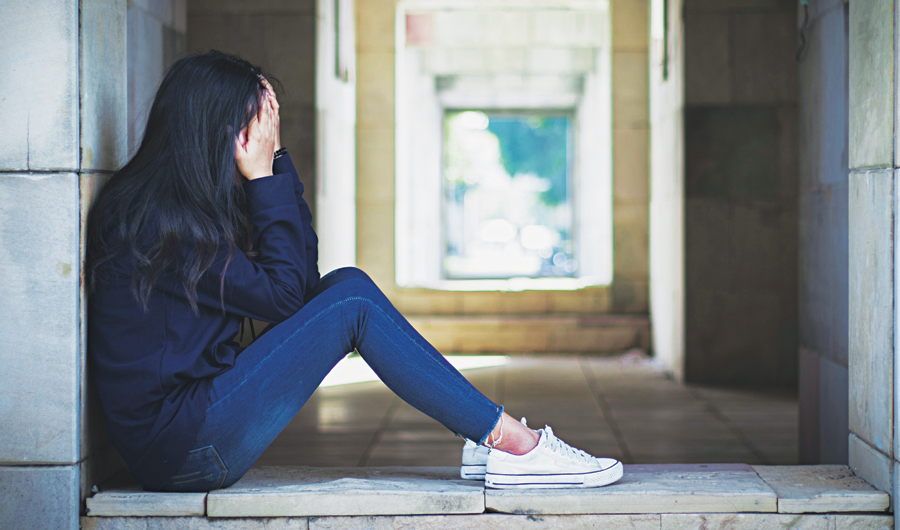
She said women are held back by fear that the violence will get worse, a sense that it has become normal, dread of what people will say, worry about their children, having no relatives to count on, relying on the abuser for money, or not knowing where to turn.
“If there is suspicion, it is advisable for family and friends to act calmly and with awareness, without intruding or making direct accusations, while focusing on strengthening daily bonds and showing continuous care,” she said.
That way, she added, a woman feels less lonely and less watched, and finds it easier to seek support or see a specialist without fearing how others will react.
Knowing the signs
Abuse is not only physical. Al-Theyabi said it can also be psychological, sexual, or financial, or take the form of neglect. It can be something said, something done or something left undone.
“It usually begins with verbal and non-verbal psychological violence, then escalates to physical violence, and sometimes to sexual violence,” she said.
In her practice, psychological abuse is the most widespread and the most harmful, followed by neglect, then physical and financial abuse. She cited a national survey by the National Center for Public Opinion Polls and the National Family Safety Program, which found psychological violence to be the most widespread form of violence against women in Saudi society, at 46.5 percent, followed by neglect at 27 percent.
Women in abusive homes often lose faith in themselves, live in fear, struggle to focus or decide, withdraw, or lash out defensively, she said. “In many clinical cases, these indicators develop into clear symptoms of psychological disorders, most notably depression, anxiety disorders and post-traumatic stress disorder.
“Children who grow up in an environment dominated by violence are deeply affected,” she said.
Many live with constant anxiety and struggle to form secure bonds, harming their relationships later in life, she explained. Having learned violence at home, they are also more likely to use it.
Making the call
A call to the Domestic Violence Reporting Center 1919, run by the Ministry of Human Resources and Social Development, is logged and passed to the responsible protection center, and the risk to the woman is assessed.
“In dangerous cases, protection must not be delayed while waiting for the abuse to escalate,” Al-Muabbi said.
Under Article 8, the ministry must match its response to the risk and work with security services to keep her safe, moving her or the abuser if needed until the threat is over.
A right to shelter
“As for shelter, it is an important legal guarantee, not merely social assistance,” the lawyer said.
Under the law’s Executive Regulation, any woman, whatever her age, and any child under 18 can be sheltered if they have suffered abuse or neglect and no relative or foster family can take them in. The first stay is three days, which officials can extend if the case requires it. The regulation also calls for an assessment of her social and mental state, help rebuilding her life, and joined-up health, security, social and psychological support.
A later amendment to the law lets a victim, or someone acting for her, return home to retrieve her ID papers and other possessions.
Holding abusers to account
“On accountability, domestic violence must not be viewed as a family dispute to be resolved through reconciliation alone,” Al-Muabbi said. Abuse that rises to the level of a crime is referred to the authorities for legal action.
Under the amended Article 13, abusers can be jailed for one month to a year, fined from SR5,000 ($1,300) to SR50,000, or both. Certain cases set out in the law carry up to five years and SR300,000, and anyone who reoffends faces double the punishment.
Even after the verdict, the ministry can keep monitoring a case for six months or more.
Applied properly, Al-Muabbi said, the Kingdom’s laws give women a genuine chance to rebuild their lives in safety and dignity and make confronting abuse a firm duty of both law and society.
Change on the ground
“A clear improvement can be felt in how the security authorities handle these cases,” Al-Theyabi said.
Officers now respond faster, keep cases private and show more sensitivity, she said. That makes the process less frightening, lowers the risk of women being traumatized again, and helps them see it through.
The road to recovery
When a woman first reaches out, the psychologist said, she most needs relief from the psychological symptoms the abuse has left. Healing has no fixed timeline; it depends on the kind, severity and length of the abuse, and on the support around her.
Her message to women suffering in silence: “Always be sure that you are not alone. We are all with you: family and friends, specialists, and a state and a legal system that protects your rights.
“I want you to know that silence escalates violence and is not a solution, and that facing reality by seeking help and protection is the step from which your safety begins.”