- Officials assess whether the changing political landscape could revive direct negotiations with Israel
- Prime Minister Nawaf Salam says the state alone must control weapons and decisions on war and peace
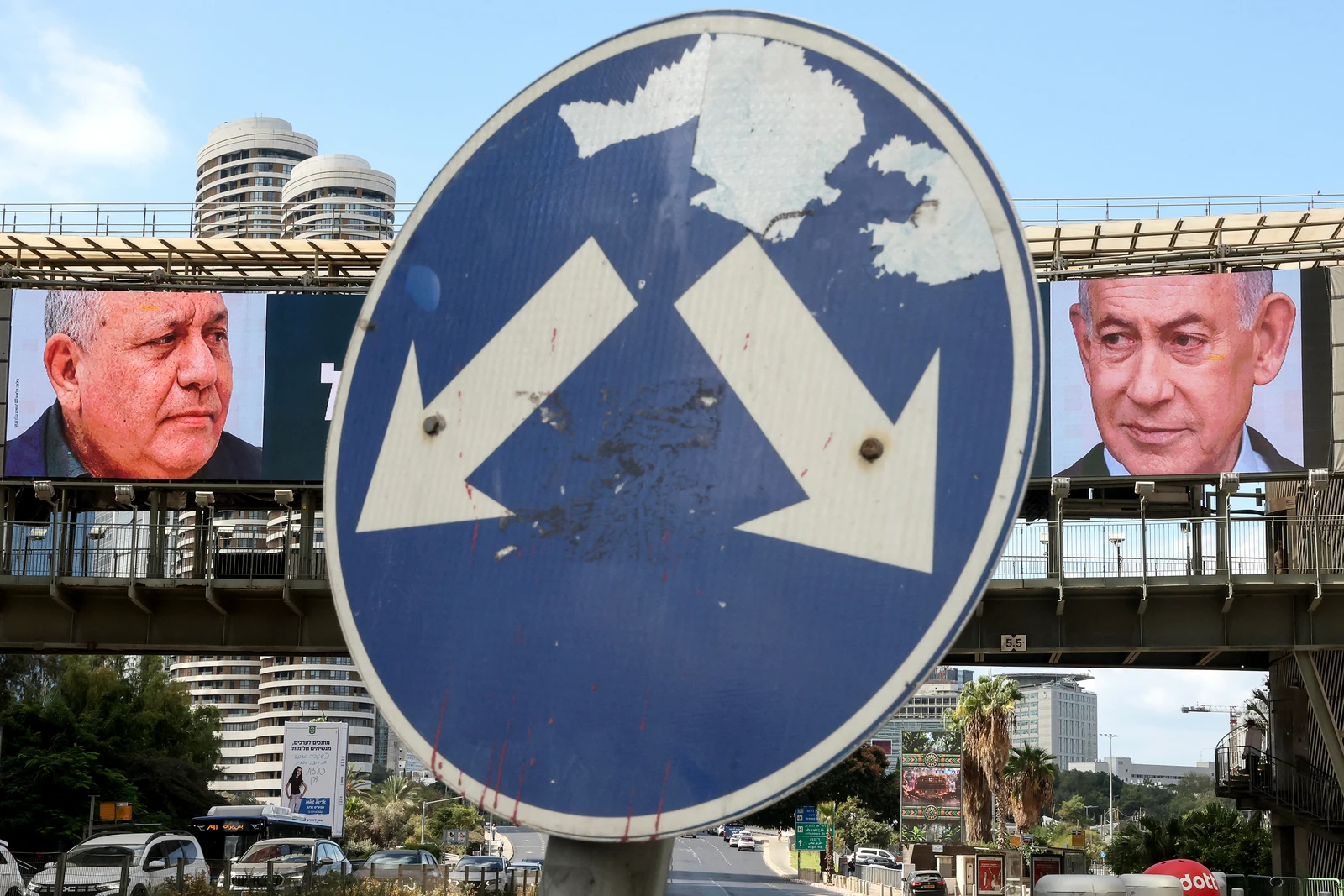
BEIRUT: Lebanese officials are waiting to see whether the political changes produced by elections in the US and Israel will improve the prospects of resuming direct negotiations between Lebanon and Israel.
A planned eighth round of talks was suspended amid disagreements over the withdrawal of Israeli forces from southern Lebanon, implementation of the US-brokered framework agreement reached in June and the mechanism that would verify compliance with its provisions.
Although Israel’s post-election political picture remains unresolved, the risk of a wider regional war appears to have receded as diplomatic efforts gain momentum.
However, a source close to Hezbollah told Arab News that the results of the US midterm elections were likely to “reduce the chances of a new round of direct negotiations in the near future.”
The source said Hezbollah remained opposed to the direct talks and expected a decision on their future to be delayed until next year.
International pressure on the Lebanese state to meet its commitments regarding Hezbollah’s disarmament was continuing, the source added.
A joint statement issued last week by the embassies of the US, UK, Australia, Canada and Japan took on added significance against the backdrop of a judicial investigation into a shipment of explosives linked to Hezbollah.
The five embassies expressed diplomatic support for the Lebanese government and called on political parties and members of parliament to make an unequivocal public commitment to the positions of President Joseph Aoun and Prime Minister Nawaf Salam.
The statement reaffirmed support for Lebanese sovereignty, the state’s exclusive control over weapons and its sole authority to decide matters of war and peace. The position leaves no room for Hezbollah to justify becoming involved in a potential regional confrontation without the state’s approval.
A Lebanese official described the current period as “a transitional phase” while Beirut waited for the formation and policy direction of Israel’s next government.
Lebanese authorities were also monitoring the course of US-Iranian negotiations and whether Hezbollah might intervene in support of Iran if another war broke out, the official told Arab News.
“The Lebanese army is not authorized to enter people’s homes and search them for weapons,” the source said. “It carries out its duties when it receives reports concerning weapons.”
Salam told a ministerial meeting on Monday that “the priority at this stage is to protect Lebanon, preserve its security and stability, and prevent it from being dragged into another war.”
In remarks on Sunday, he said protecting Lebanon required all parties to accept that decisions on war and peace, as well as control of weapons, must remain exclusively in the hands of the state.
His government would continue to pursue that policy regardless of external developments, he added.
Salam renewed his warning against foreign affiliations that could draw Lebanon back into “futile wars,” saying they would give Israel further justification to expand its occupation of the south and continue its destruction, killing and displacement.
Lebanese army commander Gen. Rodolphe Haykal, meanwhile, called on senior officers and operational commanders to maintain readiness for all scenarios without relying on changes in the international or regional environment.
“There is no policy for the army other than the national policy,” Haykal said during a meeting with commanders over the weekend.
He said the military’s principal objectives were to preserve national unity, stability and civil peace, while protecting Lebanon’s sovereignty.
The army was working to implement the decisions of the country’s political authorities and extend state control across all Lebanese territory, he added.
Haykal said the withdrawal of Israeli forces from occupied Lebanese territory was essential, describing their continued presence as “the fundamental problem and the primary threat facing our country.”
He also defended the role of the UN Interim Force in Lebanon, whose mandate is due to expire at the end of the year under a Security Council decision, ahead of a phased withdrawal in 2027.
Haykal described UNIFIL as “the historical memory of the conflict between Lebanon and the Israeli occupation.”
The force monitors the implementation of international resolutions, documents Israeli violations and attacks, and serves as a witness to the conduct of the occupation, he said.
This demonstrated the need for UNIFIL to remain in southern Lebanon and continue its mission, he added.
Hezbollah MP Ali Fayyad, however, said political changes resulting from the US and Israeli elections would not alter the group’s position or calculations.
This included what he described as the “resistance’s right” to defend Lebanon and its people and to seek the liberation of occupied territory.
Fayyad accused the Lebanese authorities of failing to protect the country’s population or secure the release of occupied land.
“The outcome of the confrontation has not yet been decided,” he said, adding that restoring a balance with Israel required resilience and reliance on Iran’s regional role, which he claimed had proved effective.
Meanwhile, Israeli attacks continued in southern Lebanon on Monday.
An Israeli military drone dropped a stun grenade near farmers harvesting olives on the outskirts of Deir Mimas. No injuries were reported.
The incident followed demolitions and continued shelling targeting villages within or bordering the Israeli-controlled “yellow zone.”
Farmers seeking to reach their land in affected areas must obtain permission through the ceasefire monitoring mechanism. The committee, in turn, seeks Israeli approval before allowing them to enter their fields.