SANAA: Yemen faced a dangerous power vacuum Friday after its president announced his resignation over a deadly standoff with Shiite militia controlling the capital and lawmakers called an emergency weekend session.
President Abdu Rabbo Mansour Hadi, a key US ally in the fight against Al-Qaeda, said he could no longer stay in office as the country was in “total deadlock.”
“I believe that I have not been able to achieve the goals for which I took up my duties,” he said late Thursday, adding that Yemen’s political leaders had failed “to lead the country to calmer waters.”
Prime Minister Khalid Bahah also tendered his resignation, saying he did want to be part of the collapse of the country.
The fall of Hadi’s Western-backed government would raise fears of complete chaos engulfing Yemen, on the key shipping route from the Suez Canal to the Gulf.
A senior State Department official said staffing at the US Embassy in the capital Sanaa, already thin after most of the diplomatic personnel were ordered to leave in September, would be further reduced.
Parliament is set to hold an extraordinary meeting to discuss Hadi’s resignation offer, which needs to be approved by lawmakers to take effect. Hadi adviser Sultan Al-Atwani told AFP that Parliament would meet on Sunday “at the earliest” because it is in recess and lawmakers need time to return.
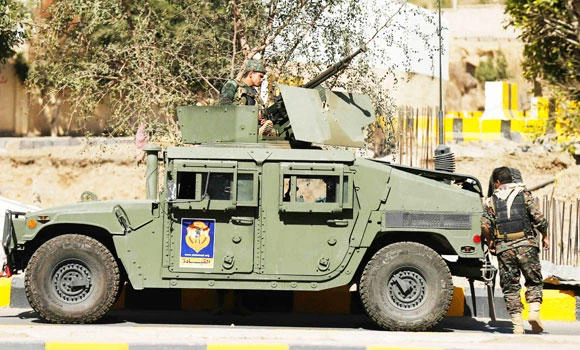
Witnesses and security forces said that Houthi militiamen had encircled the Parliament building overnight, having already seized the presidential palace earlier this week.
Gunmen have also surrounded the houses of top officials including Defense Minister Mahmud Al-Subaihi and head of intelligence Ali Al-Ahmedi, a security official said.
The Houthis, who hail from Yemen’s northern highlands and who took control of most of the capital in September, said the constitution stipulated that Hadi’s resignation should be approved by an absolute majority in Parliament.
“As this has not happened, the resignation remains pending,” the militia said in a statement.
UN Secretary General Ban Ki-moon was “seriously concerned” by the developments and called on all sides “to exercise maximum restraint and maintain peace and stability,” his spokesman said in a statement.
In Washington, State Department spokeswoman Jen Psaki said the United States was assessing the fast-moving events.
“We continue to support a peaceful transition. We’ve urged all parties and continue to urge all parties to abide by ... the peace and national partnership agreement,” Psaki said.
Oxfam warned that 16 million Yemenis — more than half the population — were in need of aid.
Power vacuum in Yemen