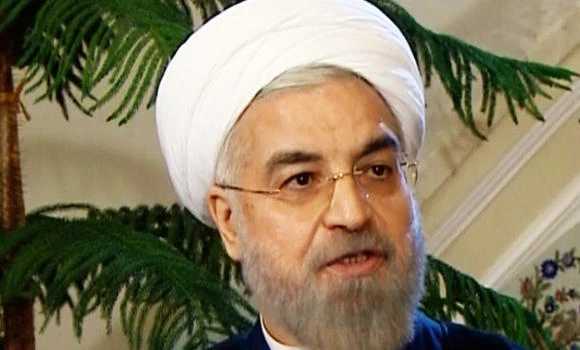
TEHRAN: Iran’s President Hassan Rouhani faced thinly veiled pressure Tuesday over a missed nuclear deal deadline and an unexpected seven-month extension of talks, with hard-liners denouncing the diplomatic deadlock.
The failure to clinch a final agreement with world powers dominated newspaper front pages, with most editorials viewing further dialogue as pointless because the talks have not yet yielded results.
The extension was debated in parliament where the judgment of Rouhani, who told the nation late Monday a deal would still be done despite the setback, was also scrutinized.
Lawmakers have consistently said the president and his negotiators have already made too many concessions over Iran’s disputed nuclear program, a sentiment aired again in a tense parliamentary session.
Hamid Rasaie, a diehard conservative MP, said that while a final agreement would be a victory for Iran, Rouhani must resist pressure for a deal whose costs are too high.
“No critic who is caring and supportive of the Islamic republic would be happy about your defeat,” he said of the possibility of no deal next year.
“Our criticism relates to your optimism toward the West,” he added.
Rouhani has become a lightning rod for opponents who routinely doubt the merit of the nuclear talks, but the decision on any final agreement rests with supreme leader Ayatollah Ali Khamenei. He supports Rouhani’s policy, but has said several times the talks have achieved nothing.
On Tuesday, Khamenei said Iran would not sink “to its knees” on the nuclear issue, despite the efforts of the arrogant — purportedly Western governments — to make it do so.
Conservative media also attacked the extension. “Nothing” said the front page of hard-line broadsheet Vatan-e-Emrooz, labeling the extra time a ruse to “cover up that negotiations in fact failed because of America’s excessive demands.”
However, Shargh, a leading reformist daily, said dialogue with the West, notably the United States, signaled “major change” for Iran and a “victory of realism, rationality and pragmatism.”
Saeed Leylaz, one of Iran’s top economists, said the $700 million per month Iran will receive in sanctions relief was a good result, equivalent to a daily increase of 300,000 barrels of oil.
“Increasing exports by that amount — about 30 percent on present levels — would be very difficult under any other circumstances,” he said.
On Rouhani, he said: “He will continue to face pressure but he is the only one who can reach the nuclear agreement that most people want.”
Rouhani squeezed over nuclear talks extension