‘Qatar Papers’ book reveals Doha’s lavish funding for Muslim Brotherhood in Europe

‘Qatar Papers’ book reveals Doha’s lavish funding for Muslim Brotherhood in Europe
The book publishes evidence of cheque and money transfers from Qatar that have been used to underwrite Brotherhood-linked projects around Europe. (Supplied)
Updated 18 April 2019

‘Qatar Papers’ book reveals Doha’s lavish funding for Muslim Brotherhood in Europe

‘Qatar Papers’ book reveals Doha’s lavish funding for Muslim Brotherhood in Europe
  • The book’s introduction says it unveils 140 documents “for the first time” that detail Qatar's funding of Brotherhood-linked figures, entities
  • It documents payments of €72 million ($80.8 million) to Brotherhood groups that are active in seven European countries

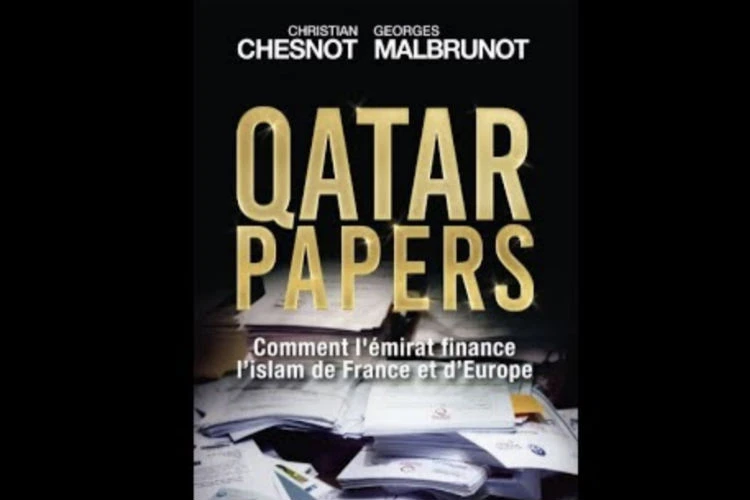
LONDON: A book recently published by two French journalists claims to reveal the details of lavish payments made by Qatar to Muslim Brotherhood organizations across Europe.

The 295-page book titled “Qatar Papers - How the State Finances Islam in France and Europe” is reportedly based on official documents and testimonies that shed light on Doha’s extensive funding to promote the Brotherhood’s ideology on the continent. 

Written by French investigative reporters Georges Malbrunot and Christian Chesnot, the book publishes evidence of cheque and money transfers from Qatar that have been used to underwrite Brotherhood-linked projects around Europe.

The book’s introduction says it unveils 140 documents “for the first time” that detail Qatar's funding of dozens of mosques and Islamic societies to promote the influence of the Brotherhood in European countries like France and Switzerland — documenting payments of €72 million ($80.8 million) to Brotherhood groups that are active in seven European countries. 

In France, the focus was on the northern city of Lille and the south-west city of Bordeaux. The documents reveal that a state-run Qatar charity funded several Islamic centers and schools in those regions.

It also shed light on the case of controversial Islamist thinker Tariq Ramadan, mentioning Qatari funds used for legal fees to fight rape allegations against him. The well-known Brotherhood figure, who spent eight months in jail over rape allegations, is cited in the book to have received €35,000 a month from the Qatar Foundation. 

Just before his arrest early last year, bank documents show that Ramadan withdrew €590,000 from Qatari bank accounts.

The book also reveals that institutions such as Mucivi and Le Musée des Civilisations de l’Islam — a museum in Geneva that displays Brotherhood propaganda — were financed by Qatar. It said the body has received CHF1.4 million ($1.5 million) in funding from Qatar. 

The book also cites documents found in the house of Youssef Nada, a former prominent Brotherhood leader, revealing his intention to set out a strategy for using mayors and other local bodies as tools of influence to promote the group’s ideology. 

The book also highlighted French intelligence warnings about Qatari support for the L'Union des Organisations Islamiques de France, an umbrella body in France.
Oman relaxes COVID-19 measure for tourists

Updated 11 December 2020

Oman relaxes COVID-19 measure for tourists

Oman relaxes COVID-19 measure for tourists
  • Tourists must register for a coronavirus polymerase test which they are required to take upon arrival

DUBAI: Tourists traveling to Oman are now exempted from self-isolation and coronavirus testing before arriving to the country, local daily Times of Oman reported.
“The ministry would like to inform you that, based on the instructions received from the Ministry of Health, it has become possible to exempt tourists from quarantine and polymerase testing (PCR) before coming to the Sultanate, provided they adhere to the procedures that include a compulsory international health insurance that covers the costs of treatment of COVID-19 disease during their residency in the Sultanate,” the Ministry of Heritage and Tourism said in a statement.
However, before departing for Oman, tourists must register for a coronavirus polymerase test which they are required to take upon arrival to the Sultanate’s airports.
The registration must be submitted on emushrif.om.covid19, and the Tarassud Plus program of the Ministry of Health must be downloaded, the statement said.
“As for those coming through the land ports, they are required to present a medical certificate of a negative PCR result that is reported for a period not exceeding 72 hours before entering the Sultanate due to the lack of the required medical examination at the land ports at the current period,” it added.
Tourists’ residency period in the country must not exceed two weeks and they must follow the rules of their place of residence and are not allowed to share rooms or mix until their test results come out, the report said.
The statement also said: "Tourist groups were also excluded from the requirement of the decision to gather in tourist sites for no more than 5 people from the same family while adhering to the health condition of COVID-19.”
Meanwhile, Oman will exempt nationals of 103 counties from needing an entry visa for a stay of up to 10 days, police said on Wednesday, in a move to support tourism and shore up its struggling economy.
Visitors must have a confirmed hotel reservation, health insurance and a return ticket, Royal Oman Police said on its Twitter account.