What happened:
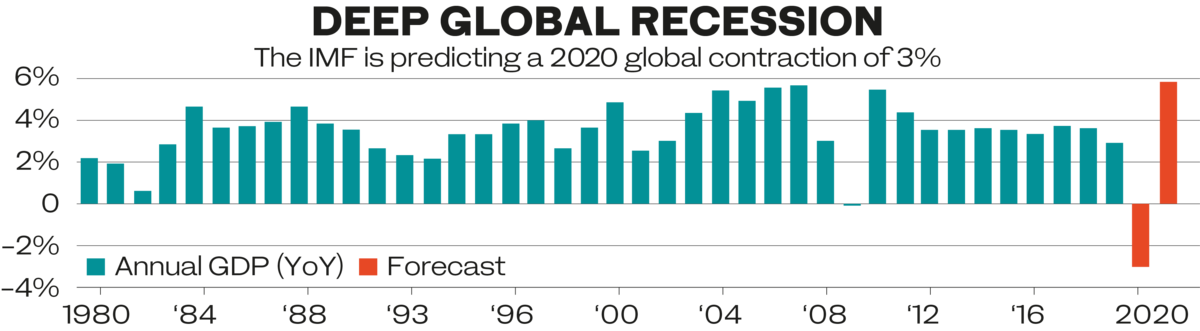
The International Monetary Fund (IMF) published the World Economic Outlook for the global economy. The institution forecasts a global recession, which it coined the Great Lockdown Recession. It is expected to be the biggest economic downturn since the Great Depression of the 1930s.
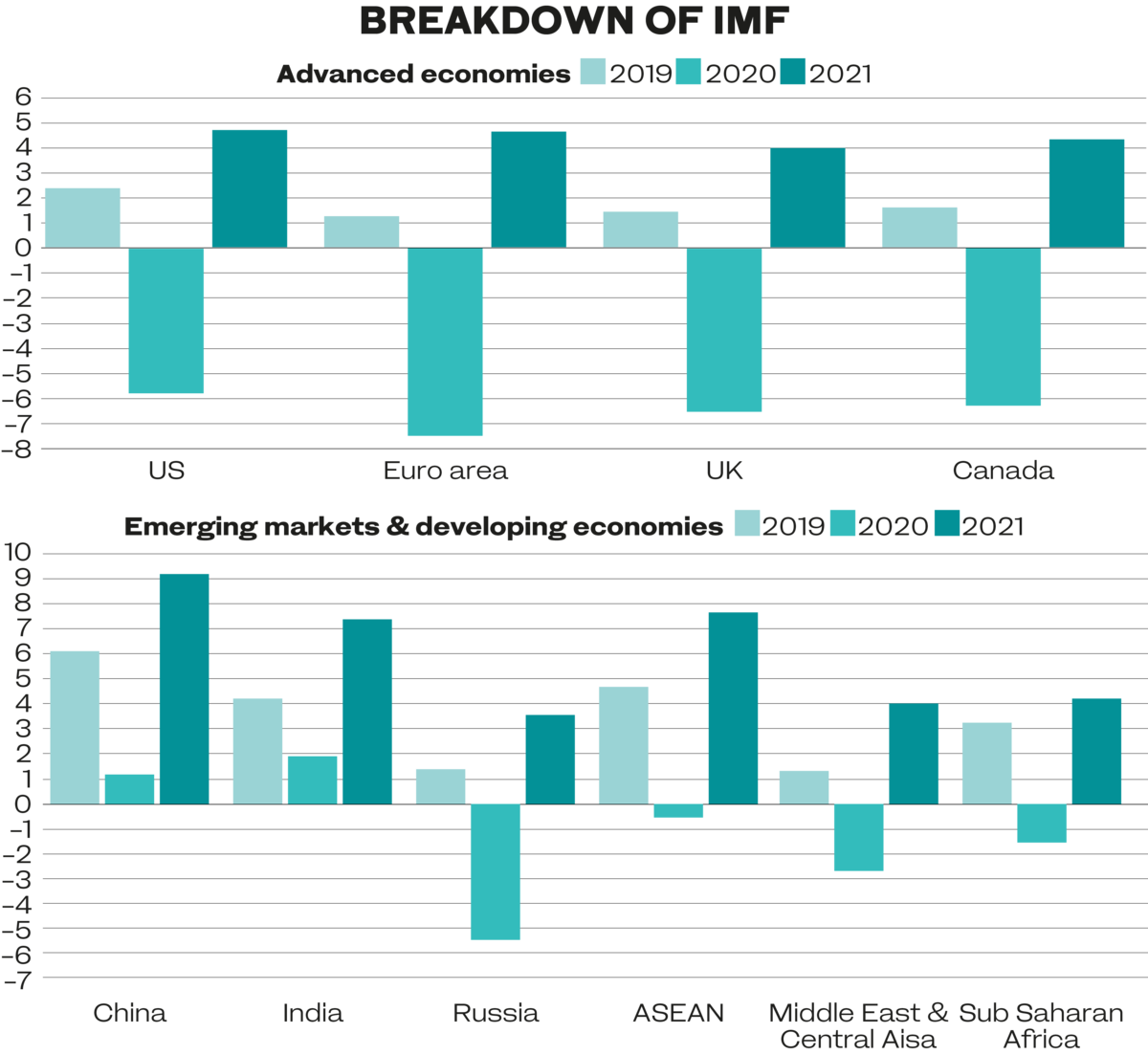
The global economy is expected to shrink by 3 percent this year, which constitutes a downgrade of more than 6 percent. The IMF’s January forecasts stood at +3.3 percent. Advanced economies are expected to contract by 6.1 percent and emerging markets and developing economies by 1 percent. China is expected to grow by 1 percent, which is not as positive as it sounds. China needs to grow by about 5 percent just to stand still. The country requires growth to maintain recent prosperity and is still in the process of lifting millions out of poverty.
The IMF will grant debt relief to the 25 poorest countries amongst its lenders, a move that was supported by a virtual meeting of G7 finance ministers and central bank governors and chaired by US Secretary of the Treasury Steven Mnuchin. The meeting also endorsed a plan to suspend payment for low-income countries to help cushion them against the economic consequences of the pandemic. It made the endorsement conditional on the G20 reaching a compromise on the plan.
The ministers supported a request by the G20 and the Institute for International Finance to ask private creditors to provide comparable treatment to poorer countries on a voluntary basis. They support greater firepower for the IMF while dealing with the fallout of the pandemic in emerging economies and developing countries, with a view to ensuring stability in the global financial system.
In the meantime, the Federal Reserve’s extending of swap lines to US allies has reduced pressures in the dollar funding market, which is also critical to financial stability.
Background:
The current economic forecasts by the IMF represent a loss of $9 trillion to the global economy, which is greater than the combined output of Japan and Germany. The pandemic has led to a simultaneous hit throughout the globe and has affected most sectors, which is unprecedented in timeline, dimension and scale.
IMF chief economist Gita Gopinath assumes the major hit to the economy will occur in the second quarter and will improve thereafter. She admits that it is difficult to forecast with a lack of precedents. If economies are slower to restart than forecasted or if there is a second wave of the outbreak with renewed lockdowns, economic contraction could be as high as -6 percent for 2020. Countries dependent on tourism, travel and entertainment or on natural resources will be particularly hard hit.
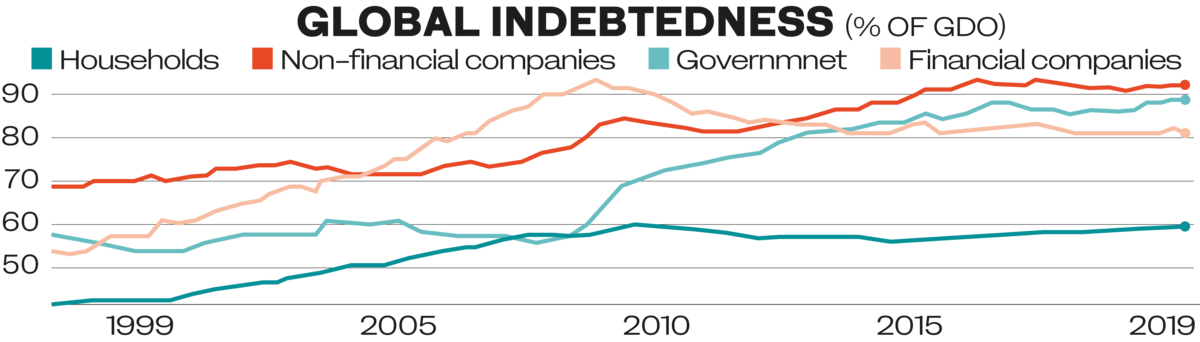
Gopinath urges countries to use monetary and fiscal measures at their disposal to support the recovery. She downplayed the risks posed by increased debt levels, saying that debt service and repayment was not a problem if interest rates remained low. This may be overly optimistic as global debt levels had already reached record levels for governments, corporations and households before the outbreak of the pandemic.
Veteran economist and chief economic adviser to Axa Mohamed El Erian feels that the IMF forecasts may be on the optimistic side in light of the ‘severity of the shutdown, an inherently messy restart, and consequent changes to the post-crisis landscape.’
Where we go from here:
We have not yet seen the full impact of the pandemic on emerging markets and developing economies, where the shock will be particularly big as they suffer from a reversal of capital flows. Some of them will be disproportionately affected by the commodity crisis because they depend on them for revenues.
It will be pivotal that the IMF and the World Bank have sufficient funds at their disposal to support countries whose healthcare systems are challenged at the best of times.
Emerging markets have become an important part of the global economy. Ensuring their ability to cope will therefore have an impact on global financial stability.
— Cornelia Meyer is a Ph.D.-level economist with 30 years of experience in investment banking and industry. She is chairperson and CEO of business consultancy Meyer Resources.
Twitter: @MeyerResources