- US considering moving key military assets from Turkey’s southern Incirlik air base to Souda Bay on the Greek island of Crete
- Greece-US relations are experiencing a historical high in stark contrast to the increasingly strained ties between Turkey and Greece
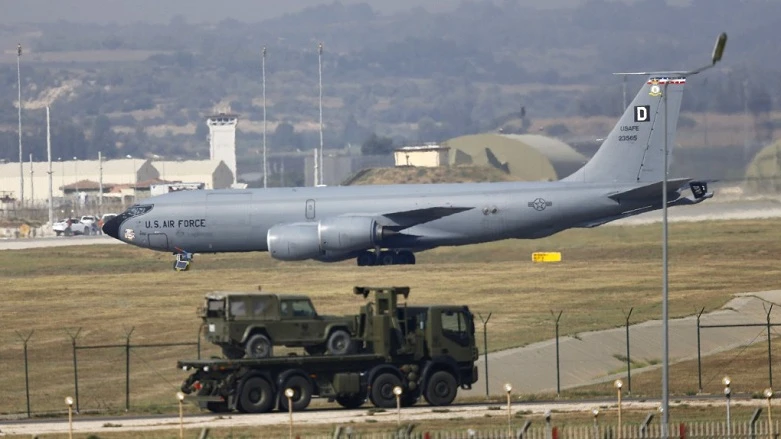
ISTANBUL: Washington is believed to have opened talks on relocating its key military assets from Turkey’s southern Incirlik air base to the Greek island of Crete in an apparent sign of its frustration with Ankara’s regional adventurism.
In the meantime, Greece-US relations are experiencing a historical high in stark contrast to the increasingly strained ties between Turkey and Greece.
Greek Foreign Minister Nikos Dendias met Secretary of State Mike Pompeo on Sunday, a day after the US envoy held talks with Greek Prime Minister Kyriakos Mitsotakis on Crete.
The timing of Pompeo’s visit to the region, the second in the past two weeks, is seen by some experts as a symbolic warning to Ankara that the US has alternative options regarding its defense assets.
The potential closure of Incirlik air base and the blockade of US access to the site have long been used by Ankara to blackmail US decision-makers during periods of bilateral crisis.
However, according to the UK newspaper The Times, it is now the US that is considering transferring its main assets, including its nuclear arsenal, from Incirlik to the Souda Bay base on Crete.
The US also recently lifted its three-decade arms embargo on Cyprus, allowing the sale of non-lethal defense equipment — another pillar for the US security partnership, with the island nation also aiming to restrict Russian naval access.
Turkey’s persistent anti-Western discourse, its insistence in keeping the Russian-made S-400 missile defense system despite warnings from the West, as well as US cooperation with Syrian Kurdish YPG militia — which Ankara views as a terror group — have been behind the recent US-Turkey dispute.
The alternative to Incirlik was recently suggested by US Sen. Ron Johnson, who chairs Senate foreign affairs subcommittee.
Johnson was quoted as saying the US presence in Turkey is under threat, which is one of the reasons Washington is “beefing up” its presence on Crete.
“I know there are many who ascribe considerable strategic value to Incirlik. The base has an important political function and is viewed as a political symbol of the US-Turkish relationship,” Aaron Stein, director of research at the Foreign Policy Research Institute, told Arab News.
“Before the war against Daesh, it was a backwater, without any assigned aircraft and with little to do. The main reason it remains open is that it is a storage facility for nuclear weapons,” he added.
Stein said the US has been looking at building up bases in Greece, including Souda Bay and Andravida.
“It is in the right place. Greece is open to a greater US presence, for now, and tensions with Ankara are considerable,” he said.
Incirlik air base, which is controlled by the Turkish army, was opened for air operations by the US-led Western coalition in June 2015 to launch strikes against Daesh in Syria.
In the past 30 years, the US military has had the right to use the Turkish base for NATO operations. About 2,500 US troops are housed at the base, which hosts a squadron of A-10 Warthog aircraft and dozens of nuclear weapons.
Last December, Turkish President Recep Tayyip Erdogan threatened to close down the Incirlik and Kurecik bases if Washington imposed sanctions over the purchase of the Russian air defense system.
Meanwhile, a sixth round of NATO-led technical military talks between Turkey and Greece to resolve the East Mediterranean conflict was held on Tuesday in Brussels, hours after Turkey carried out a naval exercise off Greek waters.
Max Hoffman, a Turkey analyst from the Washington-based Center for American Progress, believes the talks with Greece are part of a longer-term effort by the US to hedge its bets on bases and access, given the political risks in the relationship with Turkey, as well as Erdogan’s increasingly aggressive foreign policy approach.
“The US has also increased its options in Jordan and started to expand ties with Cyprus,” he told Arab News.
Hoffman said the US is signaling its concerns to Turkey should Erdogan continue down this confrontational path.
“It’s a reflection of how deep the concern is within the US government about Turkey’s trajectory, despite Erdogan’s direct line to Trump,” he added.