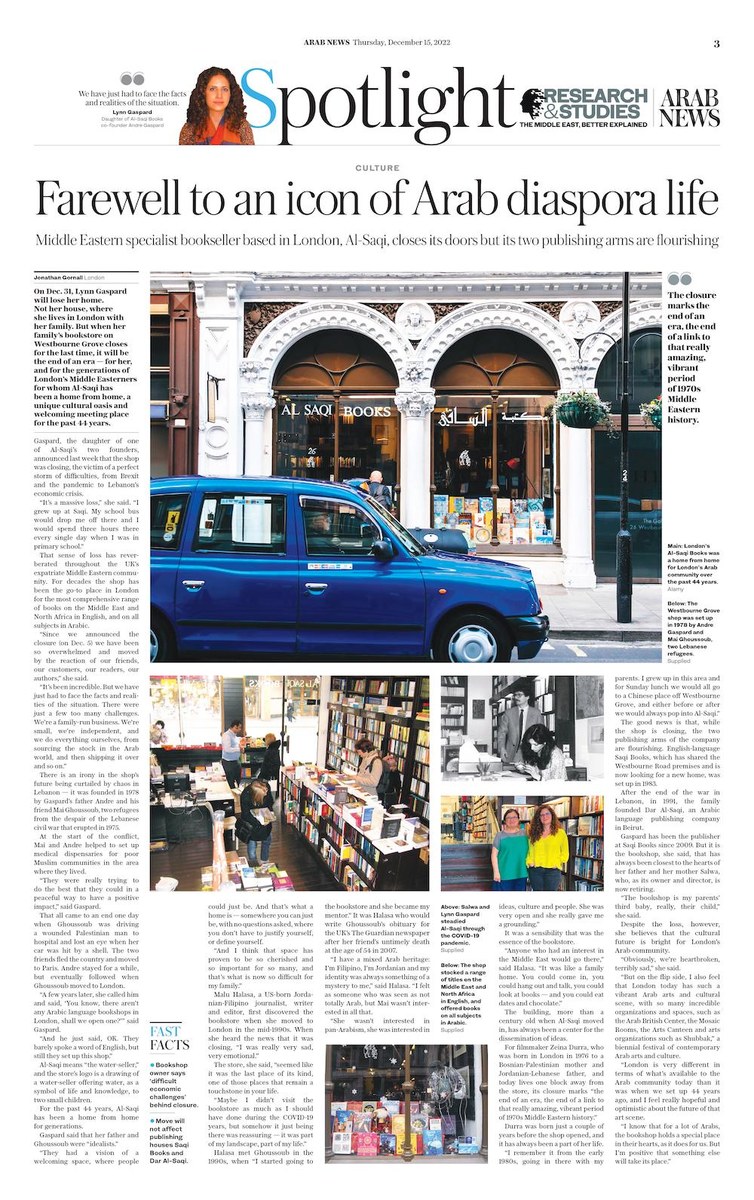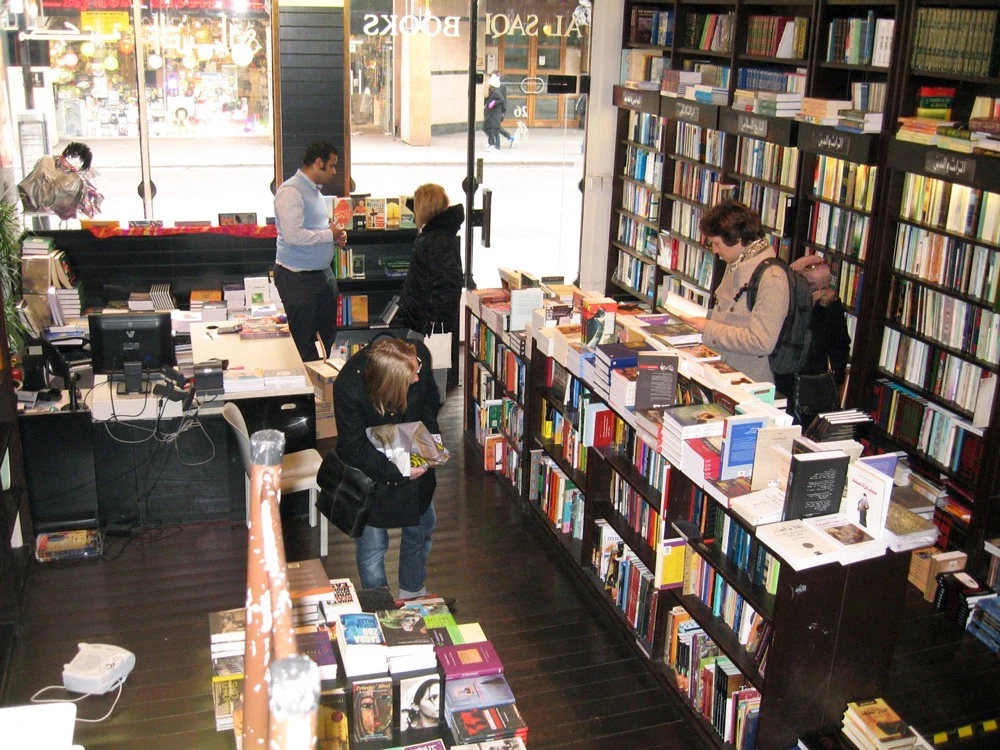
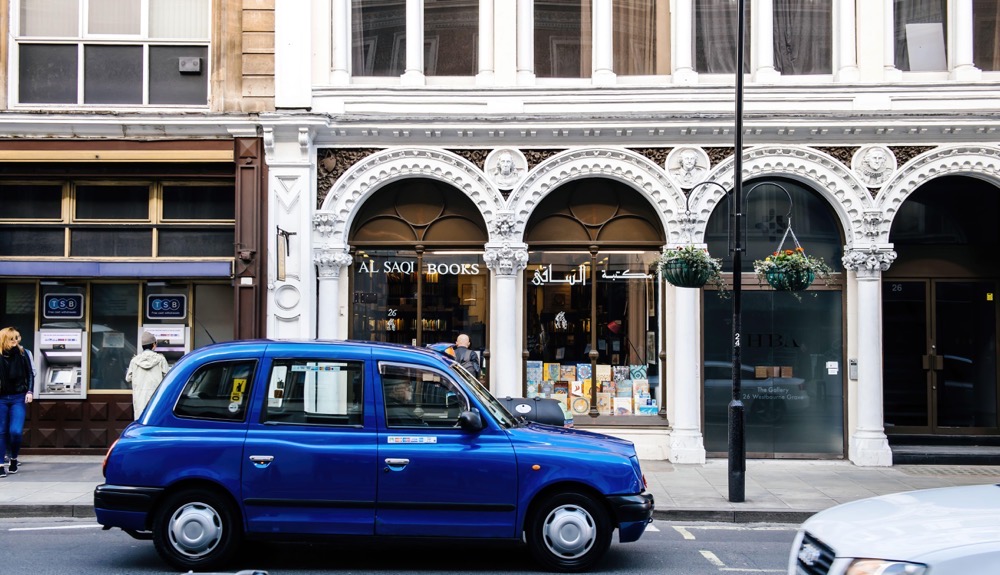
- Al-Saqi Books opened in London in 1978 to meet the demand for English and Arabic books about the Middle East
- After 44 years in business, owner Lynn Gaspard says “difficult economic challenges” have forced the store to close
LONDON: On Dec. 31, Lynn Gaspard will lose her home.
Not her house, where she lives in London with her family. But when her family’s bookstore on Westbourne Grove closes for the last time, it will be the end of an era — for her, and for the generations of London’s Middle Easterners for whom Al-Saqi has been a home from home, a unique cultural oasis and welcoming meeting place for the past 44 years.
Gaspard, the daughter of one of Al-Saqi’s two founders, announced last week that the shop was closing, the victim of a perfect storm of difficulties, from Brexit and the pandemic to Lebanon’s current economic crisis.
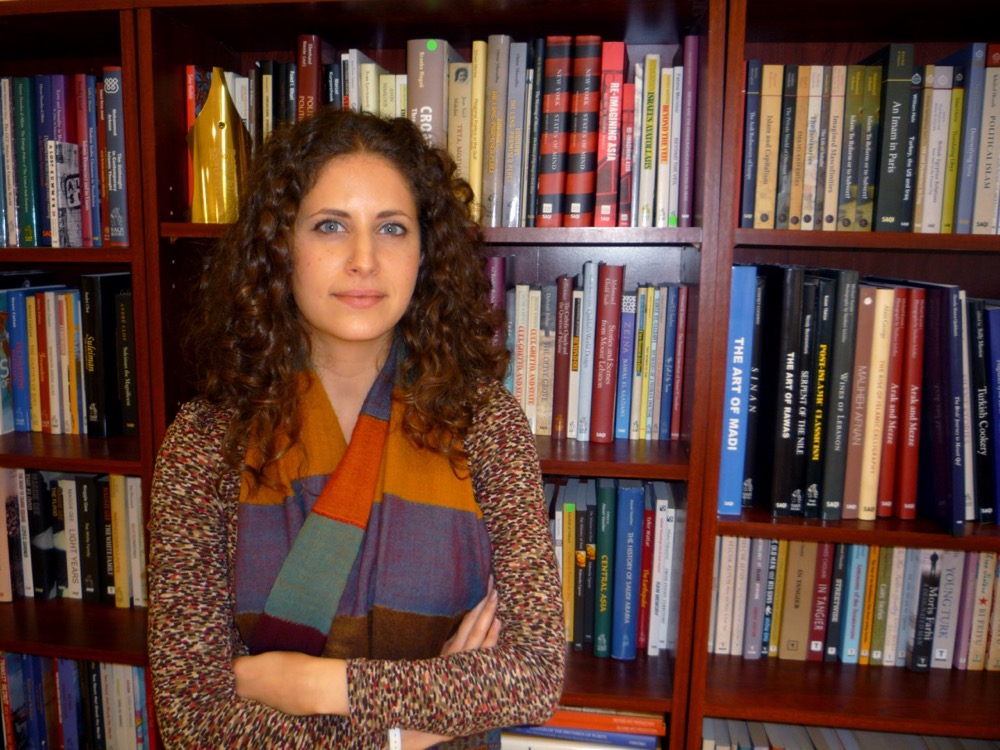
“It’s a massive loss,” she said. “I grew up at Saqi. My school bus would drop me off there and I would spend three hours there every single day when I was in primary school.”
That sense of loss has reverberated throughout the UK’s expatriate Middle Eastern community. For decades the shop has been the go-to place in London for the most comprehensive range of books on the Middle East and North Africa in English, and on all subjects in Arabic.
“Since we announced the closure (on Dec. 5) we have been so overwhelmed and moved by the reaction of our friends, our customers, our readers, our authors,” she said.
“It’s been incredible. But we have just had to face the facts and realities of the situation. There were just a few too many challenges. We’re a family-run business. We’re small, we’re independent, and we do everything ourselves, from sourcing the stock in the Arab world, and then shipping it over and so on.”
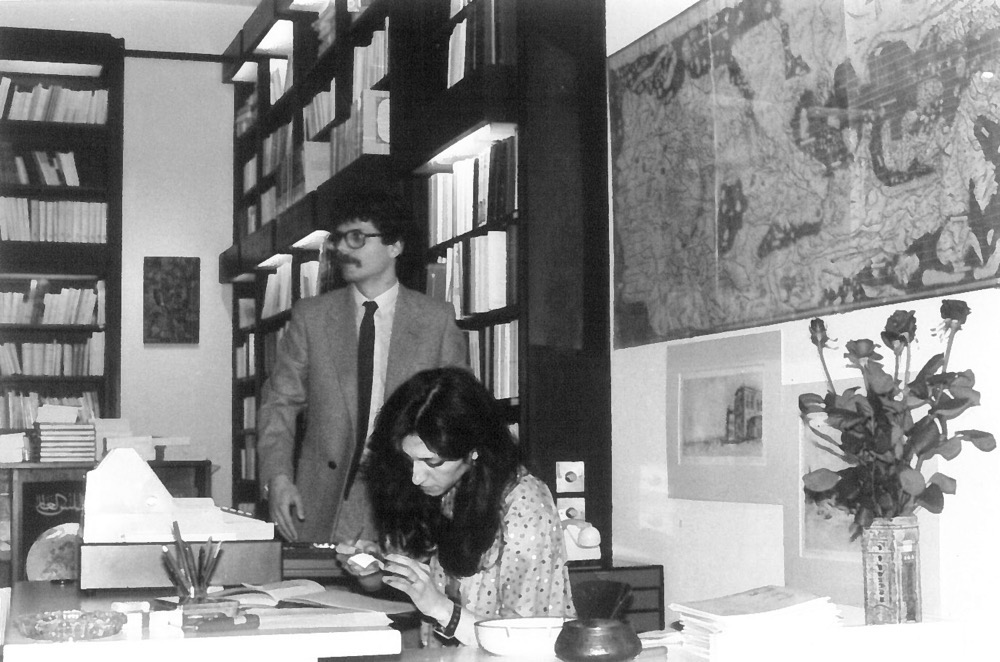
There is an irony in the shop’s future being curtailed by chaos in Lebanon — it was founded in 1978 by Gaspard’s father Andre and his friend Mai Ghoussoub, two refugees from the despair of the Lebanese civil war that erupted in 1975.
At the start of the conflict, Mai and Andre helped to set up medical dispensaries for poor Muslim communities in the area where they lived.
“They were really trying to do the best that they could in a peaceful way to have a positive impact,” said Gaspard.
That all came to an end one day when Ghoussoub was driving a wounded Palestinian man to hospital and lost an eye when her car was hit by a shell. The two friends fled the country and moved to Paris. Andre stayed for a while, but eventually followed when Ghoussoub moved to London.
“A few years later, she called him and said, ‘You know, there aren’t any Arabic language bookshops in London, shall we open one?’” said Gaspard.
“And he just said, OK. They barely spoke a word of English, but still they set up this shop.”
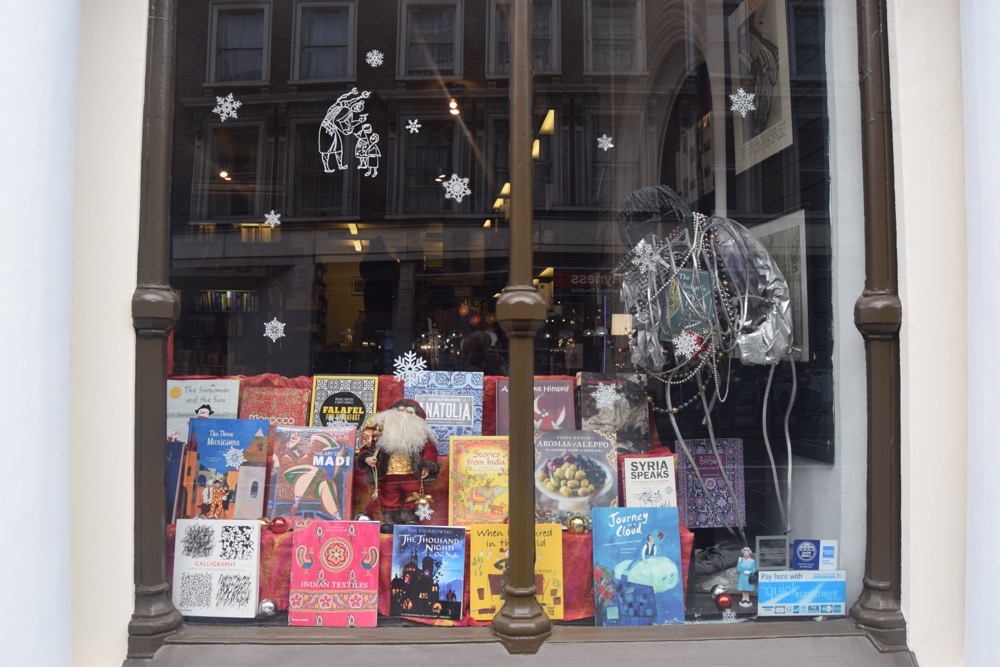
Al-Saqi means “the water-seller,” and the store’s logo is a drawing of a water-seller offering water, as a symbol of life and knowledge, to two small children.
For the past 44 years, Al-Saqi has been a home from home for generations.
Gaspard said that her father and Ghoussoub were “idealists.”
“They had a vision of a welcoming space, where people could just be. And that’s what a home is — somewhere you can just be, with no questions asked, where you don’t have to justify yourself, or define yourself.
“And I think that space has proven to be so cherished and so important for so many, and that’s what is now so difficult for my family.”
Malu Halasa, a US-born Jordanian-Filipino journalist, writer and editor, first discovered the bookstore when she moved to London in the mid-1990s. When she heard the news that it was closing, “I was really very sad, very emotional.”
The store, she said, “seemed like it was the last place of its kind, one of those places that remain a touchstone in your life.
“Maybe I didn’t visit the bookstore as much as I should have done during the COVID years, but somehow it just being there was reassuring — it was part of my landscape, part of my life.”
Halasa met Ghoussoub in the 1990s, when “I started going to the bookstore and she became my mentor.” It was Halasa who would write Ghoussoub’s obituary for the UK’s Guardian after her friend’s untimely death at the age of 54 in 2007.
“I have a mixed Arab heritage: I’m Filipino, I’m Jordanian, and my identity was always something of a mystery to me,” said Halasa. “I felt as someone who was seen as not totally Arab, but Mai wasn’t interested in all that.
“She wasn’t interested in pan-Arabism, she was interested in ideas, culture and people. She was very open and she really gave me a grounding.”
It was a sensibility that was the essence of the bookstore.
“Anyone who had an interest in the Middle East would go there,” said Halasa. “It was like a family home. You could come in, you could hang out and talk, you could look at books — and you could eat dates and chocolate.”
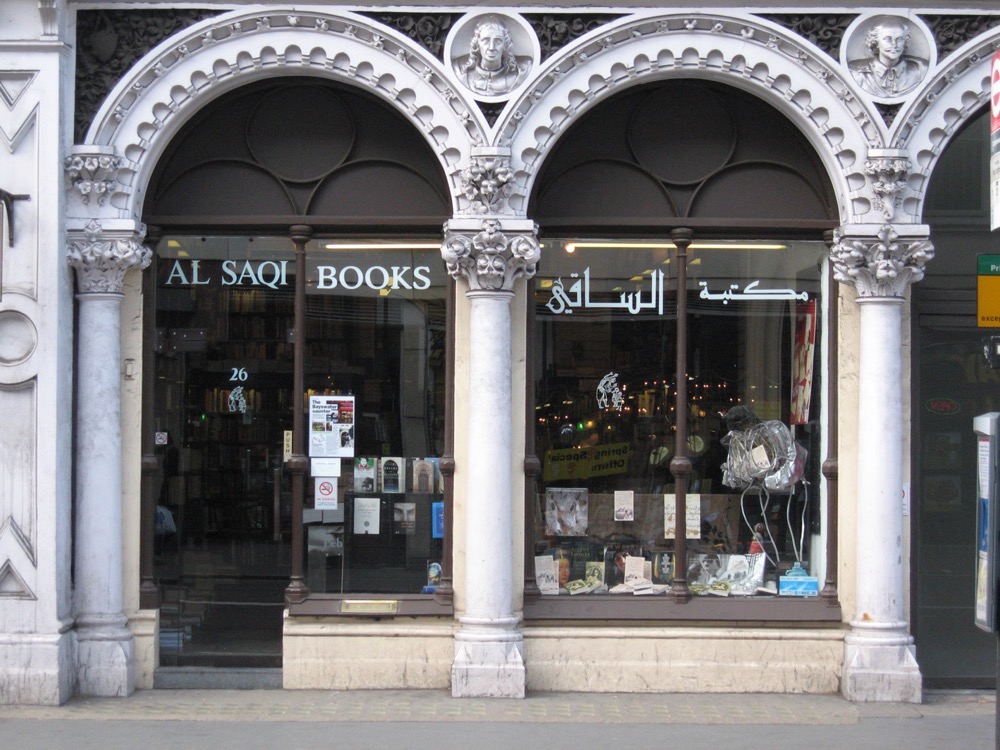
The building, more than a century old when Al-Saqi moved in, has always been a center for the dissemination of ideas.
No. 26 Westbourne Grove was built in 1860 as an extension of the Bayswater Athenaeum, one of the many institutions devoted to literary or scientific learning and social reform that sprang up in British cities in the 19th century.
According to a review in The Building News in May 1861, it was a welcome addition to the district of “Westbournia, a pious and respectable suburb of the greater metropolis,” with many rooms and halls where those seeking enlightenment would go to listen to “lectures on the Holy Land, Revelations, and Slavery.”
The reformist fashion for education, tied strongly to the traditions of English literature, explains the busts of writers on the exterior of the building, including Shakespeare, Milton and Bacon, which have gazed down on the comings and goings at Al-Saqi for the past four decades.
For filmmaker Zeina Durra, who was born in London in 1976 to a Bosnian-Palestinian mother and Jordanian-Lebanese father, and today lives one block away from the store, its closure marks “the end of an era, the end of a link to that really amazing, vibrant period of 1970s Middle Eastern history.”
Durra was born just a couple of years before the shop opened, and it has always been a part of her life.
“I remember it from the early 1980s, going in there with my parents. I grew up in this area and for Sunday lunch we would all go to a Chinese place off Westbourne Grove, and either before or after we would always pop into Al-Saqi.”
Ten years ago, her parents moved back to Jordan, “but whenever they came to town they would always go to Al-Saqi.”
Durra’s parents left Beirut for England in 1976 and “I grew up in London with that whole Middle Eastern emigre intelligentsia vibe,” she said.
“It was a time and place to stay and bring up your kids while all the instability was going on in Lebanon, and the bookshop was a big part of all that.”
Durra read Arabic at Oxford, and Al-Saqi was the place she always came to get the books she needed for her studies.
“It’s been a central part of cultural life, and not just for Arabs, but also for Kurds, Iranians — whatever you were, you would go there, and that’s what I loved most about it — it was a pan-Middle Eastern institution.”
The good news is that, while the shop is closing, the two publishing arms of the company are flourishing. English-language Saqi Books, which has shared the Westbourne Road premises and is now looking for a new home, was set up in 1983.
After the end of the war in Lebanon, in 1991, the family founded Dar Al-Saqi, an Arabic language publishing company in Beirut.
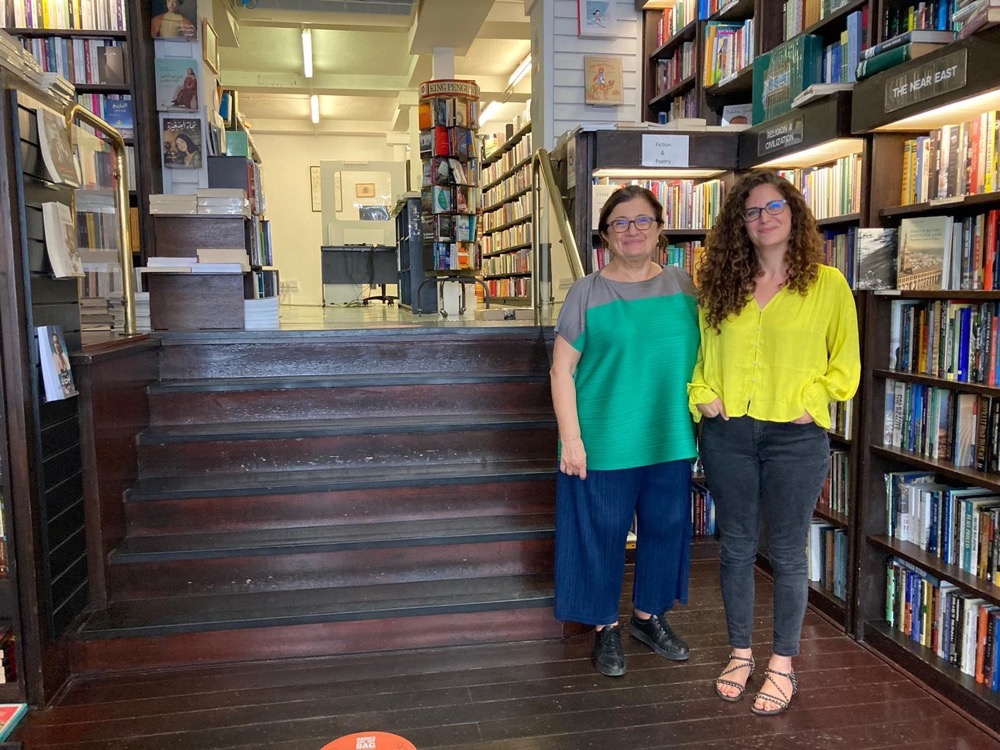
Gaspard has been the publisher at Saqi Books since 2009. But it is the bookshop, she said, that has always been closest to the hearts of her father and her mother Salwa, who, as its owner and director, is now retiring.
“The bookshop is my parents’ third baby, really, their child,” she said.
Despite the loss, however, she believes the cultural future is bright for London’s Arab community.
“Obviously, we’re heartbroken, terribly sad,” she said.
“But on the flip side, I also feel that London today has such a vibrant Arab arts and cultural scene, with so many incredible organizations and spaces, such as the Arab British Center, the Mosaic Rooms, the Arts Canteen and arts organizations such as Shubbak,” a biennial festival of contemporary Arab arts and culture.
“London is very different in terms of what’s available to the Arab community today than it was when we set up 44 years ago, and I feel really hopeful and optimistic about the future of that art scene.
“I know that for a lot of Arabs, the bookshop holds a special place in their hearts, as it does for us. But I’m positive that something else will take its place.”