Jailed Swedish-Eritrean journalist wins rights prize

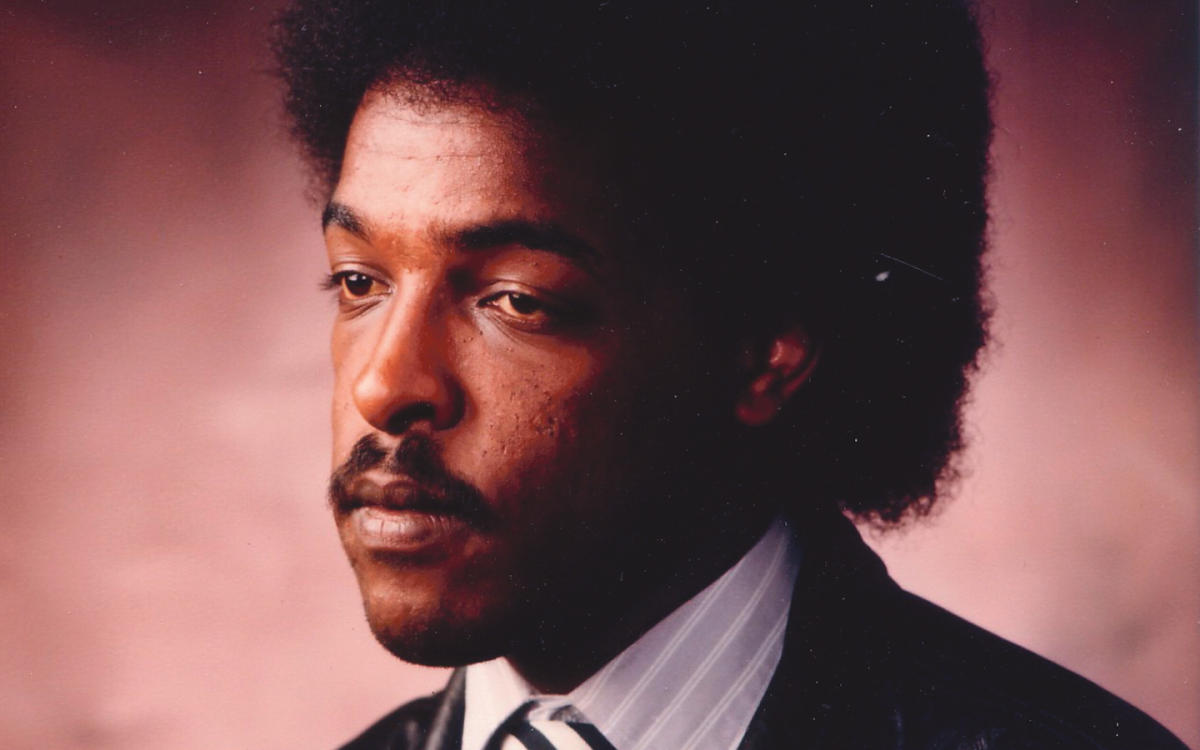
Isaak was awarded the Edelstam Prize “for his outstanding contribution and exceptional courage in standing up for freedom of expression, one’s beliefs, and in the defense of human rights”. (X/File)
Short Url
Updated 11 November 2024
Follow

Jailed Swedish-Eritrean journalist wins rights prize

Jailed Swedish-Eritrean journalist wins rights prize
  • Dawit Isaak has been held incommunicado without charge in Eritrea for more than 23 years

STOCKHOLM: A Swedish-Eritrean journalist held incommunicado without charge in Eritrea for more than 23 years won a Swedish rights prize on Monday for his fight for freedom of expression, the jury said.
Dawit Isaak was among a group of around two dozen people, including senior cabinet ministers, members of parliament and independent journalists, who were seized in a purge in September 2001.
He was awarded the Edelstam Prize “for his outstanding contribution and exceptional courage in standing up for freedom of expression, one’s beliefs, and in the defense of human rights,” the Edelstam Foundation said in a statement.
Amnesty International considers Isaak a prisoner of conscience, and press freedom group Reporters Without Borders (RSF) says he and his colleagues detained at the same time are the longest-held journalists in the world.
UN rights experts have demanded Asmara immediately release him.
Eritrea has provided no news about him, and there are fears he may no longer even be alive. He would be 60 years old.
His daughter Betlehem Isaak will accept the award on his behalf in Stockholm on November 19.
Isaak fled to Sweden in 1987 during Eritrea’s struggle against Ethiopia which eventually led to independence in 1993.
After obtaining Swedish citizenship, he returned to Eritrea in 2001 to help shape the media landscape, and co-founded Setit, the country’s first independent newspaper.
He was arrested shortly after the paper published articles demanding political reforms.
Asmara has not provided any information about his whereabouts or health over the years, which UN experts in 2021 deemed “extremely concerning.”
But they said a credible source had indicated Isaak was still alive in September 2020.
The Edelstam Prize is awarded in memory of Swedish diplomat Harald Edelstam, who as ambassador to Chile at the time of Augusto Pinochet’s 1973 military coup granted thousands of Chileans and other Latin Americans safe conduct to, and political asylum in, Sweden.

Israeli prisons treated like another war front after Oct. 7, says freed Palestinian author

Israeli prisons treated like another war front after Oct. 7, says freed Palestinian author
Updated 04 November 2025
Follow

Israeli prisons treated like another war front after Oct. 7, says freed Palestinian author

Israeli prisons treated like another war front after Oct. 7, says freed Palestinian author
  • Brutality rose significantly in last 2 years, says Nasser Abu Srour

DUBAI: Palestinian author Nasser Abu Srour, who was released last month after 32 years in captivity, said torture and brutality inside Israeli prisons had intensified in the past two years, turning detention centers into “another front” of the conflict in Gaza.

Abu Srour was among more than 150 Palestinians serving life sentences who were freed under a US-brokered Gaza ceasefire deal. He was exiled to Egypt, where he was placed in a five-star hotel in Cairo — a jarring contrast, he said, to the conditions he endured during imprisonment.

After Oct. 7, 2023, beatings and deprivation of food and warmth increased in prisons. Even the guards’ uniforms were replaced with ones bearing tags that read “fighters” or “warriors,” he said.

Abu Srour added: “They started acting like they were in a war, and this was another front, and they started beating, torturing, killing like warriors.”

He described how areas without security cameras became “places for brutality,” where guards would tie prisoners’ hands behind their heads, throw them to the ground, and trample on them.

“All cultural life in the prison ended in the last two years,” he said, as all reading and writing materials were confiscated. Daily rations were minimal, and prisoners were only given one set of thin clothes.

He recalled that prisoners were always hungry, and because their bodies were weak they “couldn’t handle even a medium temperature.”

He added: “Whenever someone was leaving prison, everyone would try to become their friends so they would get their T-shirt or underwear, or anything.”

Abu Srour took part in the First Intifada, the Palestinian uprising between 1987 and 1993, when he was charged as an accomplice in the death of an Israeli Shin Bet security officer.

He was sentenced to life in prison without parole in 1993, based on a confession extracted under torture.

In his more than three decades behind bars, Abu Srour completed a bachelor’s and a master’s degree in political science and turned to writing. He began composing poetry and other works that were smuggled out of prison.

His memoir “The Tale of a Wall: Reflections on Hope and Freedom,” dictated to a relative through phone calls over two years, has been translated into seven languages and is a finalist for the Arab Literature Prize.

After years of torture and unheeded appeals, Abu Srour struggled to believe until the final moment that his name was on the list of prisoners to be released after the Oct. 10 ceasefire.

He said: “They were calling out cell numbers, and I was sitting on my bed in room number six feeling like I am not part of it.

“There were so many times when I should have been part of it over all those years. But the whole thing is so huge and so painful, I didn’t want to interact. It was a defense mechanism.”

The 24 hours before his release were particularly painful, as prisoners were subjected to an intense final round of beatings.

During the 48-hour transfer that followed, prisoners were not allowed to open the curtains on the buses until they reached Egypt.

It was only then that Abu Srour saw the sky for the first time outside prison walls.