RIYADH: Saudi banks’ real estate loans surged to a record SR846.48 billion ($225.73 billion) in the third quarter of 2024, marking a 13.29 percent annual increase, official data showed.
Data from the Saudi Central Bank, also known as SAMA, indicated that this growth was driven by both retail and corporate lending, with corporate loans experiencing a 22 percent increase to reach SR189.6 billion.
Lending to individuals made up the lion’s share, accounting for 78 percent of the total at SR656.88 billion, reflecting an annual growth rate of 11.02 percent.
Real estate loans now comprise 29.67 percent of Saudi banks’ total loan portfolio, which stood at SR2.85 trillion by the end of the third quarter.
The sector’s unprecedented expansion is underpinned by government-backed initiatives under Vision 2030, which aim to diversify the economy and address the Kingdom’s growing housing demand.
A pivotal regulatory milestone came in 2018, when the Saudi Central Bank increased the maximum loan-to-value ratio for first-time homebuyers from 85 percent to 90 percent.
This strategic move was designed to stimulate mortgage lending, making homeownership more accessible to Saudi citizens while aligning with the Kingdom’s broader economic reform plans.
By enabling more citizens to secure financing for their first homes, the initiative directly supported the national housing strategy, which aims to boost homeownership rates and expand housing options across the country.
SAMA emphasized maintaining financial stability, ensuring that this policy shift would not compromise the resilience of the banking sector or lead to unsustainable lending practices.
Another factor supporting the real estate sector’s growth is recent monetary easing. After two years of aggressive rate hikes to curb inflation, SAMA lowered interest rates by 50 basis points in September and another 25 basis points in November, mirroring the US Federal Reserve’s monetary policy.
These cuts have made borrowing cheaper, spurring demand for real estate loans.
However, this surge in demand has a dual effect. While it boosts credit uptake, it also exerts upward pressure on housing prices, contributing to inflation.
Saudi Arabia’s annual inflation rate reached 1.9 percent in October, driven primarily by higher housing costs, according to the General Authority for Statistics.
Despite this rise, the Kingdom’s inflation remains among the lowest in the Middle East, underscoring the efficacy of its economic stabilization strategies and its resilience against global inflationary pressures.
New retail mortgages highest in 21 months
Saudi banks issued SR8.14 billion in new residential mortgages in October, marking the highest monthly figure in 21 months and a 20.33 percent increase from October last year.
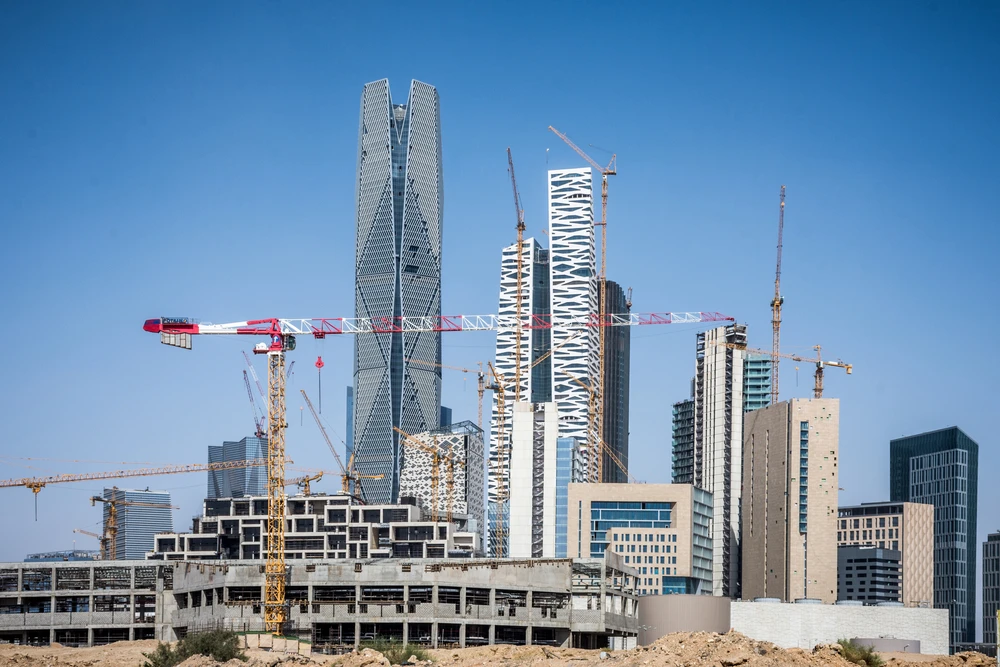
The capital, Riyadh, has emerged as a focal point of this surge, fueled by robust population and employment growth that has intensified demand for housing, with new properties struggling to keep pace.
Of the total residential loans in October, SR4.83 billion, or 59.3 percent, was directed toward purchasing houses, while 35 percent was allocated to apartments and 5.6 percent to land.
Apartment financing saw the most significant annual growth, surging 47 percent year on year to SR2.86 billion, followed by land financing at 24.8 percent and house loans at 8.37 percent.
For the third quarter of 2024, the value of new residential mortgages reached SR20.49 billion, reflecting an 11.34 percent increase compared to the same period last year. This growth was largely driven by demand for apartments, with lending in this segment soaring 58.76 percent year-on-year to SR7.25 billion.
While lending for land rose 19.16 percent to SR1.19 billion during the quarter, loans for houses declined 6.13 percent to SR12.06 billion.
The increasing prominence of apartment financing highlights a shift in Saudi Arabia’s housing market, reflecting evolving demographics and lifestyle preferences. Apartments appeal to expatriates and smaller families while also addressing affordability concerns.
According to S&P Global, population growth, averaging 3.3 percent annually through 2027, and a surge in expatriate inflows are fueling demand, particularly in Riyadh.
This factor, coupled with job opportunities, is outpacing the delivery of new housing units.
According to JLL’s KSA market dynamics report for the first half of 2024, 16,200 units were added in Riyadh and 11,300 in Jeddah during this period, with another 16,000 units expected in both cities by the end of the year.
However, despite this growth, supply constraints continue to push prices higher. High construction costs and competition with Vision 2030 projects are limiting housing affordability.
Additionally, Saudi Arabia’s real estate market is navigating regulatory changes to attract foreign direct investment. While FDI inflows currently average 2 percent of GDP, they are expected to grow as reforms unfold, including new residency visa options tied to real estate investments, according to S&P Global.
As mortgage infrastructure matures, spearheaded by entities like the Saudi Real Estate Refinance Co., the market is poised for increased liquidity and growth.
Secondary mortgage market
Saudi Arabia is embarking on a transformative journey to establish a secondary mortgage market, a move set to redefine the Kingdom’s housing and financial sectors.
With two major agreements in place, the country is strategically aligning global expertise with local execution to ensure liquidity in housing finance, boost homeownership, and foster economic diversification in line with Vision 2030.
In a landmark development, the Saudi Real Estate Refinance Co., a subsidiary of the Public Investment Fund, signed a memorandum of understanding with BlackRock, the world’s largest asset manager.
The agreement, finalized during a high-profile visit by Majid Al-Hogail, minister of municipal and rural affairs and housing, to the US, underscores the Kingdom’s commitment to leveraging global expertise to develop its mortgage finance ecosystem.
The partnership with BlackRock is expected to play a pivotal role in creating a functional secondary mortgage market by laying the groundwork for mortgage-backed securities.
BlackRock’s extensive knowledge of global financial markets will be instrumental in structuring these securities, designed to improve market liquidity by enabling banks to sell bundled mortgage loans to investors.
This influx of liquidity is anticipated to reduce borrowing costs for Saudi families, making homeownership more affordable.
Robert Kapito, BlackRock’s president, described the collaboration as a key step in aligning Saudi Arabia’s real estate finance market with international capital markets. He emphasized the potential for this initiative to not only support local housing goals but also attract global investment.
Meanwhile, SRC has also signed a separate agreement with Al-Ahli Bank and the Real Estate Development Fund to operationalize the secondary mortgage market at a local level.
This tripartite partnership focuses on creating and refinancing mortgage portfolios, ensuring the housing finance market has continuous access to funding.
The initiative is also set to fast-track the issuance of mortgage-backed securities in the domestic market, laying a solid foundation for sustainable growth in the sector.
As mortgage origination grows, so does the need for a secondary market to manage liquidity effectively.
SRC CEO Majeed Al-Abduljabbar described the partnership with Al-Ahli Bank as a critical step in addressing these challenges. By enabling banks to securitize mortgages and sell them as MBS, the initiative will enhance liquidity, reduce financing costs, and expand housing options for citizens.
These partnerships come at a pivotal time for the Kingdom, where the housing sector is central to Vision 2030’s objectives of raising homeownership rates to 70 percent and reducing economic reliance on oil revenues.
By integrating the real estate finance sector into global capital markets, Saudi Arabia is not only ensuring affordable housing but also positioning itself as a regional leader in innovative financial solutions.