- New Lebanese president hails Kingdom’s ‘historical role in supporting Lebanon’
- Macron to Berri: ‘We are committed to supporting Lebanon and implementing ceasefire agreement’
BEIRUT: New Lebanese President Joseph Aoun’s first official overseas trip will be to Saudi Arabia, he said on Saturday.
It came during during a phone call with Saudi Crown Prince Mohammed bin Salman, the president’s office said.
The crown prince called to congratulate Aoun and invited him to visit the Kingdom, the Lebanese presidency and Saudi Press Agency said.
Aoun said that Saudi Arabia would be his first destination “in recognition of the Kingdom’s historical role in supporting Lebanon and standing in solidarity with it, and as an affirmation of Lebanon’s deep Arab identity as the foundation of its relations with its regional surroundings,” his office said.
During the call, the crown prince conveyed King Salman’s and his congratulations on Aoun’s election and his swearing-in as president.
The crown prince wished “success to Aoun and the brotherly Lebanese people, as well as further progress and prosperity.”
Aoun thanked the crown prince for Saudi Arabia’s stances toward Lebanon and its people.
In his first statement after assuming office, Aoun told visitors on Saturday that he “did not come to engage in politics but to build a state that can only be established on justice and equality among all its components, which share one identity.”
Speaking to a delegation from Dar Al-Fatwa headed by Grand Mufti Sheikh Abdel Latif Derian, Aoun said: “The responsibility does not lie solely on me, and this is not just my term; it is the term of every Lebanese, regardless of their position or sect.
“We have great and numerous opportunities, and the world has begun discussing conferences in support of Lebanon, but it depends on us to demonstrate to these countries the extent of our credibility in building the state.
“We are not building a state for sects; Lebanon as a state protects everyone; the state of sects does not ensure protection.”
Aoun added: “There are no winners or losers; rather, we have a great opportunity that we either seize or lose.
“We have seen what has happened recently, and everyone has been affected. This country, its people and future generations have suffered enough.”
Aoun expressed his hope that the new government would be formed as quickly as possible, “allowing us to begin building bridges of trust with the outside world.”
He said: “We must seek the assistance of the outside world, not use it to gain strength against our people. No sect or individual is superior to another.”
In his speech, Grand Mufti Derian thanked the Arab and friendly states that helped Lebanon “emerge from the dark tunnel and end the presidential vacancy.”
He said: “We are an essential component of the state, and what we seek is to achieve a balance between the components of Lebanese society.
“We want to feel that we live in a state governed by justice, law, the constitution and the Taif Agreement,” he added.
In Damascus, Caretaker Prime Minister Najib Mikati held talks on his first official visit to Syria following the fall of Bashar Assad’s regime.
He held an extensive meeting with the leader of the new administration, Ahmad Al-Sharaa.
Al-Sharaa told a press conference at the People’s Palace: “We are giving ourselves an opportunity to build positive relations in the upcoming stages based on the sovereignty of Lebanon and Syria.
“We will maintain neutrality toward all parties in Lebanon and will try to resolve issues.
“The priority for Syria at this time is to ensure the security of the nation and to confine weapons to the hands of the Syrian state.”
He said: “Our objective is to establish positive relations between the Syrian and Lebanese peoples based on mutual respect, and the sovereignty of both countries, and Syria will strive to address all issues through dialogue.”
Al-Sharaa’s meeting with Mikati focused on smuggling and Syrian deposits in Lebanese banks, he added.
“We also raised the issue of demarcating the borders between the two countries.”
Mikati called for “activating the relations between the two countries based on the national sovereignty of each and working to prevent anything that could harm the relationship.
“Syria represents Lebanon’s natural gateway to the Arab world, and as long as it is well, Lebanon will also be well,” he added.
The caretaker prime minister also addressed the issue of Syrian refugees in Lebanon, describing it as an “urgent matter.”
Lebanon must “promptly and facilitate their return to Syria, as this matter exerts significant pressure on Lebanon, and I have sensed an understanding of this situation,” Mikati said.
Meanwhile, Parliament Speaker Nabih Berri received a phone call from French President Emmanuel Macron, who congratulated him on the election of the president.
Macron highlighted France’s commitment to “continuing its support for Lebanon in all fields, especially the Lebanese army, and to implementing the ceasefire agreement in southern Lebanon.”
He said that he would visit Lebanon “very soon.”
President Aoun received congratulatory messages on his election from Kuwait’s Emir Sheikh Meshal Al-Ahmad Al-Jaber Al-Sabah, who highlighted his “keenness to strengthen the historic and distinguished relations between the two countries,” as well as UAE President Sheikh Mohamed bin Zayed Al-Nahyan; UAE Vice President and Prime Minister Sheikh Mohammed bin Rashid Al-Maktoum; UAE Vice President Sheikh Mansour bin Zayed Al-Nahyan; and Turkish President Recep Tayyip Erdogan.
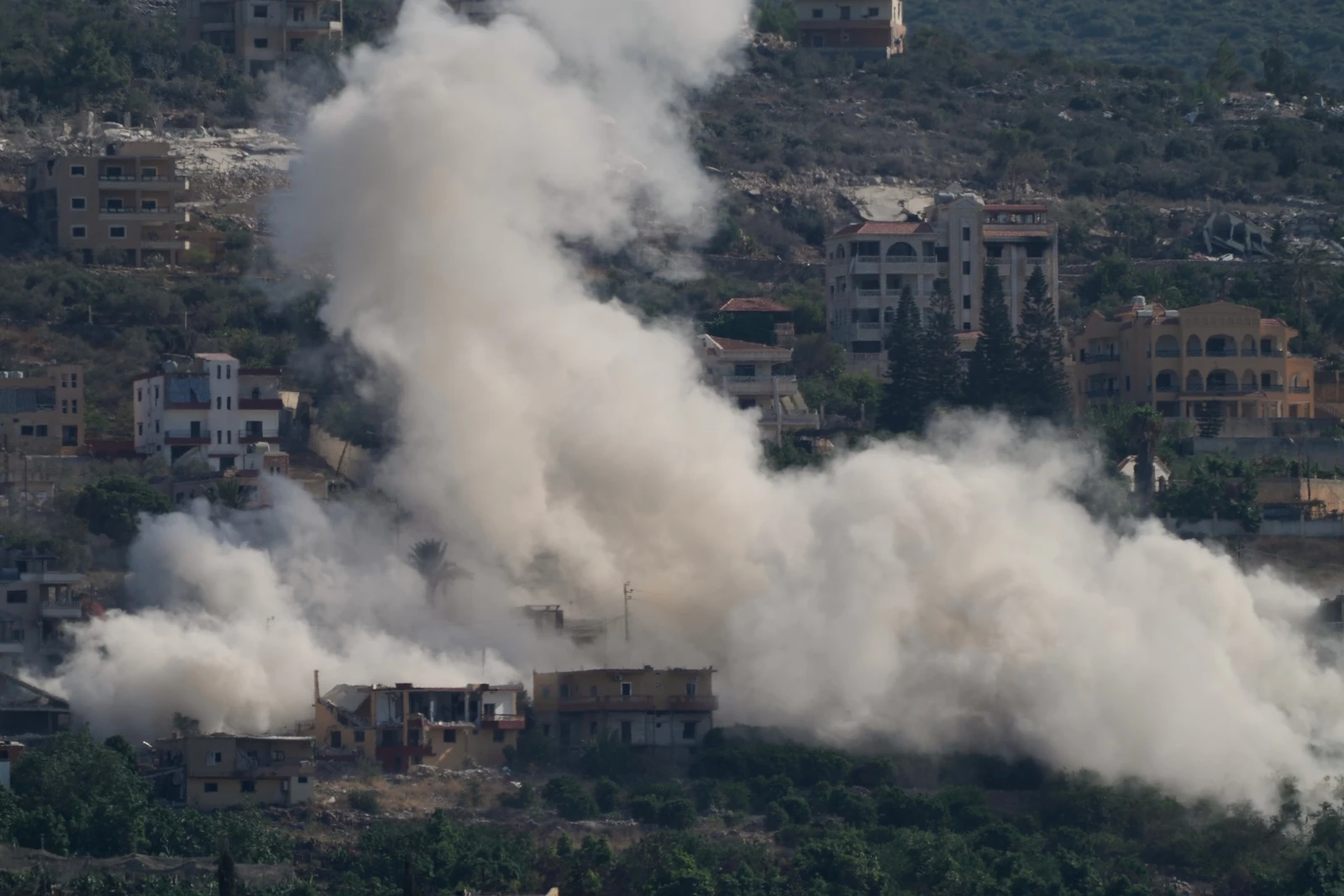
In southern Lebanon, the Lebanese army began redeploying in the towns of Al-Qaouzah, the outskirts of Ramyeh, Tayr Harfa, Wadi Ain Al-Zarqa and Al-Batishiyeh in Tyre district after the Israeli army withdrew as part of the ceasefire agreement with Hezbollah.
The army is expected to complete its deployment in the towns of Yaroun, Maroun Al-Ras, Aitaroun, Blida, Mays Al-Jabal, Houla, Markaba and Odaisseh this week.
Israeli forces that had infiltrated the area carried out an operation involving the demolition of several houses in the town of Aita Al-Shaab in the Bint Jbeil district.