UAE launches global media initiative, Bridge Summit

UAE launches global media initiative, Bridge Summit
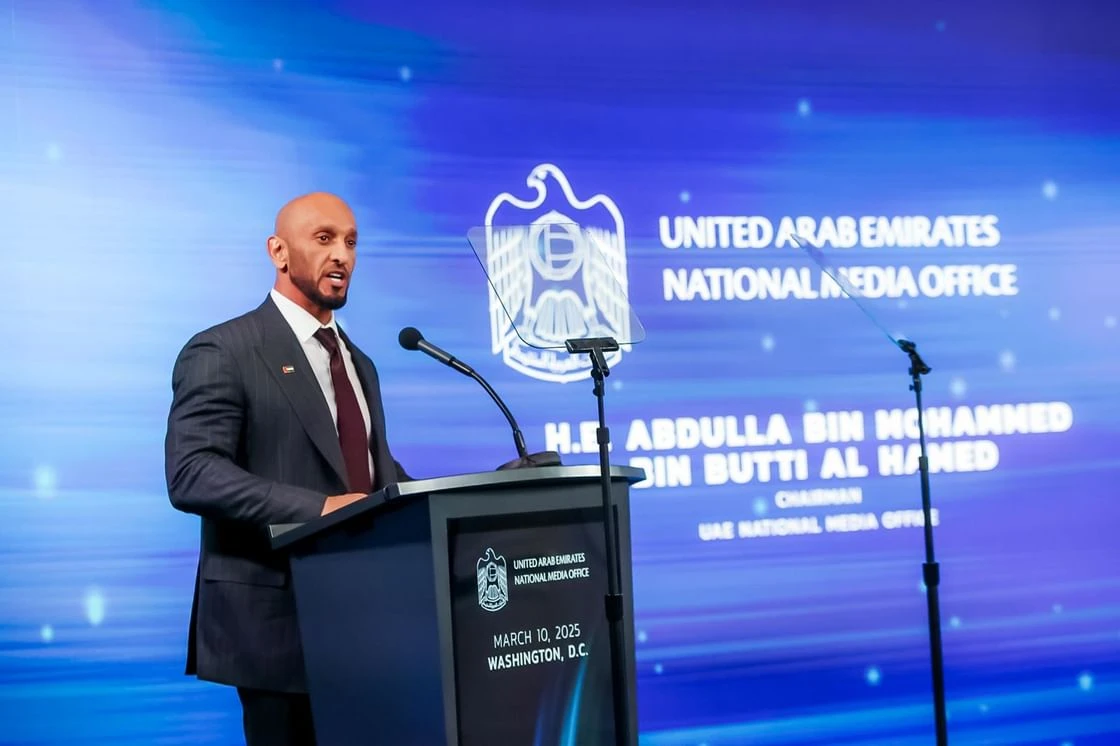
Announcement was made by Abdulla bin Mohammed bin Butti Al-Hamed, chairman of UAE’s National Media Office and chairman of the board of directors of the UAE Media Council. (WAM)
Short Url
Updated 12 March 2025
Follow

UAE launches global media initiative, Bridge Summit

UAE launches global media initiative, Bridge Summit
  • 2-day forum to be held in Abu Dhabi ‘will lead transformation in the sector,’ says UAE’s National Media Office
  • UAE also announces launch of Bridge Foundation, a nonprofit aimed at supporting, elevating media sector

DUBAI: The UAE’s National Media Office has announced the launch of the Bridge Summit to “explore the future of media.”

Set to take place from Dec. 8-10 in Abu Dhabi, the summit also seeks to “lead transformation in the sector, and enhance its contribution to the global economy,” according to a press statement.

The forum will feature a media production exhibition and aims to attract CEOs, state leaders, and media professionals and experts from around the world.

The announcement was made by Abdulla bin Mohammed bin Butti Al-Hamed, chairman of UAE’s National Media Office and chairman of the board of directors of the UAE Media Council, during an event in Washington.

He said: “We launched the Bridge Summit to foster meaningful dialogue, develop solutions to current and future media challenges, and support the sustainable growth of this vital sector.”

Al-Hamed also announced the launch of the Bridge Foundation, a nonprofit aimed at empowering media professionals and elevating the media sector through training programs and research grants.

It will also support media startups through opportunities for funding and international partnerships.

The launch of the foundation is in line with the country’s “vision to position media as a powerful driver of development” contributing to “a more impactful media ecosystem that upholds societal values and advances sustainable development,” Al-Hamed said.

White House restricts reporters’ access to part of press office

White House restricts reporters’ access to part of press office
Updated 01 November 2025
Follow

White House restricts reporters’ access to part of press office

White House restricts reporters’ access to part of press office
  • Journalists are now barred if they do not have prior approval to access the area known as Upper Press, near the president's office
  • he policy comes amid wider restrictions on journalists by the Trump administration, including new rules at the Pentagon 

WEST PALM BEACH: US President Donald Trump’s administration on Friday barred reporters from accessing part of the White House press office without an appointment, citing the need to protect “sensitive material.”
Journalists are now barred if they do not have prior approval to access the area known as Upper Press — which is where Press Secretary Karoline Leavitt’s office is located and is near the Oval Office.
Reporters have until now been able to freely visit the area, often wandering up to try to speak to Leavitt or senior press officers to seek information or confirm stories.
Media are still allowed to access the area known as “Lower Press,” next to the famed White House briefing room, where more junior press officers have their desks, the memo said.
The policy comes amid wider restrictions on journalists by the Trump administration, including new rules at the Pentagon that major outlets including AFP refused to sign earlier this month.
The change at the White House was announced by the National Security Council in a memorandum titled “protecting sensitive material from unauthorized disclosure in Upper Press.”
“This memorandum directs the prohibition of press passholders from accessing... ‘Upper Press,’ which is situated adjacent to the Oval Office, without an appointment,” said the memo, addressed to Leavitt and White house Communications Director Steven Cheung.
“This policy will ensure adherence to best practices pertaining to access to sensitive material.”
It said the change was necessary because White House press officers were now routinely dealing with sensitive materials following “recent structural changes to the National Security Council.”
Trump has gutted the once powerful NSC, putting it under the control of Secretary of State Marco Rubio, after former National Security Adviser Mike Waltz was reassigned in May following a scandal over the use of the Signal app to plan strikes on Yemen.
Trump’s administration has made a major shake-up to access rules for journalists since his return to power in January.
Many mainstream outlets have seen their access to areas like the Oval Office and Air Force One reduced, while right-wing, Trump-friendly outlets have been given more prominence.
The White House also banned the Associated Press news agency from key areas where Trump speaks after it refused to recognize his order changing the name of the Gulf of Mexico to the Gulf of America.