- Bilal Fahad: “Arch Rock was chosen because it’s a significant landmark in AlUla, and its setting perfectly aligns with the Earth Day theme and the nature of the experience”
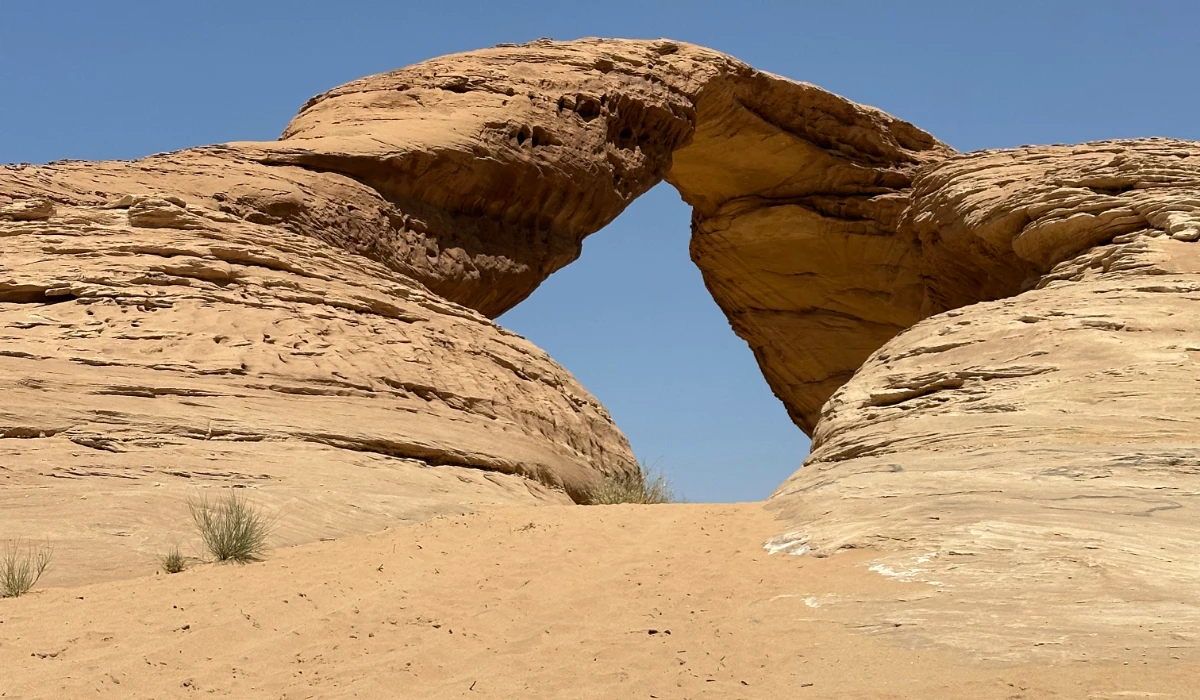
JEDDAH: In the heart of AlUla, a Saudi community platform, Motnfs, is hosting an Earth Day event on April 22 at the iconic Rainbow Rock, also known as Arch Rock.
The 2025 theme, “Our Power, Our Planet,” highlights the vital role of renewable energy sources such as solar and wind in creating a cleaner, greener future.
The experience in AlUla is designed to deepen connections with nature, foster social bonds, and promote environmental awareness in a fun and engaging setting.
Bilal Fahad, founder and experience designer at Motnfs, said: “We decided to align the initiative with the Earth Day 2025 theme through an experience that practically incentivizes teamwork despite the diversity of the participants in a way that raises environmental awareness, creating an environment that encourages the adoption of sustainable eco-friendly habits that reflect our common strength to protect the planet and reflect on this year’s Earth Day theme.”
Rainbow Rock earns its name from its distinctive shape. It resembles an arch or rainbow flanked by two cloud-like formations. The site’s surreal beauty, paired with AlUla’s minimal light pollution, makes it a prime destination for camping and stargazing under crystal-clear skies.
“Arch Rock was chosen because it’s a significant landmark in AlUla, and its setting perfectly aligns with the Earth Day theme and the nature of the experience,” Fahad added.
Earth Day, marked globally on April 22 since 1970, unites more than 1 billion people across 193 countries to advance environmental protection. Initiatives like tree planting and sustainability workshops highlight collective efforts to combat climate change, preserve biodiversity and reduce waste.
The core of the Earth Day event in AlUla is a community clean-up designed to raise awareness about environmental care and promote a shared sense of responsibility for preserving natural spaces.
“Success is measured by the area cleaned and the level of participant engagement during the activity,” said Salman Al-Kanani, co-founder and social media manager at Motnfs.
Motnfs encourages environmental consciousness not only during Earth Day, but also throughout its activities.
“We design experiences in an innovative way that instills a sense of environmental responsibility in participants. This is what characterizes our experiences — redefining people’s connection with nature and bringing themselves away from the pressures of modern life,” said Batool Al-Humaidi, co-founder and public relations lead.
The Earth Day event includes a treasure hunt, blending fun with environmental education.
“The experience is centered around a treasure hunt, where the real treasure is the earth we live on and the participants themselves — highlighting that with the right practices, they are true treasures of our treasure earth,” added Al-Humaidi.
Another key moment of the day will be stargazing, which Fahad believes is a powerful way to connect with the environment.
“The astronomy guide leads participants through a journey of the night sky, sharing stories and facts that spark awe and awareness. By looking up, we’re reminded of our place in the universe and the importance of protecting our planet, tying back to Earth Day’s message of care and responsibility,” Fahad said.
Motnfs operates in Riyadh, Jeddah and AlUla, with plans to expand to more destinations within and beyond the Kingdom.