- Antonio Guterres: ‘Nothing can justify the collective punishment of the Palestinian people’
- ‘The scale of death and destruction are beyond any other conflict in my years as secretary-general’
NEW YORK: The UN secretary-general Antonio Guterres on Tuesday urged the immediate implementation of binding measures issued by the International Court of Justice in the Gaza genocide case, warning that the humanitarian crisis in the Palestinian enclave has deepened since the ruling and that the war is entering “a third monstrous year.”
Antonio Guterres told world leaders gathered at the opening of the high-level debate at the 80th session of the UN General Assembly in New York: “The measures stipulated by the ICJ must be implemented, fully and immediately.”
The ICJ, the UN’s top legal body, issued provisional measures earlier this year in response to a case brought against Israel under the Genocide Convention.
They require Israel to take all measures to prevent genocide and incitement to genocide, cease military operations, ensure unimpeded humanitarian aid to Gaza, and facilitate UN-mandated investigations into alleged genocidal acts. The court emphasized that these orders create international legal obligations for Israel.
Since that ruling, Guterres said, a famine has been declared in Gaza and violence has intensified, with civilians bearing the brunt of the continued military offensive.
“The scale of death and destruction are beyond any other conflict in my years as secretary-general,” he said.
Guterres again unequivocally condemned the Hamas attack on Israel of Oct. 7, 2023, but stressed that no justification exists for the “collective punishment of the Palestinian people and the systematic destruction of Gaza.”
He added: “Nothing can justify the horrific Hamas terror attacks of Oct. 7 and the taking of hostages, both of which I have repeatedly condemned. And nothing can justify the collective punishment of the Palestinian people.”
Guterres called for an urgent permanent ceasefire, the release of all hostages and full humanitarian access to the Gaza Strip, which has faced near-total blockade and extensive bombardment since the war began nearly two years ago.
He also reiterated that the only long-term solution to the Israeli-Palestinian conflict lies in the creation of a viable, independent Palestinian state alongside Israel.
“We must not relent in the only viable answer to sustainable Middle East peace: a two-state solution,” Guterres said. “Relentless settler expansion and violence, and the looming threat of annexation, must stop.”
His remarks came amid mounting international criticism of both the scale of Israel’s military campaign and the failure of diplomatic efforts to end the conflict.
Last week, the UN Independent International Commission of Inquiry on the Occupied Palestinian Territory and Israel concluded that Israel is committing genocide in Gaza.
The investigators warned member states that silence in the face of genocide amounts to complicity, urging them to fulfill their obligations under the Genocide Convention and take every measure they can to halt it.
Independent humanitarian access and journalistic reporting remain heavily restricted in the enclave.
“We know what is needed,” Guterres told the UNGA. “Permanent ceasefire now. All the hostages released now. Full humanitarian access now.”
He warned that the world is at a crossroads between “cooperation or collapse,” amid multiple global crises, from war to climate change, and growing disregard for international law.
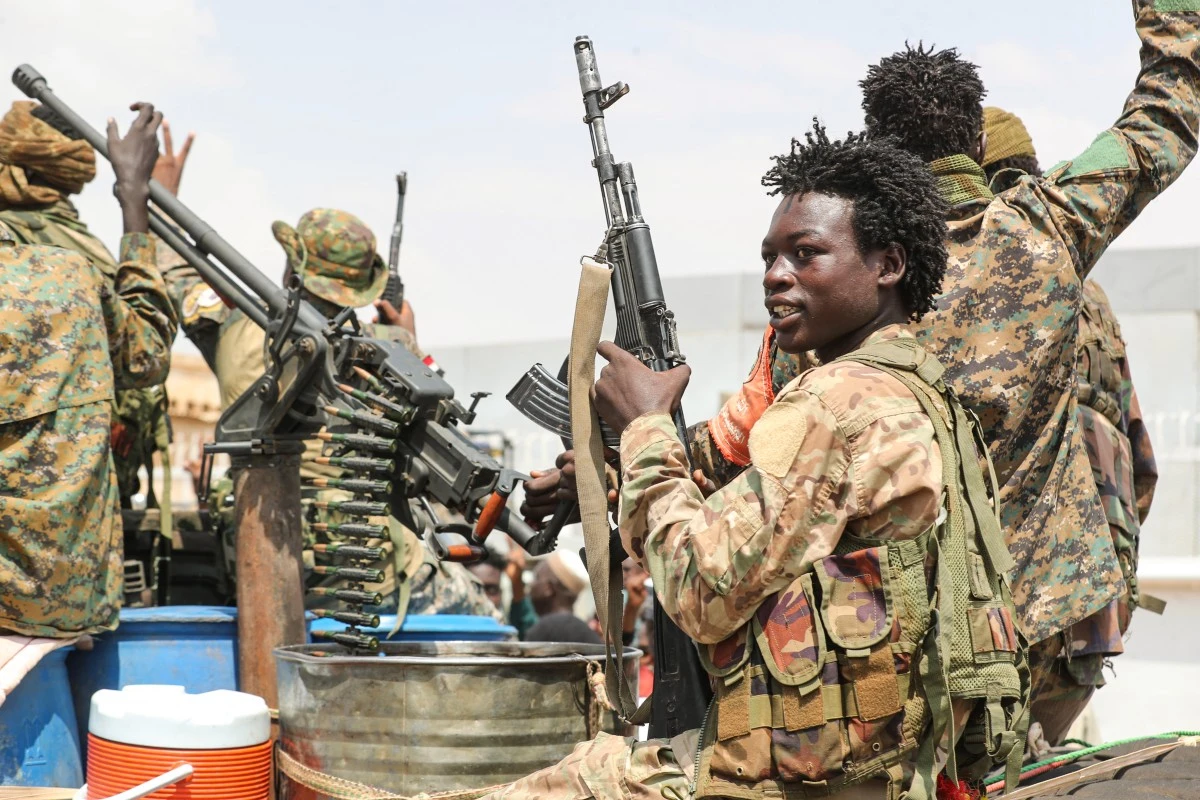
Guterres also highlighted the crisis in Sudan, where a civil war has caused massive civilian suffering and regional destabilization.
“In Sudan, civilians are being slaughtered, starved and silenced. Women and girls face unspeakable violence,” he said, warning that there is no military solution to the conflict.
“I urge all parties, including those in this hall: End the external support that’s fueling this bloodshed. Push to protect civilians. The Sudanese people deserve peace, dignity and hope,” he added.
Sudan’s war, which erupted in April 2023, has displaced millions and created one of the world’s worst hunger crises, with famine declared by UN in large areas.