- UDC emerging as a key force in shaping a new tourism model grounded in cultural preservation
JEDDAH: As Saudi Arabia accelerates efforts to diversify its economy beyond oil, AlUla Development Co. is emerging as a key force in shaping a new tourism model grounded in cultural preservation, sustainability, and community empowerment.
Launched in January 2023 as a wholly owned entity of the Public Investment Fund, UDC was established to lead the development and management of AlUla’s built environment in line with the Royal Commission for AlUla’s vision.
Its mandate includes master planning and delivering tourism, hospitality, residential, and commercial assets that celebrate the region’s heritage while supporting long-term economic growth.
Tasked with transforming AlUla into a world-class destination, UDC works closely with the RCU and private sector partners to implement strategic projects that balance development with cultural authenticity.
From strategy to execution
UDC’s progress on the ground is reflected in several completed projects, including Habitas AlUla, Banyan Tree AlUla, and Cloud7 Residence, as well as Caravan by Habitas and the iconic Maraya Concert Hall — all currently operational and enhancing the region’s tourism offering.
The company is also expanding its portfolio through strategic partnerships. Among them is a 250-key Autograph Collection hotel by Marriott, designed under the “NUMAJ” concept and aiming for LEED Gold certification.
Through adaptive reuse of heritage structures, construction of eco-luxury resorts, and establishment of vibrant commercial hubs, UDC is anchoring AlUla’s rise as both a national treasure and a global cultural tourism hub.
Among the company’s signature developments is the Dar Tantora hotel, which blends traditional mud-brick architecture with modern luxury — a hallmark of UDC’s commitment to authentic, site-sensitive design. The company is also overseeing several infrastructure projects aimed at improving accessibility, environmental sustainability, and service delivery across AlUla’s tourism zones.
Heritage-led tourism drives economic growth
Speaking to Arab News, Yaseen Ghulam, associate professor of economics and director of research at the Riyadh-based Al-Yamamah University, said: “AlUla Development Co.’s role in preserving heritage and promoting cultural tourism of AlUla is similar to Machu Picchu, Peru, the Great Barrier Reef, Australia, and Rome, Italy, each with their unique attractions, revenue generation, and economic impact, showcasing the importance of heritage preservation and cultural tourism in these regions.”
More specifically, he added, AlUla aims to become a prominent center for heritage, culture, and tourism and is in fact a key component of Saudi Arabia’s Vision 2030 strategy, aiming to diversify the local economy and establish the region as a global tourism hub by contributing $31.9 billion to the Kingdom’s gross domestic product by 2035.
The professor noted that AlUla has been included among the top five Saudi cities in the prestigious IMD World Smart City Index that measures the competitiveness of the city to attract tourists.
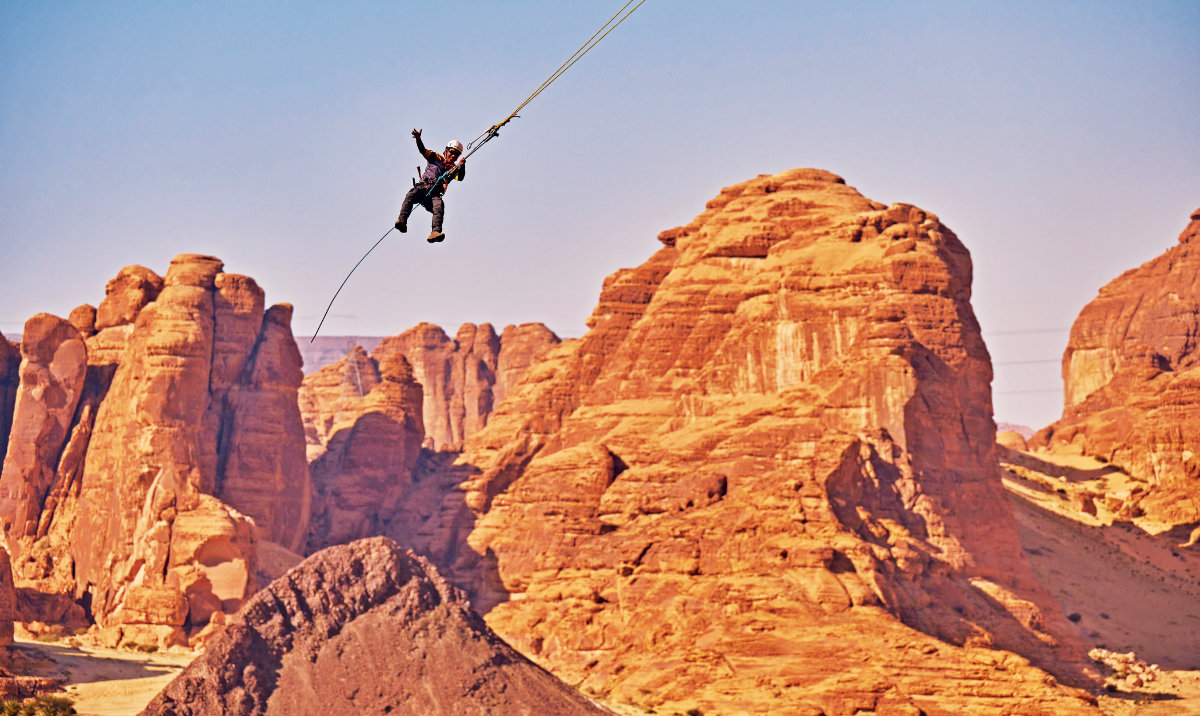
“As a result, AlUla is thriving in the Kingdom’s entertainment sector, which is expected to create 450,000 jobs and contribute 4.2 percent to the GDP by 2030.”
He added that in 2024 alone, AlUla hosted 85 projects, including films, TV series, commercials, and music videos, across various mediums. “The export potential of Podaxis pistillaris, a local plant valued for its ecological, nutritional, and cultural significance, is being explored.” Ghulam said.
“AlUla also has over 3,000 beehives managed by 28 beekeepers, producing over 12 tonnes of honey annually. The region’s citrus harvest has established it as a top agritourism destination and supports economic diversification.” he added.
Balancing growth with preservation
Despite these advancements, Ghulam noted that the rapid commercialization of heritage sites carries risks. “Tourism and heritage development can benefit the local economy but also has drawbacks like overcrowding and cleanliness issues. Rome in Italy is attracting a significant negative media attraction in this regard,” he explained.
To address this, the Kingdom and UDC are balancing preservation with economic benefits for long-term sustainability.
UDC is also leveraging advanced technologies to enrich visitor experiences while protecting heritage assets. “UDC and Kingdom are also promoting experiential tourism by integrating advanced technologies like artificial intelligence, virtual reality, and augmented reality,” Ghulam added. “AR experiences bring site history to life through smartphones or wearable smart glasses.”
More importantly, he added, strategic alignment between public and private sectors is helping UDC and Kingdom focus on diversifying tourism offerings, reducing seasonality, and developing workforce.
AlUla’s rising investor appeal
As a gateway to AlUla’s sustainable development, UDC offers local and international investors a rare opportunity to engage in heritage-driven tourism and support Saudi Arabia’s Vision 2030, with projects spanning hotels, villas, and penthouses, as well as modern low-rise apartments, offices, retail, warehouses, and supporting infrastructure.
Zahoor Ahmed, vice president at MIE Group and global foreign direct investment and mega-project development expert, told Arab News that AlUla is attractive primarily because it offers something genuinely unique within this region and the heritage experiences that cannot be replicated elsewhere.

Modern technologies like AI can help preserve heritage sites. These efforts ensure AlUla stays relevant not just now, but for decades to come.
Zahoor Ahmed, vice president at MIE Group
“We are talking about sites like Hegra, which is Saudi Arabia’s first UNESCO World Heritage Site. Investors are seeking long term authenticity that will fuel global cultural demand. Tourists today seek experiences deeply rooted in history and culture, and AlUla provides exactly that.” Ahmed added.
The project development expert also pointed to the institutional support backing AlUla’s growth. “There is significant government backing. Just recently, at the Future Investment Initiative, the Royal Commission for AlUla presented plans outlining billions of dollars of public-private investment opportunities. This kind of clarity and scale give investors’ confidence.” he said.
He added that there is also strategic collaboration with international partners, such as the UK National Archives, further boosting AlUla’s global credibility and appeal.
AlUla’s inclusion in the IMD Smart Cities Index, he added, highlights how heritage and technology are working hand in hand. “Modern technologies like AI can help preserve heritage sites. These efforts ensure AlUla stays relevant not just now, but for decades to come,” he said.
Community, culture, and careful design
As UDC accelerates infrastructure development in AlUla, it remains committed to ensuring that growth does not come at the expense of heritage and identity — a key concern for investors and cultural experts alike.
“Maintaining authenticity as the Kingdom’s infrastructure grows requires thoughtful balance and inclusion,” Ahmed noted, adding: “The single most important factor, in my opinion, is community and cultural involvement that attracts a wider global tourism base.”
He cited community initiatives as a success story: “The Royal Commission for AlUla has actively involved local communities by training hundreds of local youths to become heritage guides and hospitality specialists. This ensures that AlUla’s cultural narratives are genuinely expressed by the community itself.”
Ahmed also emphasized the importance of sensitive infrastructure development, citing Dar Tantora hotel as “exactly the type of respectful development that maintains AlUla’s authentic feel.”
He underlined the necessity of regulation and oversight, emphasizing that clear regulations by the RCU are guiding development to ensure that modern infrastructure respects archaeological integrity. “By consistently reinforcing this careful balance, AlUla can expand without compromising the very essence of its heritage.” Ahmed said.
A model for economic diversification
Looking ahead, Ghulam believes AlUla offers a viable model for the Kingdom’s broader goals.
“The Royal Commission for AlUla is enhancing AlUla’s economic, investment, and tourist potential through comprehensive regeneration, integrated partnerships, and inclusive sustainable development,” he said.
Under the AlUla Sustainability Charter, he added, the RCU is focusing on revitalizing the built environment, empowering communities, and promoting light-touch tourism.
“It has established partnerships with organizations in France, China, Italy, the UK, and the US, thus expanding its global network. More importantly, AlUla has been named the Best Cultural Tourism Project in the Middle East.” he said.
As for future policies, Ghulam said governments can play a pivotal role in advancing sustainability by implementing policies and incentives — such as carbon pricing, green bonds, ecosystem service payments, and regulatory frameworks — that encourage private sector participation in conservation efforts and align economic growth with environmental priorities.