- Israel would free 250 Palestinians serving life sentences in its prisons and 1,700 people detained from Gaza since the war began, including all women and children
CAIRO: Israel and Hamas began indirect talks on ending the war in Gaza on Monday, after both sides signaled support for US President Donald Trump’s peace plan.
The talks in Egypt’s Red Sea resort of Sharm el-Sheikh are brokered by the US and aim at hammering out details for the plan’s first phase. That includes a ceasefire to allow for the release of all remaining hostages held by Hamas in exchange for hundreds of Palestinian prisoners in Israel.
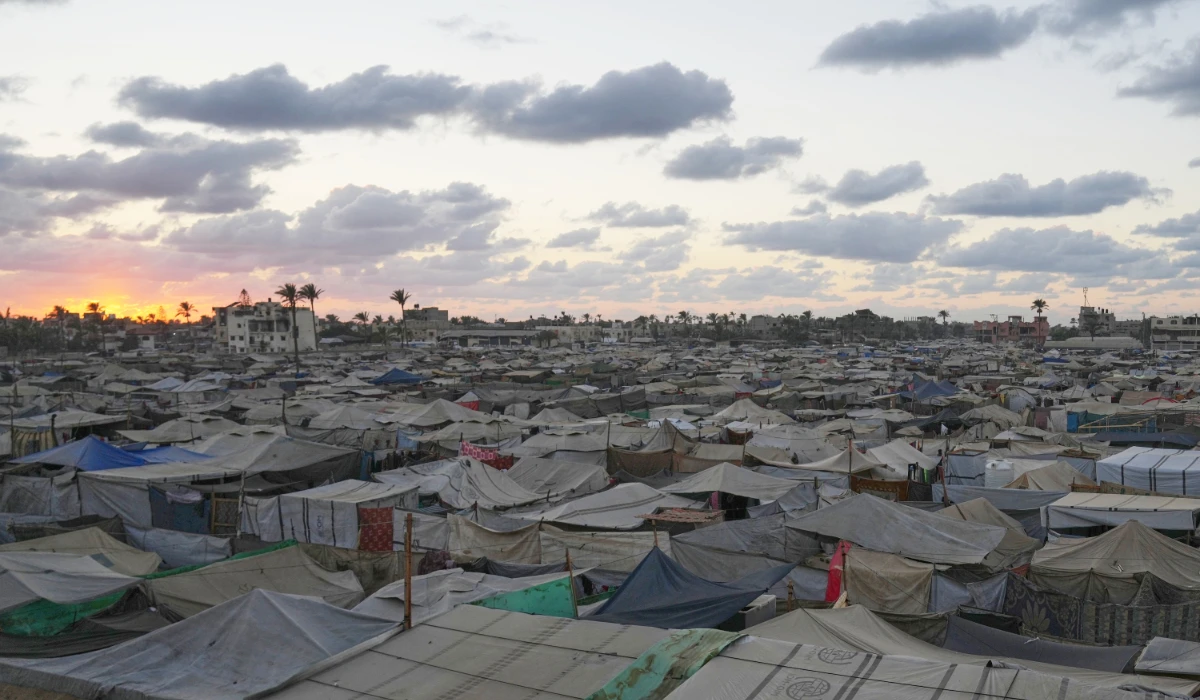
Trump’s plan has received wide international backing and raised hopes for an end to a devastating war that has upended global politics, left tens of thousands of Palestinians dead and the Gaza Strip in ruins. The war began on Oct. 7, 2023, when Hamas-led militants stormed into southern Israel and killed around 1,200 people, mostly civilians, and abducted 251.
Many uncertainties remain around the latest plan, including the demand for Hamas to disarm and the future governance of Gaza. Tuesday marks two years since the war began.
Here’s what we know:
Who’s at the talks
US envoy Steve Witkoff is leading the US negotiating team, according to a senior Egyptian official Saturday. Local Egyptian media said that Witkoff and Jared Kushner, Trump’s son-in-law, arrived in Egypt and are expected to join the talks.
Hamas said that its delegation will be headed by its chief negotiator, Khalil Al-Hayya, and Israel has said its delegation will be headed by top negotiator and Prime Minister Benjamin Netanyahu confidant Ron Dermer, although it wasn’t clear if he was on the ground in Egypt. Netanyahu’s office said that foreign policy adviser Ophir Falk would also be present for Israel among others.
It’s not clear how long the talks would last. Netanyahu said they would be “confined to a few days maximum,” and Trump has said that Hamas must move quickly, “or else all bets will be off.” Hamas officials have warned more time may be needed to locate bodies of hostages buried under rubble.
The plan’s essentials
All hostilities would — in theory — immediately end. Under the deal, Hamas would release all hostages it holds, living or dead, within 72 hours. The militants still have 48 hostages. Israel believes 20 of them are alive.
Israel would free 250 Palestinians serving life sentences in its prisons and 1,700 people detained from Gaza since the war began, including all women and children. Israel also would hand over the bodies of 15 Palestinians for each body of a hostage handed over.
Israeli troops would withdraw from Gaza after Hamas disarms, and an international security force would deploy. The territory would be placed under international governance, with Trump and former UK Prime Minister Tony Blair overseeing it.
An interim administration of Palestinian technocrats would run day-to-day affairs. Hamas would have no part in administering Gaza, and all its military infrastructure, including tunnels, would be dismantled. Members who pledge to live peacefully would be granted amnesty. Those who wish to leave Gaza can.
Palestinians wouldn’t be expelled from Gaza. Large amounts of humanitarian aid would be allowed and would be run by “neutral international bodies,” including the United Nations and the Red Crescent.
What Hamas has said
A Hamas statement on Friday said that it was willing to release the hostages and hand over power to other Palestinians, but that other aspects of the plan require further consultations among Palestinians. The statement made no mention of Hamas disarming, which is a key Israeli demand.
The statement also reiterated its longstanding openness to handing power over to a politically independent Palestinian body.
What Israel has said
Netanyahu said on Friday that Israel was prepared for the implementation of the “first stage” of Trump’s plan, apparently referring to the release of hostages. But his office said in a statement that Israel was committed to ending the war based on principles that it has set out before. Netanyahu has long said that Hamas must surrender and disarm.
Israel’s army on Saturday said that the country’s leaders had instructed it to prepare for the first phase of the US plan.
What remains uncertain
Questions include the timing of key steps. One Hamas official said that it would need days or weeks to locate some hostages’ bodies. And senior Hamas officials have suggested that there are still major disagreements requiring further negotiations. A key demand is for Hamas to disarm, but the group’s response made no mention of that.
It’s not clear that Hamas officials can agree among themselves on the plan.
A senior official, Mousa Abu Marzouk, said that Hamas was willing to hand over its weapons to a future Palestinian body that runs Gaza, but there was no mention of that in the group’s official statement responding to Trump’s plan. Another official, Osama Hamdan, told Al Araby television that Hamas would refuse foreign administration of the Gaza Strip and that the entry of foreign forces would be “unacceptable.”
Parts of the plan remain unclear. Hamas wants Israel to leave Gaza completely, but the plan says Israel would maintain a “security perimeter presence,” which could mean it would keep a buffer zone inside the territory.
And the future of Gaza remains in question. The plan says that if the Palestinian Authority, which administers the occupied West Bank, reforms sufficiently and Gaza redevelopment advances, “the conditions may finally be in place for a credible pathway to Palestinian self-determination and statehood.”