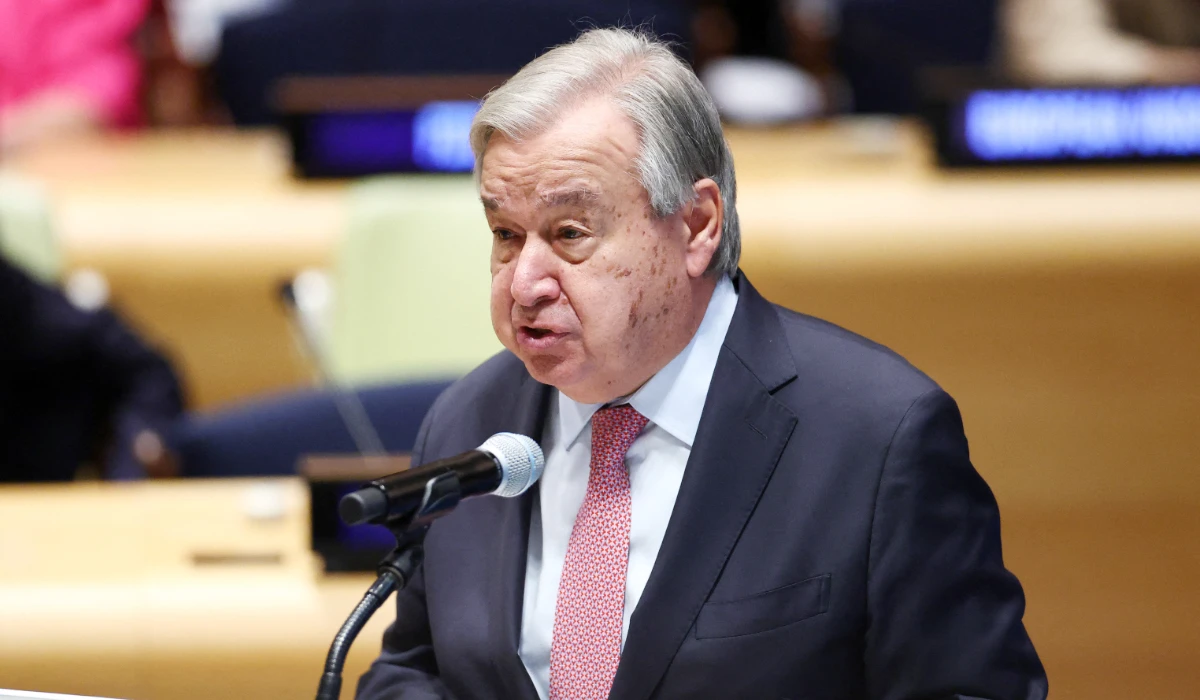
- “Around the globe, we see troubling trends in military spending, more armed conflicts, and more shocking brutality against women and girls,” Secretary-General Antonio Guterres told a UN Security Council meeting marking the anniversary
UNITED NATIONS: Twenty-five years after a landmark UN resolution demanded equal participation for women in all efforts to promote peace, the United Nations chief said Tuesday that far too often women remain absent.
At the same time, sexual violence against women and girls is on the rise and 676 million women live within 50 kilometers (30 miles) of deadly conflicts, which the head of the UN women’s agency says is the highest number since the 1990s.
“Around the globe, we see troubling trends in military spending, more armed conflicts, and more shocking brutality against women and girls,” Secretary-General Antonio Guterres told a UN Security Council meeting marking the anniversary.
Since the resolution’s adoption on Oct. 31, 2000, there has been some progress, he said. The number of women in uniform as UN peacekeepers has doubled, women have led local mediation, advanced justice for survivors of gender-based violence, and women’s organizations have been instrumental in promoting recovery from conflicts and reconciliation.
“But gains are fragile and – very worryingly – going in reverse,” Guterres said.
In no-nonsense language, Guterres said too often nations gather in rooms like the Security Council chamber “full of conviction and commitment,” but fall far short of the resolution’s demand for equal participation of women in peace negotiations — and protection of women and girls from rape and sexual abuse in conflicts.
Despite the horrors of war, UN Women Executive Director Sima Bahous also pointed to some progress. She said women have reduced community violence in the disputed Abyei region between Sudan and South Sudan and in the Central African Republic.
In Haiti, women have achieved near parity in the new provisional electoral council, and women’s representation in Chad’s National Assembly has doubled, she said. Syria’s interim constitution guarantees rights and protections for women, and in war-torn Ukraine women have succeeded in getting national relief efforts helping women codified into law.
But Bahous also said it’s lamentable that the world today is witnessing “renewed pushback against gender equality and multilateralism.” She said the situation is being exacerbated by what she called short-sighted funding cuts.
These cuts are undermining education opportunities for Afghan girls, curtailing life-saving medical care for tens of thousands of sexual violence survivors in Sudan, Haiti and beyond, and limiting access to food for malnourished women and children in Gaza, Mali, Somalia and elsewhere, Bahous said.
She stressed that change is possible.
“It is understandable that some might conclude that the rise and normalization of misogyny currently poisoning our politics and fueling conflict is unstoppable,” Bahous said. “It is not. Those who oppose equality do not own the future, we do.”
Guterres urged the UN’s 193 member nations to increase their commitment to women caught in conflict with new funding and by ensuring their participation in peace negotiations, accountability for sexual violence and their protection and economic security.