Ford Motors gearing up to launch EV in the Saudi market

Ford Motors gearing up to launch EV in the Saudi market
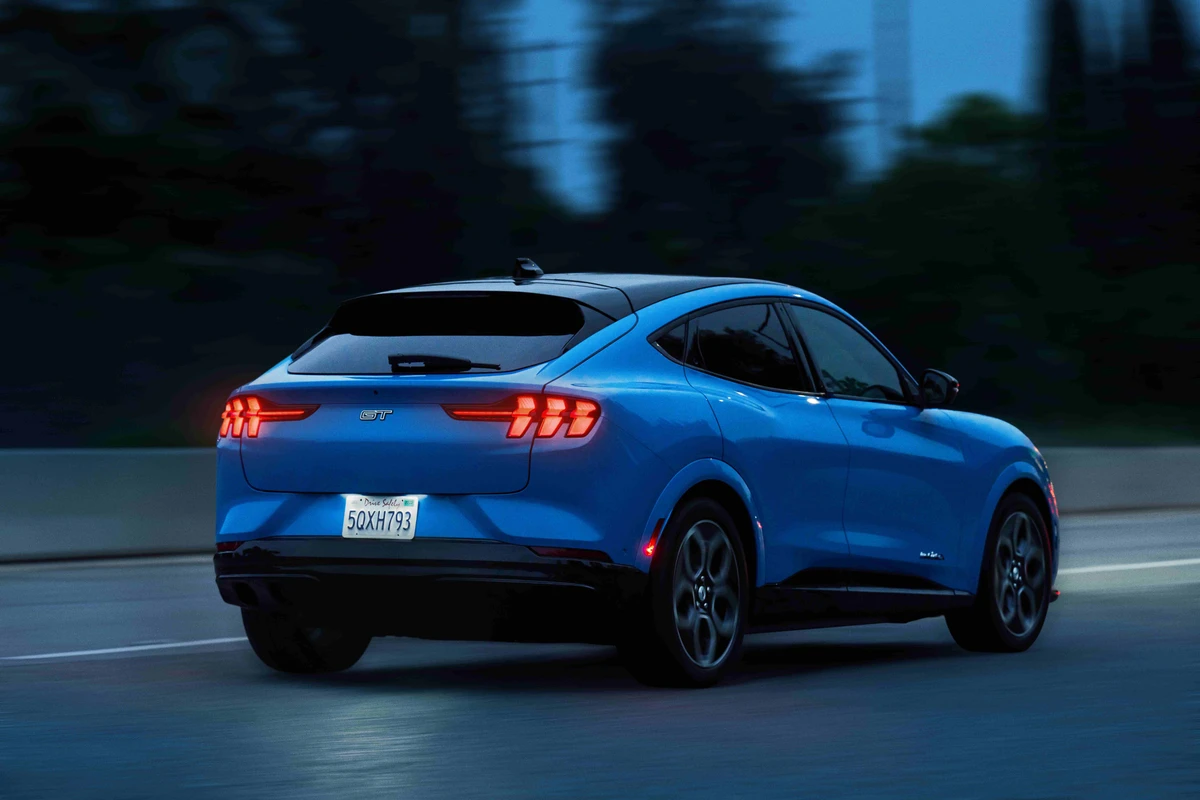
The Mustang Mach-E will be available in the Kingdom from this November. Supplied
Short Url
Updated 07 October 2025
Follow

Ford Motors gearing up to launch EV in the Saudi market

Ford Motors gearing up to launch EV in the Saudi market

RIYADH: Ford Motors is set to join Saudi Arabia’s electric vehicle market, rolling out the Mustang Mach-E in the Kingdom this November.

The US motor vehicle brand is set to test the waters with its first EV by rolling out 500 to 1,000 units in the Saudi market. This launch comes as year-to-date sales in Saudi Arabia are up 16 percent compared to August 2024. 

The EV market in Saudi Arabia is gaining momentum, a trend supported by the expansion of competitors such as the Public Investment Fund-backed Lucid, Chinese company BYD, and the establishment of the Kingdom’s first homegrown electric vehicle brand, Ceer.

Ravi Ravichandran, president of Ford Middle East and North Africa, told Arab News: “We are launching the Mustang Mach-E full battery this year.” 

“We are looking at 500-1,000 units, how we see the response and how good it is, and if there is a demand, we can always produce [more],” he added. 

The president of Ford MENA highlighted that, in the initial stages, they will test the market’s demand for the vehicles. He also clarified, “At this point, we don’t see a battery electric as a significant demand in the region.”

Ravichandran underlined that the Mustang Mach-E, which is already present in the US market, received initial positive feedback due to the government credit provided for driving EVs. 

“This Mustang Mach-E is a performance segment, and it will be on a top-end, high-end pricing,” Ravichandran said.

Adoption of EVs in the US stands at 2-3 percent, while the rate in Saudi Arabia is lower as it is “just starting,” he said, adding: “We don’t see an immediate takeoff on battery electric here. People are more into hybrids, even in the US.”

The Ford Motor Team also announced the launch of the new Territory hybrid in Saudi Arabia.

“Over the next five years, we will see more hybrids, and then the EV will take a bit more time,” he said.

Saudi Arabia aims to reduce carbon emissions by 50 percent and has an ambitious goal to transition 30 percent of all vehicles in Riyadh to electric by 2030.

“We also would look at partnerships if the government and the industry are shifting towards battery electric; we will also be a part of that growth story in terms of infrastructure and in terms of how the government wants to move into that direction,” Ravichandran said.

“We are investigating areas in that,” he said. 

Ford identified challenges in EV adoption in Saudi Arabia, including infrastructure, range anxiety, the affordability of the vehicles, and the impact of high temperatures on performance.

Saudi Arabia is aiming to tackle charging infrastructure limitations through entities such as EVIQ, a joint venture between the Public Investment Fund and Saudi Electricity Co. to provide EV infrastructure.

EVIQ has signed a memorandum of understanding with Black Lane and Universal Motors Agencies, one of Saudi Arabia’s premier automotive dealers, to enhance EV charging access and awareness across the Kingdom.

EVIQ hopes to break the charging infrastructure stalemate by installing over 5,000 fast chargers across 1,000 locations throughout the Kingdom.

Highlighting its local commitment, PIF-backed Lucid recently revealed in its third-quarter 2025 figures that over 1,000 vehicles were built during the three-month period for final assembly at the company’s Saudi facility.


Saudi Arabia’s non-oil sector posts strong growth as PMI hits 60.2 

Saudi Arabia’s non-oil sector posts strong growth as PMI hits 60.2 
Updated 8 sec ago
Follow

Saudi Arabia’s non-oil sector posts strong growth as PMI hits 60.2 

Saudi Arabia’s non-oil sector posts strong growth as PMI hits 60.2 

RIYADH: Saudi Arabia’s non-oil economy accelerated in October, with the Purchasing Managers’ Index climbing to 60.2, its second-highest level in more than a decade, signaling strong business growth momentum. 

The latest survey by Riyad Bank and S&P Global showed a sharp improvement in operating conditions across the Kingdom’s private sector, underpinned by solid demand, rising employment, and robust output growth.  

The October reading, up from 57.8 in September, highlights the sustained momentum of the non-oil economy as Vision 2030 reforms continue to drive diversification away from crude revenues. 

Speaking at the Future Investment Initiative in October, Saudi Arabia’s Minister of Economy and Planning Faisal Alibrahim said the Kingdom’s gross domestic product is expected to expand by 5.1 percent in 2025, supported by continued growth in non-oil activities. 

Commenting on the latest report, Naif Al-Ghaith, chief economist at Riyad Bank, said: “Saudi Arabia’s non-oil private sector recorded a solid improvement in business conditions in October, with the PMI rising to 60.2, marking one of the strongest readings in over a decade.”  

He added: “The acceleration was driven by broad-based gains in output, new orders, and employment, reflecting sustained demand momentum and continued strength in the non-oil economy.”  

Al-Ghaith noted that the latest survey results also indicate a strong start to the final quarter of the year, supported by both domestic and external demand. 

According to the report, the pace of growth in new orders received by non-oil companies accelerated for the third consecutive month in October, with 48 percent of surveyed firms reporting higher sales. 

Participating companies attributed the sales growth to improving economic conditions, a growing client base, and increased foreign investment. 

Output and employment also expanded sharply during the month, with job creation rising at the fastest pace in nearly 16 years.

Al-Ghaith said the persistent rise in new export orders highlights the growing competitiveness of Saudi firms and the progress achieved under ongoing diversification initiatives. 

“The rise in demand encouraged firms to expand production and workforce capacity at the fastest rate since 2009, as businesses expanded capacity to meet new workloads. Purchasing activity and inventories also increased, while suppliers’ delivery times continued to improve, reflecting efficient coordination and resilient supply chains,” he added.  

October data indicated a sharp rise in input costs for non-oil firms, driven mainly by wage increases from salary revisions and bonuses. 

On the outlook, companies remained optimistic, citing strong market demand, ongoing project work, and government investment initiatives. 

“Optimism is underpinned by solid domestic demand and the momentum of ongoing projects. Although some concerns persist around costs and competition, sentiment overall remains strongly positive, reflecting confidence in the economy’s continued expansion and the strength of the non-oil private sector,” concluded Al-Ghaith.