Israeli forces intercept new Gaza-bound aid flotilla

Update Israeli forces intercept new Gaza-bound aid flotilla
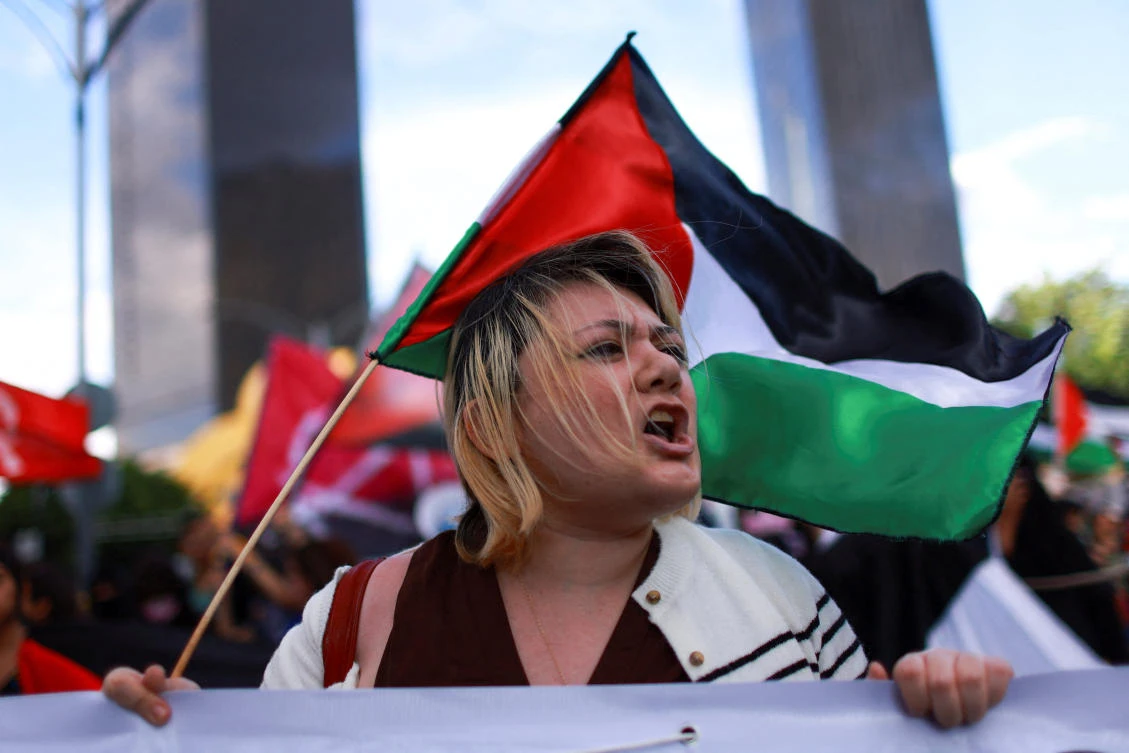
A demonstrator takes part in a pro-Palestinian protest after Israeli forces intercepted the vessels of the Global Sumud Flotilla aiming to reach Gaza and break Israel's naval blockade, in Mexico City, Mexico October 7, 2025. (Reuters)
Short Url
Updated 08 October 2025
Follow

Israeli forces intercept new Gaza-bound aid flotilla

Israeli forces intercept new Gaza-bound aid flotilla
  • The Gaza Freedom Flotilla said its vessels were under attack by the Israeli military
  • Authorities detained Belgian rapper Youssef Swatt’s aboard one of the boats, his lawyers said

JERUSALEM: Israeli forces on Wednesday intercepted a new Gaza-bound aid flotilla, days after thwarting another maritime convoy that had tried to break Israel’s blockade on the war-battered Palestinian territory.
The Global Sumud Flotilla first reported that three of its vessels had been “attacked and illegally intercepted by the Israeli military” in the early morning, 220 kilometers (about 140 miles) off the coast of Gaza.
It later said all nine of the latest flotilla’s vessels had been intercepted, including one, the Conscience, carrying more than 90 journalists, doctors and activists.
Israel has blocked several international aid flotillas in recent months from reaching Gaza, where the United Nations says famine has set in after two years of devastating conflict.
As the war drags on, solidarity with the Palestinians has grown globally, with activists, protesters across the world and increasingly governments condemning Israel for its conduct.
Israel confirmed on Wednesday it had intercepted boats entering waters it says fall under its blockade of Gaza.
“Another futile attempt to breach the legal naval blockade and enter a combat zone ended in nothing. The vessels and the passengers are transferred to an Israeli port,” its foreign ministry said on social media.
“The passengers are expected to be deported promptly,” it added.
The pro-Palestinian activist group Freedom Flotilla Coalition said the boats were carrying “vital aid worth over $110,000... in medicines, respiratory equipment, and nutritional supplies that were destined for Gaza’s starving hospitals.”
Turkiye’s foreign ministry accused Israel of carrying out an “act of piracy,” describing the intervention against the flotilla as “an attack on civil activists, including Turkish citizens and members of parliament.”

Belgian rapper detained

Israeli authorities detained Belgian rapper Youssef Swatt’s aboard one of the boats, his lawyers said.
Irene Khan, UN special rapporteur on freedom of expression and opinion, said Israel was obliged to “ensure the rights of all those being arbitrarily detained.”
“This attack against unarmed civilians on the high seas is yet another violation of international law by Israel,” she said in a statement.
Last week, Israeli naval forces stopped another flotilla of 45 vessels from the Global Sumud campaign that was carrying politicians and activists including Swedish climate campaigner Greta Thunberg.
The move drew mass protests across Europe.
Palestinian Islamist movement Hamas, whose October 7, 2023 attack on Israel sparked the war in Gaza, condemned the interception as a “crime of piracy and maritime terrorism.”
Israel expelled Thunberg and scores of fellow campaigners on Monday, many of whom complained of mistreatment at the hands of the Israeli authorities — accusations Israel rejected.
Israel has sought to brand the Global Sumud Flotilla an offshoot of Hamas.
It said the boats violated a prohibited zone and that little humanitarian aid was found on board the vessels.
Palestinian militants’ October 7 attack on Israel resulted in the deaths of 1,219 people, mostly civilians, according to an AFP tally of official Israeli figures.
Israel’s military campaign in Gaza has killed at least 67,183 people, according to the health ministry in the Hamas-run territory, figures the United Nations considers credible.
The data does not distinguish between civilians and combatants but indicates that more than half the dead are women and children.
Iraqis vote in a parliamentary election marked by tight security and a major political boycott

Iraqis vote in a parliamentary election marked by tight security and a major political boycott
Updated 11 min 43 sec ago
Follow

Iraqis vote in a parliamentary election marked by tight security and a major political boycott

Iraqis vote in a parliamentary election marked by tight security and a major political boycott
  • The election is taking place against the backdrop of major shifts in the region over the past two years

BAGHDAD: Iraqis headed to the polls on Tuesday to vote in a parliamentary election marked by tight security and a boycott by a major political bloc.
A total of 8,703 polling stations were open across the country for the general election. Members of the security forces and displaced people living in camps cast their ballots in early voting on Sunday.
Turnout was sparse in the early hours Tuesday at polling stations visited by Associated Press journalists. Initial results were expected on Wednesday.
Only 21.4 million out of a total of 32 million eligible voters updated their information and obtained voter cards ahead of the polling, a decrease from the last parliamentary election in 2021, when about 24 million voters registered.
The election is taking place against the backdrop of major shifts in the region over the past two years — including the wars in Gaza and Lebanon after the Oct. 7, 2023 Hamas-led attacks on southern Israel, the Israel-Iran war in June, and the fall of Syrian President Bashar Assad last December.
These developments come as US pressure intensifies on the Iraqi government to curb the influence of Iran-aligned armed factions, some of which have candidates participating in Tuesday’s vote.
The popular Sadrist Movement, led by influential Shiite cleric Muqtada Al-Sadr, is boycotting the polls. Al-Sadr’s bloc won the largest number of seats in the 2021 election but later withdrew after failed negotiations over forming a government, amid a standoff with rival Shiite parties. He has since boycotted the political system.
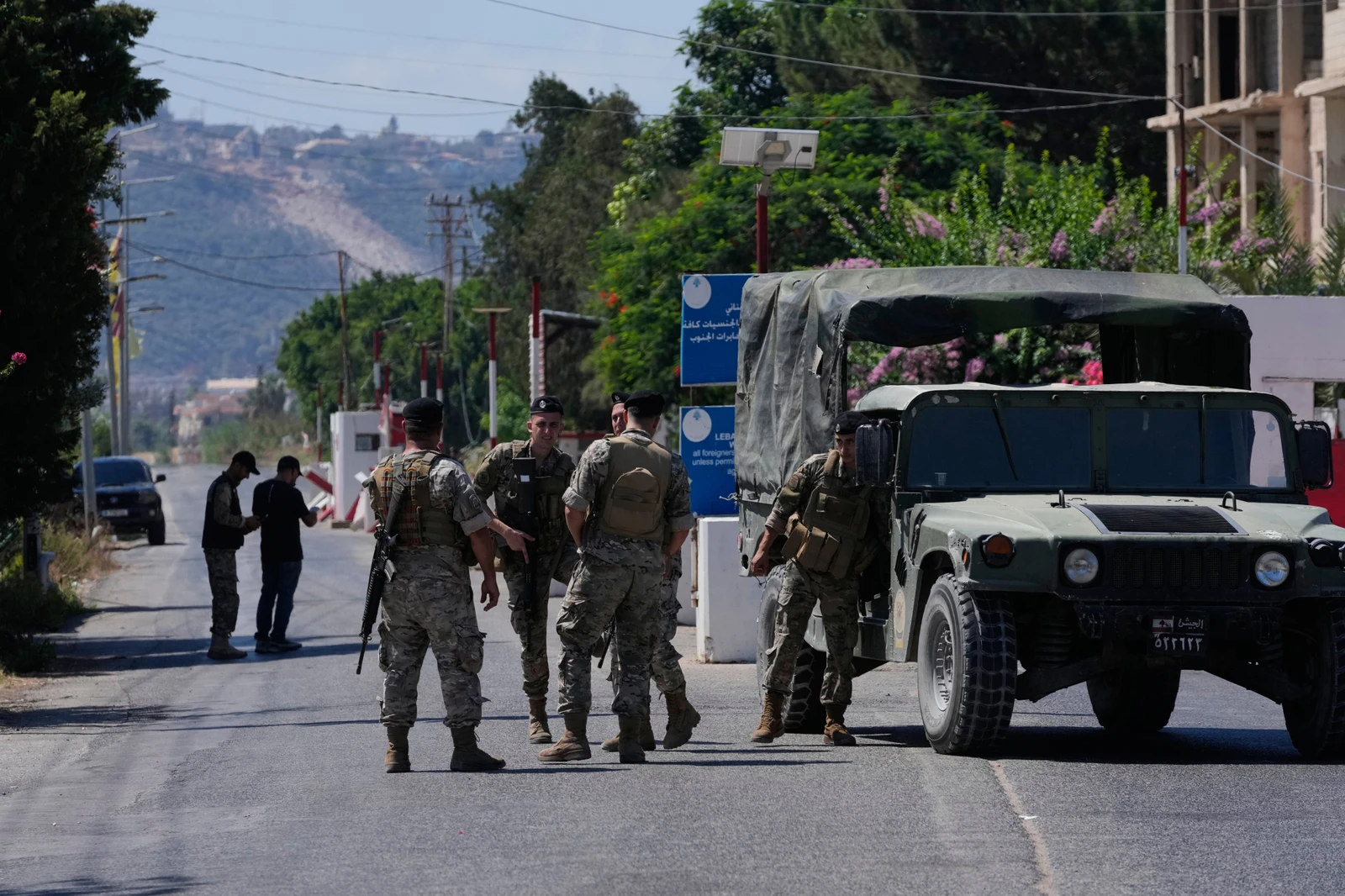
At the entrance to Sadr City — a sprawling stronghold of the Sadrist movement on the outskirts of Baghdad — security was noticeably tighter than in other parts of the Iraqi capital. Iraqi special forces and federal police were deployed across the area, with armored vehicles and Humvees stationed along the main roads, manned by heavily armed soldiers.
A large banner showed Al-Sadr wearing military fatigues and holding a weapon, with the words, “My people in Sadr City are boycotting.” On a main Sadr City street, all shops were shuttered, and posters of slain Sadr loyalists lined the walls.
Polling station were open but were almost completely empty. At one, which serves 3,300 voters, station director Ahmed Al-Mousawi said a few hours into the balloting that fewer than 60 people had voted.
“The Sadrist boycott has had a major impact,” he said. “In previous elections, there used to be long lines from the early morning hours, but today the difference is dramatic.”
Sabih Dakhel, a 54-year-old voter who came with his wife, said they had decided to vote in hopes that new elected officials might improve living conditions for people like them.
“We were able to vote freely today, but the Sadrist boycott has deeply affected participation,” Dakhel said. “Sadr City feels almost like a lockdown because of Muqtada Al-Sadr’s call for his followers to stay home.”
The election results could also face legal challenges. The head of Iraq’s Supreme Judicial Council wrote in a statement published on the council’s website that the election date set for Tuesday is unconstitutional, noting that the vote was originally scheduled for Nov. 24.