- More than 100 remain in Israeli prisons, including Dr. Hossam Abu Safiya, a hospital director who became the face of the struggle to keep treating patients
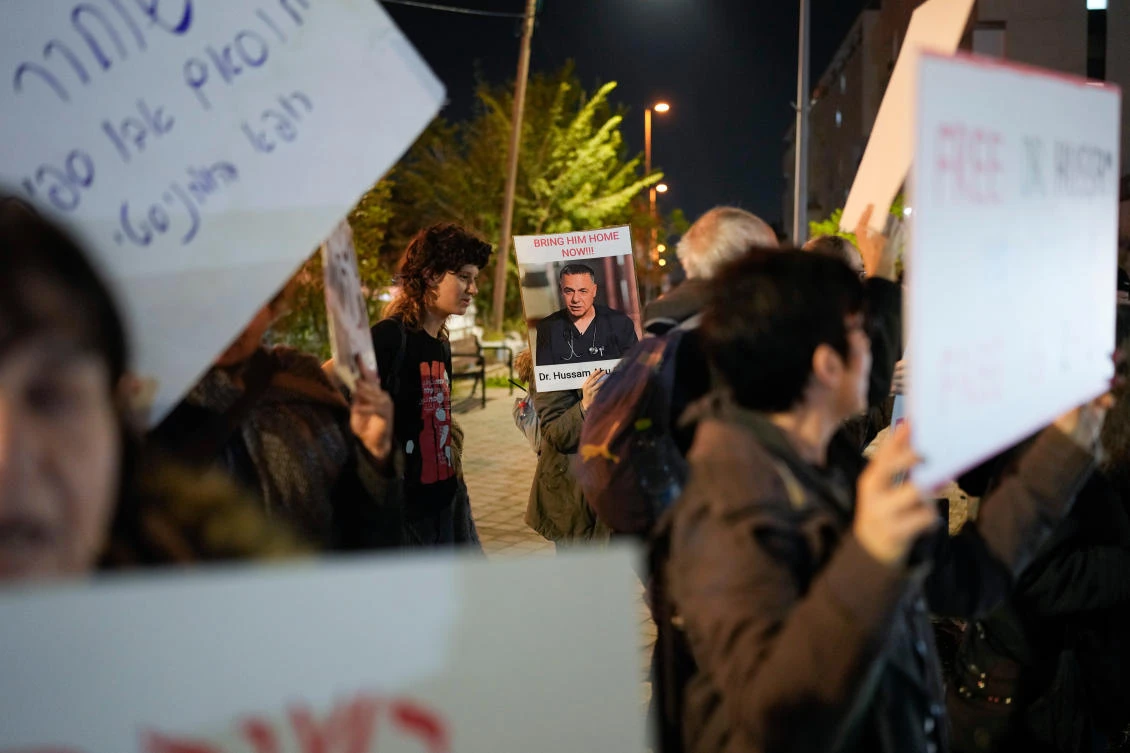
CAIRO: Under Gaza’s ceasefire deal, Israel freed dozens of doctors, nurses, paramedics and other medical personnel seized during raids on hospitals. But more than 100 remain in Israeli prisons, including Dr. Hossam Abu Safiya, a hospital director who became the face of the struggle to keep treating patients under Israeli siege and bombardment.
Despite widespread calls for his release, Abu Safiya was not among the hundreds of Palestinian detainees and prisoners freed Monday in exchange for 20 hostages held by Hamas. Abu Safiya, director of Kamal Adwan Hospital in northern Gaza, has been imprisoned without charge by Israel for nearly 10 months.
Health Workers Watch, which documents detentions from Gaza, said 55 medical workers – including 31 doctors and nurses – were on lists of detainees from Gaza being freed Monday, though it could not immediately be confirmed all were released. The group said at least 115 medical workers remain in custody, as well as the remains of four who died while in Israeli prisons, where rights groups and witnesses have reported frequent abuse.
Cheering staff from Al-Awda Hospital carried on their shoulders their released director, Ahmed Muhanna, who was held by Israel for about 22 months since being seized in a raid on the facility in northern Gaza in late 2023.
“Al-Awda Hospital will be restored, its staff will rebuild it with their own hands … I am proud of what we have done and will do,” Muhanna told well-wishers, his face visibly gaunter than before his detention, according to video posted on social media.
Al-Awda Hospital, damaged during multiple offensives in the largely leveled Jabaliya refugee camp, has been shut down since May, when it was forced to evacuate during Israel’s latest offensive.
Israel’s two-year campaign aiming to destroy Hamas after its Oct. 7, 2023, attack decimated Gaza’s health system, forcing most of its hospitals to shut down and heavily damaging many, even as staff struggled to treat waves of wounded from bombardment amid supply shortages. During the war, Israeli forces raided a number of hospitals and struck others, detaining hundreds of staff.
Israel says it targeted hospitals because Hamas was using them for military purposes, a claim Palestinian health officials deny.
Abu Safiya
It was not known if Abu Safiya, 52, might still be released. Israeli officials did not immediately respond to requests for comment. His family said on social media there were “no confirmed details about the date of his release,” adding that freed detainees described him as “in good health and strong spirits.”
The Israeli military said Abu Safiya was being investigated on suspicion of cooperating with or working for Hamas. Staff and international aid groups that worked with him deny the claims. In November 2023, Israeli forces seized Dr. Mohamed Abu Selmiya, director of Gaza City’s Shifa Hospital, declaring him a Hamas officer – but then released him seven months later.
Abu Safiya, a pediatrician, led Kamal Adwan Hospital through an 85-day siege of the facility during an Israeli offensive in the surrounding districts of Jabaliya, Beit Lahiya and Beit Hanoun. The videos he put out made him a rallying figure for medical staff across Gaza who, like him, kept working under siege, even while injured or when family members were killed.
When troops raided the hospital on Dec. 27, images showed Abu Safiya in his white lab coat walking out of the building through streets of rubble toward an Israeli armored vehicle to discuss evacuation of patients. Abu Safiya and dozens of others, including patients and staff, were taken prisoner.
Abu Safiya “stayed in the hospital until the last moment. He didn’t leave because all health care services there would collapse if he left. Dr. Hossam is a truly great man,” said Dr. Saeed Salah, medical director of the Patient’s Friends Hospital in Gaza City, who has known Abu Safiya for 29 years.
Surviving siege
Throughout the siege, Abu Safiya repeatedly refused military calls to shut down the hospital. He posted frequent videos on social media showing staff struggling to treat waves of wounded Palestinians. He pleaded for international help as the hospital’s supplies ran out and reported on Israeli strikes on the building that caused injuries and deaths among patients and staff, and damaged wards.
In October 2024, a drone strike killed one of his sons, Ibrahim, at the hospital entrance.
“I refused to leave the hospital and sacrifice my patients, so the army punished me by killing my son,” he said in a video afterward, breaking down in tears.
The next month, shrapnel from a drone blast wounded Abu Safiya as he sat in his office.
“Even with his wound, he was circulating among the patients … He was sleeping, eating, drinking among the patients,” said Dr. Rana Soboh, a nutrition technical adviser for the US medical aid group MedGlobal.
Abu Safiya became the hospital’s director in late 2023 after his predecessor, Dr. Ahmed Kahlout, was seized in an Israeli raid. Kahlout is also still being held by Israel, which accused him of being a member of Hamas, though he is not known to have been charged.
Abu Safiya worked to rebuild the heavily damaged hospital, reviving its intensive care unit and pediatric ward. Soboh worked with him to set up a malnutrition unit that has treated hundreds of children.
He “is an amazing doctor,” she said. “He built things out of nothing.”
The raid
On Dec. 27, troops surrounded the compound. Abu Safiya’s son Elias, who was in the hospital, said his father went out to talk to the officers, then returned and asked the staff to gather everyone – patients, staff and family members – in the courtyard. Some were evacuated to other hospitals, others were detained.
Zaher Sahloul, president of MedGlobal, said troops wrecked the hospital’s radiology department and operating rooms, and destroyed ventilators.
The Israeli military said it launched the raid after warning staff multiple times about Hamas fighters it claimed were operating from the hospital.
Days after Abu Safiya was detained, his 74-year-old mother died, Elias said.
“She hadn’t stopped crying since they detained him,” he said.
Imprisonment
Abu Safiya is currently being held at Israel’s Ofer Prison in the occupied West Bank. The Israeli rights group Physicians for Human Rights–Israel, which visited him in September, said he had not been brought before a judge or interrogated and had no information about why he was detained.
Abu Safiya said he and other detainees received insufficient food and medical care, the group said, adding that he had lost about 25 kilograms since his detention. It said he reported that guards regularly beat prisoners during searches of their cells.
The Israelis “knew that he was a symbol for Gaza, said Islam Mohammed, a freelance journalist who was detained with Abu Safiya in the raid on Kamal Adwan Hospital. For a period, he was held at Sde Teiman Prison at the same time as Abu Safiya, though in a different cell, and said he and other detainees were often beaten, and guards shouted insults at them.
“The treatment was inhuman from the time of detention, until release,” said Mohammed, who was released to Gaza on Monday. “To call it a beating does not describe it,” he said.
Israeli officials say they follow legal standards for treatment of prisoners and that any violations by prison personnel are investigated.