- Comments came days after New York Times report revealed Shireen Abu Akleh was intentionally killed, but that the Biden administration ‘soft-pedaled’ this assessment to appease Israel
- ‘No government should compromise the truth and the safety of its citizens to protect political interests,’ says Tony Abu Akleh
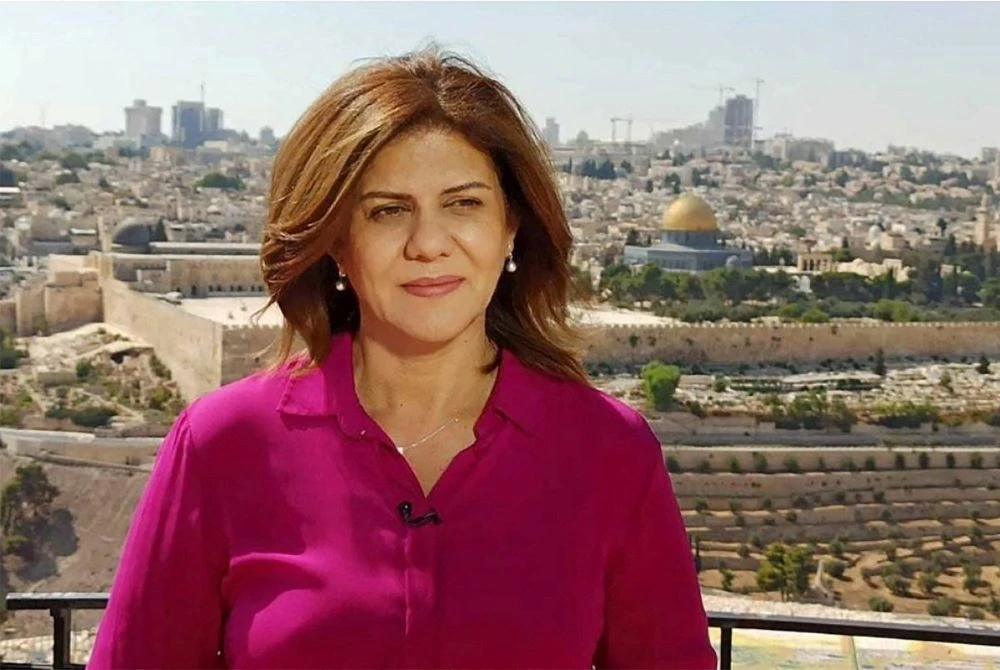
LONDON: The brother of journalist Shireen Abu Akleh, who was shot dead by the Israeli army while covering a raid in the West Bank in 2022, has alleged that new revelations from an American military officer who investigated her killing reveal a US cover-up.
Tony Abu Akleh’s comments follow a report by The New York Times stating that Col. Steve Gabavics and four other unnamed sources who were part of the investigative team concluded that Shireen, a Palestinian-American correspondent for Al Jazeera, was intentionally killed, but that the administration of then US President Joe Biden “soft-pedaled” this assessment to appease Israel.
“It was from day one we knew everything. They were trying to cover it up … obviously for political gains,” Tony told the BBC on Tuesday.
“We believe that the US government intentionally downplayed these findings and softened the language just to avoid holding Israel accountable, which is really disappointing. No government should compromise the truth and the safety of its citizens to protect political interests.”
Shireen was killed while reporting on an Israeli army raid in Jenin in May 2022.
Multiple investigations by the UN, The New York Times, and others concluded she was deliberately shot by Israeli forces.
Although Israel initially blamed Palestinian gunmen, it later acknowledged she was very likely shot by an Israeli soldier who “misidentified” her.
The Biden administration supported this narrative, stating it “found no reason to believe” the US citizen was intentionally targeted, a position Tony described at the time as a “whitewash.”
Gabavics, a retired US military policeman involved in the investigation, told The New York Times earlier this week that he was certain the Israeli sniper knew he was targeting a journalist, even if not Shireen specifically.
Based on records of Israeli military radio traffic, Shireen’s clearly visible position, and the precision of the shot, Gabavics stressed that the evidence strongly suggested the shooting was deliberate.
He also revealed that he clashed with his then superior, Lt. Gen. Michael R. Fenzel, over the question of intent, which resulted in Gabavics being sidelined.
Gabavics, who was the key informant behind a Zeteo documentary claiming to identify the shooter, told the BBC that the evidence reviewed “indicated clearly that it was intentional.”
He said: “I would like the administration to really go back and talk to Israel and hold them accountable, to make them actually do a deliberate investigation, even with the facts almost, you know, multiple years removed. They still exist there, that they can go back to make a determination.”
On Tuesday, media rights groups also called for “an independent and transparent” investigation into the killing.
“The US government owes the public — and Shireen Abu Akleh’s family — more than words of regret,” said the Committee to Protect Journalists’ CEO Jodie Ginsberg.
“It has a responsibility to its citizens. These new disclosures reinforce the need for an independent investigation that finally delivers accountability. Without such accountability, Israeli forces will continue to take journalists’ lives — because they know they can do so without consequence.”