

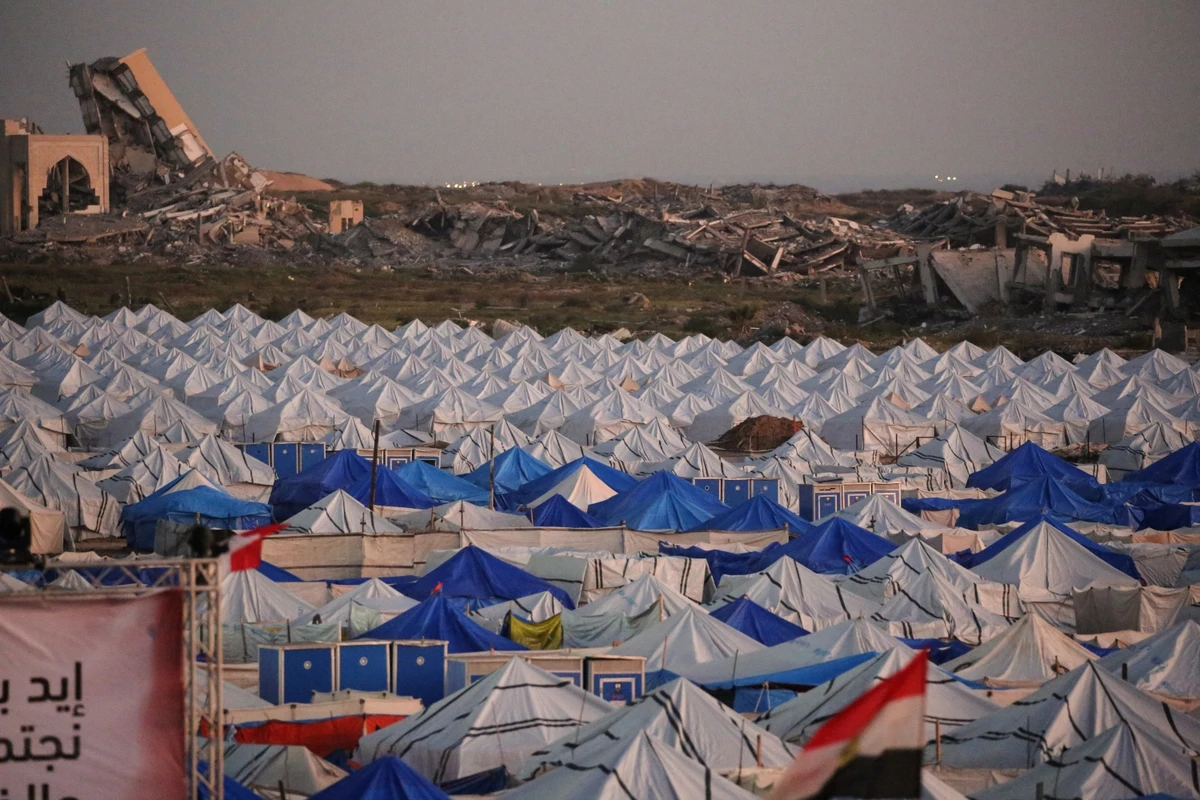

Let us imagine a liberated Palestine. Let us consider how justice for the Palestinian people would reshape not only the region but the entire globe.
This is not a conversation about a “political solution” in the narrow, bureaucratic sense. Such solutions require no particular genius: true justice can only occur when the Palestinian people are granted the totality of their rights and the fulfillment of their political aspirations.
Equally true is the reality that no such justice can manifest so long as Israel remains committed to its current Zionist ideology — a framework predicated on racial supremacy and the systematic eradication of the indigenous Palestinian population. Once the shackles of this ideology are broken, the exact political mechanics become secondary; history suggests that the future would lean toward a shared coexistence rather than a continuation of the current segregation along ethnic lines.
To some, discussing a liberated Palestine now may appear slightly — though not entirely — removed from the current war ravaging the region. It is a war that, if not permanently halted, will continue to devastate the peoples of the Middle East, inviting further militarization, runaway defense spending and cycles of violence. On the contrary, this is the most critical discussion we can have today.
Palestine has remained the beating heart of every Middle Eastern war and every persistent conflict
Dr. Ramzy Baroud
In his seminal 2002 documentary “Palestine is Still the Issue,” the late Australian journalist and filmmaker John Pilger summed up the centrality of Palestine to the Middle East with these prescient words: “A historic injustice has been done to the Palestinian people and until Israel’s illegal and brutal occupation ends, there will be no peace for anyone, Israelis included.”
These are not mere words of posturing; they are an undeniable historical truth. Palestine has remained the beating heart of every Middle Eastern war and every persistent conflict. For Israel, the occupation has served as the linchpin for its military incursions across borders. For Palestine’s neighbors and allies, it remains the unhealed wound of a region historically unified by political, cultural, linguistic and religious continuity.
Even during periods when Palestine was seemingly relegated to the periphery of regional diplomacy, Israel was keen to remind its neighbors that its designs were never limited to the Palestinians alone. Whether in historic Palestine or the diaspora, the Zionist project has always signaled broader ambitions.
Israeli Prime Minister Benjamin Netanyahu has explicitly confirmed this expansionist intent, last year declaring that he is on a “historic and spiritual mission” to realize the vision of a “Greater Israel.” By openly connecting with a map that swallows Palestinian land and threatens the sovereignty of neighboring Arab states, he has made it clear that the erasure of Palestine is merely the first step in a much larger colonial design.
The current war confirms this centrality. Its origins, the ensuing political discourse and the clashing visions of a “postwar” reality all pull Palestine back to the center of the global stage. To discuss Palestine as if it were an isolated issue — as some unfortunately do — is a profound historical mistake. Conversely, to discuss the future of the Middle East without centering Palestine is equally delusional.
Therefore, we must insist on discussing Palestine now more than ever. Once a just outcome to the Palestinian struggle is achieved, the waves of positivity will transform the region. Only then can we move from a state of perpetual warfare to a future rooted in genuine, collective liberation.
That said, do not expect a list of dry political recipes to follow. We already know, instinctively, what justice for Palestinians looks like. The freedom to live, to be treated as equals, to enjoy sovereignty and to demand accountability and respect — these do not require exhaustive citations of international law. These are natural rights; they flow through us, individually and collectively, as surely as the blood in our veins.
To discuss Palestine as if it were an isolated issue — as some unfortunately do — is a profound historical mistake
Dr. Ramzy Baroud
The fact that Israel and its enablers refuse to respect international law or adhere to any common humanitarian principle is no fault of the Palestinians or the other victims of Israeli aggression. The moral and legal burden must be shouldered entirely by those who have abused, disregarded and attempted to dismantle the international legal order for far too long.
Today, the Palestinians — much like the people of Lebanon, Syria and other nations across the region — are doing exactly what every oppressed nation must do: they are remaining steadfast. This “sumoud” is key, now more than ever before. The ultimate outcome of this conflict will not be determined by lopsided death tolls or the sheer scale of destruction but by the unyielding resilience of the people. History is a patient teacher; it tells us that if the rightful owners of the land hold their ground, they will eventually win.
Richard Falk, the former UN special rapporteur on Palestinian human rights and a prominent legal scholar, refers to this phenomenon as winning the “legitimacy war.” It is a war fought not with fighter jets but with the moral clarity of those who refuse to disappear.
If true justice prevails in Palestine, it will inevitably prevail in Lebanon, Syria and beyond. The exhausted branding of the Middle East as a “war-torn” region will finally vanish. A just peace will invite more than just the absence of war; it will invite opportunity, reconstruction, a collective regional rise and — most importantly — the restoration of hope.
This is not a desperate wish whispered in a time of darkness. It is the only way out.
- Dr. Ramzy Baroud is a journalist, author and the editor of The Palestine Chronicle. His latest book, “Before the Flood,” was published by Seven Stories Press. His website is www.ramzybaroud.net. X: @RamzyBaroud


