- Keir Starmer’s exit leaves Gulf governments recalibrating relationships as Britain prepares for its seventh prime minister in a decade
- Experts expect continuity on Gulf policy, but question Andy Burnham’s foreign affairs experience and future approach to Palestine
LONDON: It is a measure of the importance that successive UK governments have placed on close economic and political ties with the Gulf, to say nothing of Britain’s historic connections to the region, that since 2007 and the premiership of Gordon Brown, British prime ministers have paid no fewer than 34 official visits to the Gulf states — three more than the total number of trips made to the US in that time.
With 11 visits, Saudi Arabia has been the most popular Gulf Cooperation Council destination for British prime ministers. Sir Keir Starmer, who resigned as Britain’s leader this week after just under two years in office, visited the Kingdom twice — for the first time in December 2024, and as recently as April this year.
As welcome as those close ties are to all of the Gulf states — the total trade in goods and services between the UK and Saudi Arabia alone was worth £13.8 billion ($18.2 billion) in 2025 — GCC governments that have spent the past two years developing working relationships with Starmer’s team, particularly those with trade, defense and foreign policy briefs, are now back to square one.
Andy Burnham, who seems certain to replace Starmer, could be in Number 10 Downing Street within a few weeks, or by September at the latest, should a challenger emerge from the ranks of the parliamentary Labour Party.
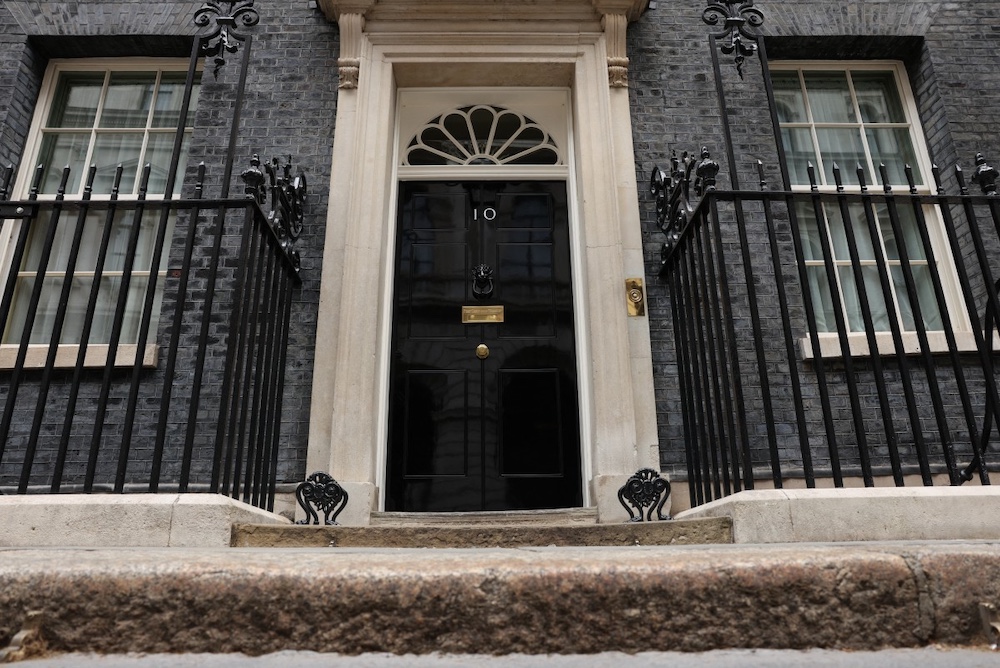
Either way, like all prime ministers before him, he will pick his own ministerial teams, and foreign policy advisers from Riyadh to Abu Dhabi will now be tearing up their carefully compiled notes on yet another British administration and scrambling to build a file on Burnham, to understand to what extent he is a man they can do business with.
Saudi Arabia has had only seven kings since the Kingdom was founded by Abdulaziz bin Saud in 1932. Starmer’s replacement will be Britain’s seventh prime minister in just 10 years.
Regardless, believes Chris Doyle, director of the Council for Arab-British Understanding, the GCC is unlikely to see any significant change in UK policy toward the Gulf states.
“I imagine there won’t be a massive difference in approach under Burnham,” he said. “I don’t think that he would see this as a relationship that would necessarily be changing. And to be honest, and with no disrespect to the Gulf states, I doubt this is an issue that will be uppermost in his mind right now.
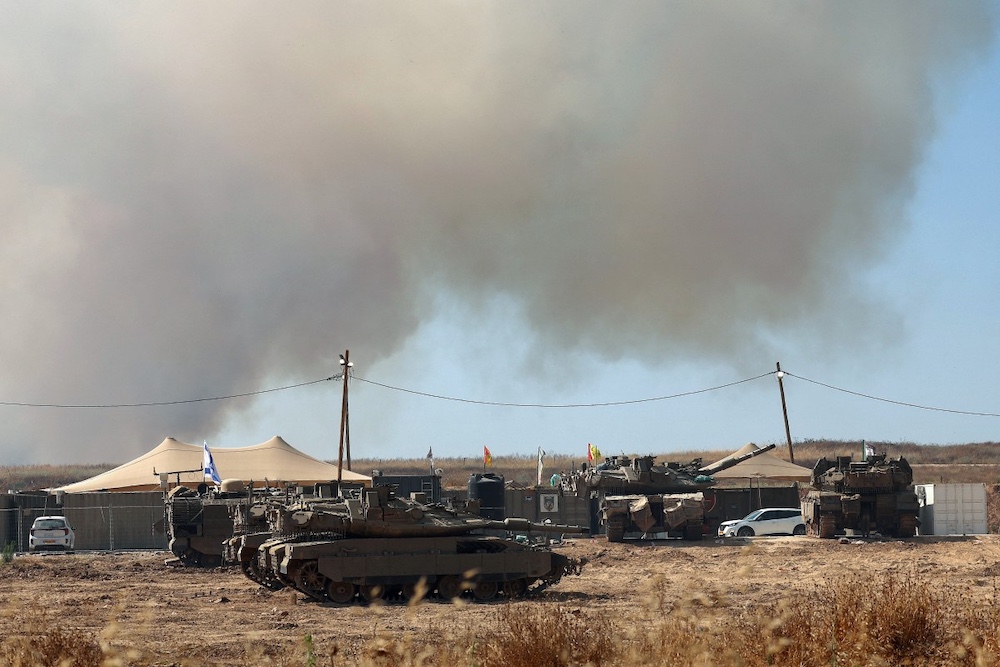
“Of course, the whole issue of Iran does come into this, and I think he would take a similar stance on that to Starmer. If, for example, the ceasefire does break down, he would not want Britain to get directly involved militarily.”
But Sir John Jenkins, the former British ambassador to Saudi Arabia, Syria and Iraq, is concerned about Burnham’s lack of diplomatic experience. Before becoming mayor of Manchester, Burnham was an MP from 2001 to 2017 and held a number of senior jobs, including health secretary and chief secretary to the Treasury.
But he will be the first British prime minister for generations who has not served time as leader of the opposition, has not had to present a manifesto to his party or the British public, and has not held any of the great posts of state — chancellor, home secretary or foreign secretary.
“I don’t think Burnham knows the first thing about international affairs,” said Sir John. “Managing buses, supping ale, and going to footballers’ parties in Prestbury (as mayor of Manchester) aren’t an ideal preparation for dealing with Trump, Macron, Meloni or the Gulf leaders. He’s going to have to learn fast.”
There is one regional issue, however, with which Burnham is familiar and on which he might well focus, said Doyle. “Where we might see change of course is on Palestine, where I hope and expect that there will be a tightening of the UK government’s position.”
But, echoing a reputation for pragmatic, chameleon-like flexibility on domestic issues, Burnham’s record on Palestine and Israel has been mixed. In 2012, he visited Gaza as part of a trip organized by Labour Friends of Palestine and the Council for Arab-British Understanding. Then, in 2015, he joined Labour Friends of Israel.
That same year, he made his first, unsuccessful bid to lead the Labour Party, and during the campaign pledged to make a trip to Israel his first overseas visit if he became Labour leader. This might, or might not, have had something to do with the accusations of institutionalized antisemitism that were rocking the party at the time.
Ahead of the general election that year, however, he expressed strong support for a Palestinian state in response to a survey of candidates by the Palestine Solidarity Campaign. “I fully support two states living side by side in peace, and recognized by all of their neighbors,” he said. Palestinian statehood, he added, “is not a gift to be given but a right to be recognized.”
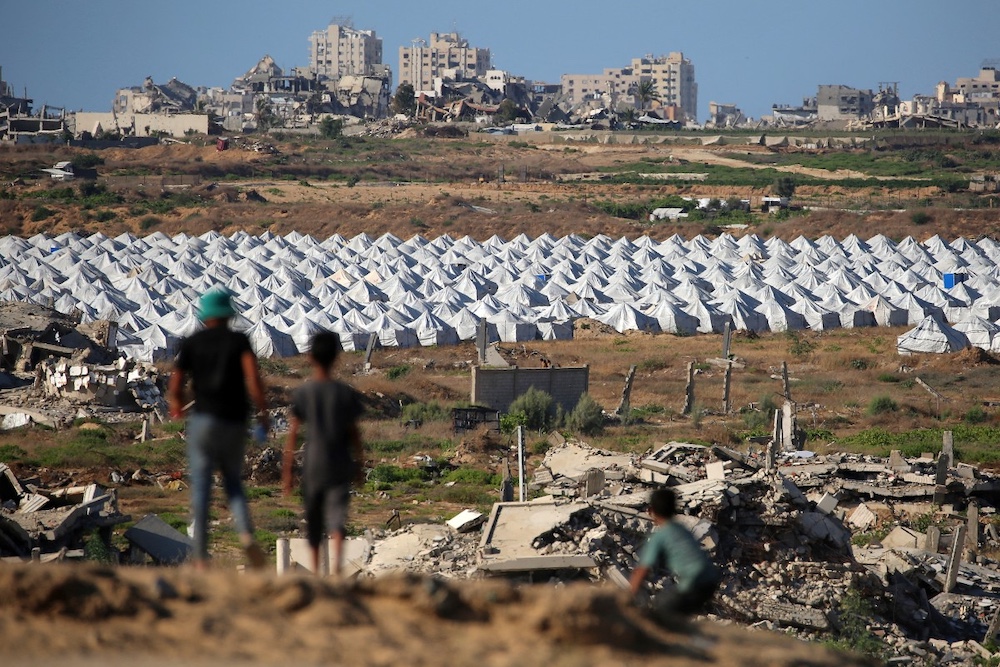
The Israeli settlements in the West Bank “and their continued expansion remain key obstacles to resolving the conflict” and “are both illegal and immoral.”
But he stopped short of backing the anti-Israel boycott, divestment and sanctions movement. “The threat of boycotts of Israel is the wrong response,” he said. “Labour has taken and will maintain domestic action to introduce labelling transparency, and will seek a Europe-wide approach to settlement products.”
More recently, in 2023, Burnham stepped out of his lane as mayor of Manchester to call for a ceasefire in Gaza before Starmer did, and in June 2025 co-signed a letter calling on the UK government to act to protect the two-state framework. Three months later, Starmer’s government did just that, announcing its recognition of a Palestinian state.
Utterances on Israel and Palestine aside, to a great extent, Burnham is a closed book when it comes to foreign policy. Trying to predict Burnham’s stance on any policy issues, foreign or domestic, is further complicated by the fact that his views have not always been consistent.
For example, in a speech in January, before his run for the top job was on the cards, he made the case for what he called “business-friendly socialism,” and told the Institute for Fiscal Studies that the UK was too “in hock to the bonds market.”
Now, his advisers have let slip that his first big speech this week will be on the economy, during which he will attempt to appeal to those very markets by emphasizing his determination to adhere to fiscal rules.
Britain’s current political crisis — the debate over immigration that is dividing the country — came to the fore exactly 10 years ago on Tuesday when the UK electorate voted by the narrowest of margins to leave the EU, its biggest trading partner.
The impetus for then-Conservative Prime Minister David Cameron’s decision to call the Brexit referendum was driven by fears of the populist appeal of Nigel Farage and his UK Independence Party. Today, Farage is an MP and his latest party, Reform UK, now has eight MPs in the House of Commons.
When he spoke at the Labour conference last year, Burnham was adamant that he wanted to see the UK rejoin the EU (the leaving of which, according to a report last week from the Bank of England, has harmed the UK economy to the tune of 6 percent).
But while he was campaigning to win his seat in Makerfield, a staunchly pro-Brexit constituency, he denied he was proposing that the UK should rejoin the EU — even though polls show that 60 percent of Britons now believe Brexit was a disaster that continues to harm the country.
Whatever his true views on European reintegration, they are likely to be overshadowed by the rise of parties like Farage’s Reform, which achieved stunning successes in recent local council elections, and the threat they will pose to Labour at the next general election, which must be called by no later than August 2029.
Burnham’s challenge will be how to appease voters drawn to Reform’s messaging, while remaining true to his left-wing Labour roots. Farage has already thrown down the gauntlet, arguing that the seemingly soon-to-be-anointed “King of the North” does not have a mandate from the people to govern, and challenging him to call a general election.
That is unlikely to happen. But in the run-up to 2029, Burnham is going to have no choice but to broaden his appeal. Labour did not evict Starmer because he was incompetent, ineffective or corrupt. The knives came out because they feared he lacked the appeal of the populists, such as Farage.
For Sir John, “assuming there’s a coronation, it’s going to be Groundhog Day. I don’t think Britain is ungovernable. It’s simply badly governed. The gap between the electorate and the political elite is wider than I can ever remember, and that makes UK politics a weird sort of elite maneuver game rather than responding to the real needs.”
And Sir John has some advice for the Gulf states.
“If I were a GCC ambassador, I’d be trying to cultivate the younger crowd — and that includes Reform — who might in the end have to sort out the mess. Someone is going to have to do so, and it will happen. The UK has enormous strengths, if we get the governance right.”