


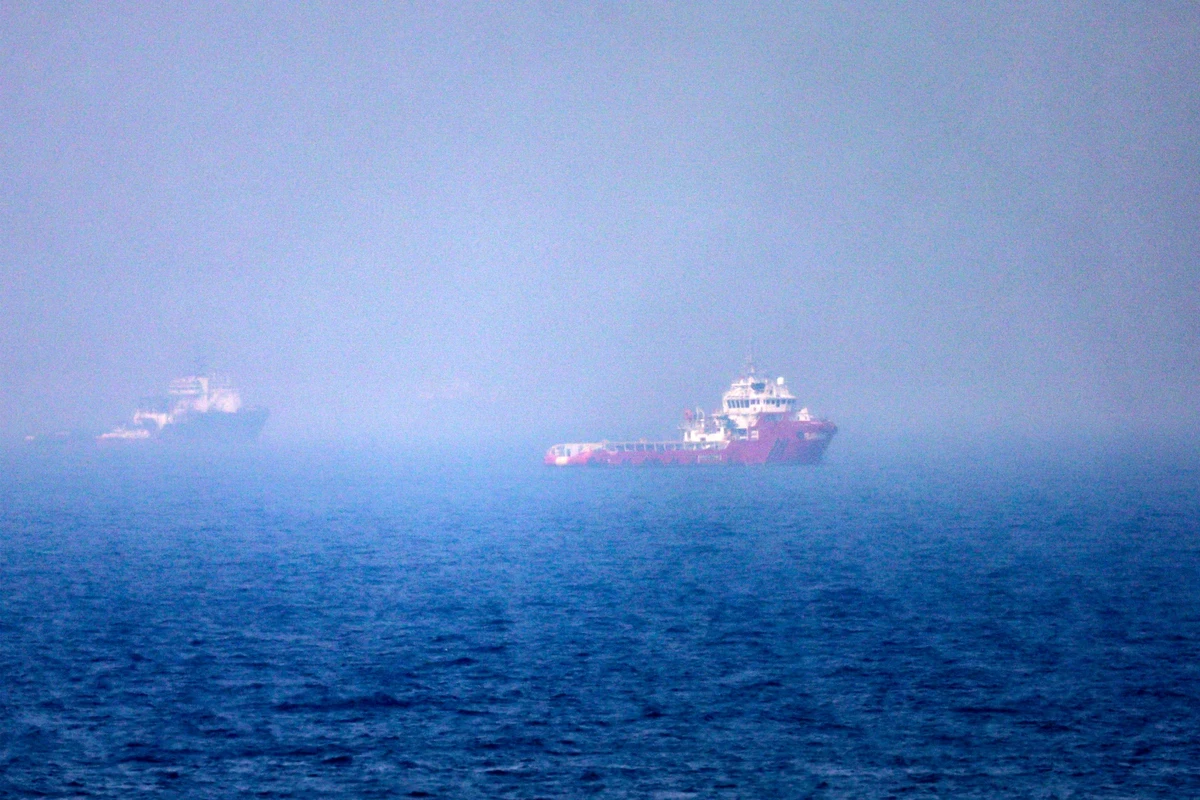

In its latest bid to escalate, Iran has gone all-out. After closing the Strait of Hormuz, on Wednesday it threatened to go after other waterways in the region to stop energy exports, as reported by Iran’s official media. The escalation in Yemen is part of that plan.
Tehran seems to have been especially enraged by the new channel Oman has provided for safe passage through its own territorial waters in the Strait of Hormuz. After Foreign Minister Abbas Araghchi failed to persuade Oman to abandon this effort, Iran attacked ships crossing the Omani channel, ships elsewhere on the other side of the Gulf and other targets hundreds of miles away in a country that has, for decades, stood by Tehran when most countries abandoned it and mediated its numerous conflicts with the international community.
Iran also repeatedly attacked other Gulf Cooperation Council states and Jordan. Stating the obvious, Tehran on Sunday announced that it was no longer bound by the memorandum of understanding it signed with the US. Part of the escalation is due to Iran’s belief that the agreement gave it full control of the Strait of Hormuz, which was not how the US or mediators understood the deal, as that would be contrary to the UN Convention on the Law of the Sea, which bars any country from controlling any international waterway.
As it decided to escalate in the Gulf, Iran also opened a new front in Yemen. For months, the Houthis had been threatening to join the fray. Barrages of fiery speeches were directed at Saudi Arabia and the internationally recognized government of President Rashad Al-Alimi. Almost daily, the Houthis threatened to attack the Kingdom unless it paid them untold amounts of money to fund the salaries of the same forces they planned to use against their neighbor to the north.
Part of the escalation is due to Iran’s belief that the agreement gave it full control of the Strait of Hormuz
Dr. Abdel Aziz Aluwaisheg
The escalation in Yemen started with dispatching a flight by Mahan Air to Sanaa without seeking permission from the Yemeni government — a basic requirement under international civil aviation rules in any other part of the world — thus jeopardizing the people on board.
Mahan Air is no ordinary carrier. It is owned by a private entity controlled by the Quds Force, the notorious arm of Iran’s Revolutionary Guards. It was instrumental in transporting weapons and military personnel, including terrorists, to, among others, the Assad regime in Syria, Hezbollah in Lebanon and the Houthis in Yemen. The airline is sanctioned by the US and EU. In addition, many countries, including GCC states, have banned the airline from using their airports or airspace.
The government of Yemen is among those to have barred Mahan Air. Yet the airline persisted in violating the government’s repeated orders to turn back. After government forces disabled Sanaa Airport, the flight’s original destination, it landed in another airport controlled by the Houthis.
Besides its violation of civil aviation agreements, the brazen disregard of Yemen’s law and its government’s clear instructions to turn back was also a clear violation of UN Security Council Resolution 2216, which imposed a sweeping arms embargo on the Houthis. Resolution 2216 was adopted under Chapter VII of the UN Charter, meaning that force could be used to enforce it.
After the Mahan Air incident, the Houthis on Monday launched ballistic missiles against civilian targets in southern Saudi Arabia — a clear violation of the four-year-old truce mediated by the UN. Since this truce started in April 2022, the Houthis had avoided, with rare exceptions, targeting Saudi territory. That they have now returned to attacking the country is a serious development.
Monday’s Houthi attack on Saudi Arabia can be seen as part of a new Iranian escalation in the Red Sea and the Bab Al-Mandab Strait. For months, the Houthis have threatened to block the strait but Iran apparently reined them in.
However, after reclosing the Strait of Hormuz, Iranian officials started to put other waterways in their crosshairs. On Wednesday, they threatened to close “all other export corridors that benefit the US and its allies,” as per a Revolutionary Guards statement carried by Iran’s state media.
Echoing Iran’s declaration, a Houthi spokesman was quoted by Iran’s official media warning that they were ready to close the Bab Al-Mandab Strait, a move that he said would raise oil prices to $200 per barrel.
If Iran and the Houthis carry out their threats and close Bab Al-Mandab or attack ships in the Red Sea, they would put at risk significant amounts of international trade.
While trade crossing the Bab Al-Mandab Strait has dropped significantly since Houthi attacks on shipping started in 2023, as much as about 15 percent of global maritime trade went through it in 2025. The International Energy Agency estimates that about 4.2 million barrels of crude oil and petroleum liquids crossed the waterway daily last year, or about 5 percent of international production.
In the final quarter of 2025, about 40 percent of the nearly 3,400 ships passing through the Red Sea were carrying oil and gas, including 1,330 oil tankers and 88 liquefied natural gas ships. General cargo made up another 40 percent, carrying agricultural commodities, coal and iron ore, among others. Much of the trade between Asia and Europe goes through the Red Sea.
So, look for shortages of key commodities and additional spikes in prices all over the world — although not the $200 oil price as the Houthis dreamed up — if Iran and the Houthis carry out their threats.
These developments make it urgent to go back to the implementation of UNSC Resolution 2216, especially as it relates to monitoring compliance with the arms embargo, which Mahan Air has now broken in broad daylight. While diplomatic efforts must resume, the international community, including China and Russia, must speak with one voice against escalation in the Red Sea and the Bab Al-Mandab Strait.
A number of UN bodies have been created to monitor compliance with the arms embargo against the Houthis, such as the UN Verification and Inspection Mechanism, established in 2015, and the UN Mission to support the Hodeidah Agreement, established by the Security Council in 2018. The Houthis have prevented these two bodies from carrying out their activities in Yemen, rendering them futile. In light of the new escalation and renewed threats from Iran and the Houthis, they must be empowered to carry out their duties without hindrance.
- Dr. Abdel Aziz Aluwaisheg is the GCC assistant secretary-general for political affairs and negotiation. The views expressed here are personal and do not necessarily represent those of the GCC.
X: @abuhamad1


