
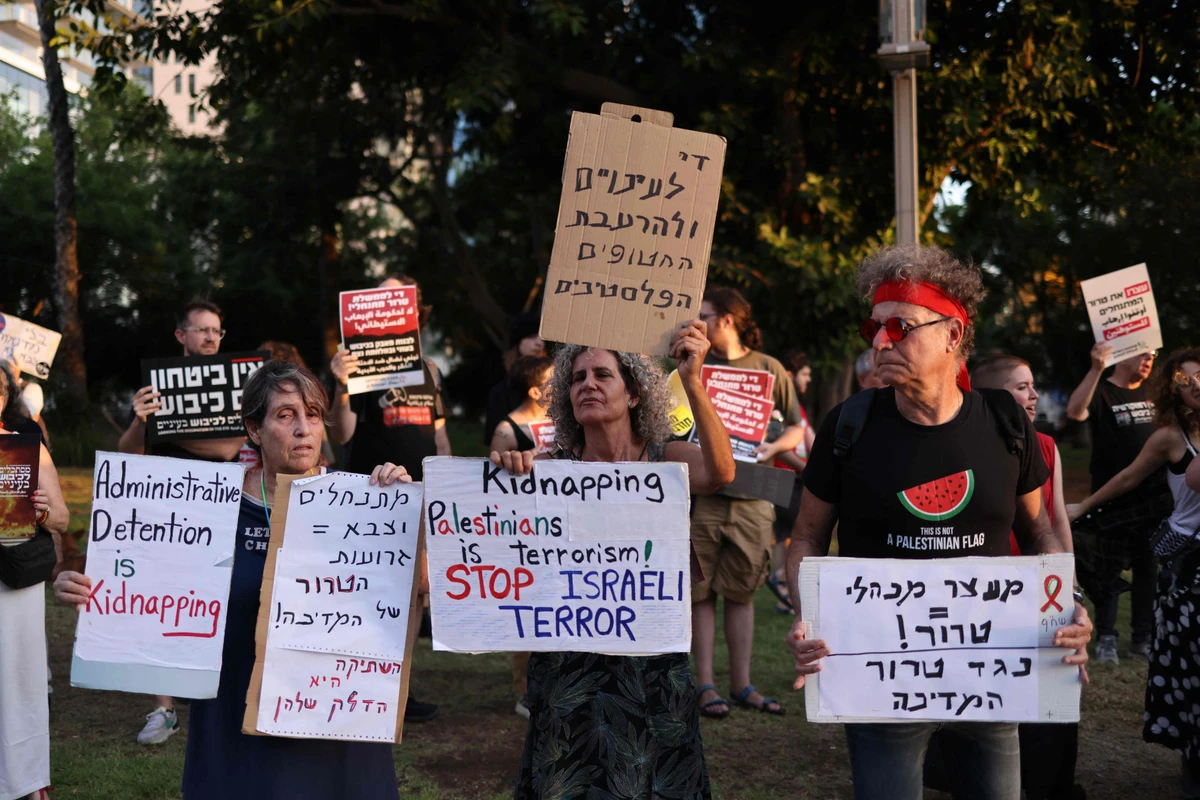

What will it take for the international community to recognize that it needs to turn at least some of its attention toward events in the occupied West Bank before the situation there spirals out of control?
After years of steadily deteriorating security conditions, the West Bank has now reached boiling point. Nearly 60 years of occupation, the continuing expansion of settlements onto Palestinian land, and the denial of the political, civil, and human rights of Palestinians have created an environment in which friction is inevitable and hardly avoidable.
At this moment, however, it has become increasingly apparent that elements within the settler movement, together with their political representatives in Israel, are deliberately escalating an already explosive situation. Prime Minister Benjamin Netanyahu is complicit in this, whether he supports it or is simply too politically weak to challenge the more extreme members of his governing coalition.
Either way, some within the coalition government appear to believe that a deterioration in security would strengthen their electoral prospects, or even provide grounds for postponing the general election scheduled for October due to a state of emergency.
There is, admittedly, nothing new about violent settlers. Although they remain a minority, they are far from insignificant and enjoy considerable political and governmental support. Their attacks inflict additional suffering on Palestinian civilians and their property, compounding the hardships of a harsh military occupation. Put simply, because this violence is politically motivated it should be recognized for what it is: terrorism.
Israeli law, as well as international conventions, defines terrorism as an act carried out with a “political, religious, nationalistic or ideological motive.” The law further states that if such an act causes, or threatens to cause, serious harm to a person’s life, body or liberty, public health or safety, property, religious sites, infrastructure, essential services, or severely disrupts them, it constitutes terrorism.
This definition is broadly consistent with that adopted by many governments around the world. Yet Israel applies it, and the sanctions that accompany it, almost exclusively when its own citizens are the victims, but not when Israeli citizens, acting with clear political motives, inflict similar violence on Palestinians.
The presence of more than 700,000 Israeli settlers in the occupied West Bank and East Jerusalem is itself widely regarded as illegal under international law. In its 2024 advisory opinion, the International Court of Justice concluded that Israel’s continued occupation of the Palestinian territories is unlawful and stated that the settlement enterprise should be brought to an end as rapidly as possible.
To add insult to injury, armed groups of settlers are often able to move freely throughout the West Bank, intimidating and terrorizing local communities. Unlike their Palestinian victims, they are frequently well armed.
When Palestinians attempt to defend themselves, Israeli security forces often intervene by arresting, injuring or even killing those resisting the attacks. In some cases, security forces have been accused of escorting or protecting the settlers involved.
A case in point occurred late last month, when a group of settlers, including teenagers accompanied by armed adults, entered the Palestinian village of Tell claiming they were on a hike — some sort of summer holiday trip. Even though Israelis are prohibited from entering Areas A and B of the West Bank without military authorization, and this visit had not been coordinated with the army, the group nevertheless proceeded.
Palestinians attempted to repel this incursion onto their land, leading to a violent confrontation. During the clashes, one Palestinian reportedly seized the weapon of a settler from the nearby Havat Gilad settlement who had rushed to the scene. Other settlers and Israeli soldiers stationed nearby soon arrived, and the confrontation escalated into a gun battle in which four Palestinians and two Israelis were killed.
Settlers portray such excursions as innocent recreational activities. They are anything but innocent. They are intended to send a political message: that the settlers regard themselves as the masters of the land and they can enter any Palestinian village or town, regardless of Israeli military regulations or international law, as masters of the place.
The continuing expansion of settlements has created an environment in which friction is inevitable.
Yossi Mekelberg
Their message, directed not only at Palestinians but also at the Israeli government, is that the only authority they recognize is their own.
These unauthorized visits are among the least serious of the offenses attributed to extremist settlers. Mosques have been set on fire, olive groves destroyed, homes and vehicles torched, and buildings and civilians have come under gunfire at times, resulting in fatalities. Despite this, accountability within Israel remains limited, while the international response has generally been muted.
Settler violence, reprehensible as it is, is not the only reason the West Bank is approaching a breaking point. Since the start of the war in Gaza in October 2023, existing settlements have continued to expand and new ones have been established, including in the midst of densely populated Palestinian areas.
At the same time, Palestinian communities in East Jerusalem and Area C, vulnerable Bedouin communities in particular, continue to face displacement. In addition, an estimated 32,000 Palestinians have been displaced as a result of sustained Israeli military operations in and around the Jenin, Tulkarm, Nur Shams and El-Far’a refugee camps in the northern West Bank.
The economic situation has also deteriorated sharply. Far fewer Palestinians are now permitted to work in Israel or Israeli settlements. Civil servants employed by the Palestinian Authority have gone unpaid for extended periods, in large part because Israel has withheld the tax revenues that it collects on the Authority’s behalf.
Taken together, these developments make it increasingly clear why the West Bank resembles a barrel of explosives just waiting for a spark.
Logic would suggest that such a deterioration cannot serve Israel’s long-term interests. Yet for some time now, the interests of the Israeli public have not necessarily aligned with those of the prime minister, his government or, in particular, the settler movement and their political representatives in the Knesset and the government.
Many within the settler movement appear determined to provoke confrontation, believing that sustained conflict will pave the way for annexation and possibly the forced displacement of Palestinians from the West Bank.
Netanyahu, together with some of his ultranationalist coalition partners, might view a worsening security situation as politically advantageous; it could provide justification for a harsher crackdown on Palestinian resistance, while reinforcing their claim that only they can guarantee Israel’s security.
They might also hope that a state of emergency will either improve their electoral prospects or create grounds for postponing the election altogether. If this scenario sounds far-fetched, it is worth considering the record of the current government and its prime minister before dismissing it.
- Yossi Mekelberg is a professor of international relations and an associate fellow of the MENA Program at Chatham House. X: @YMekelberg


