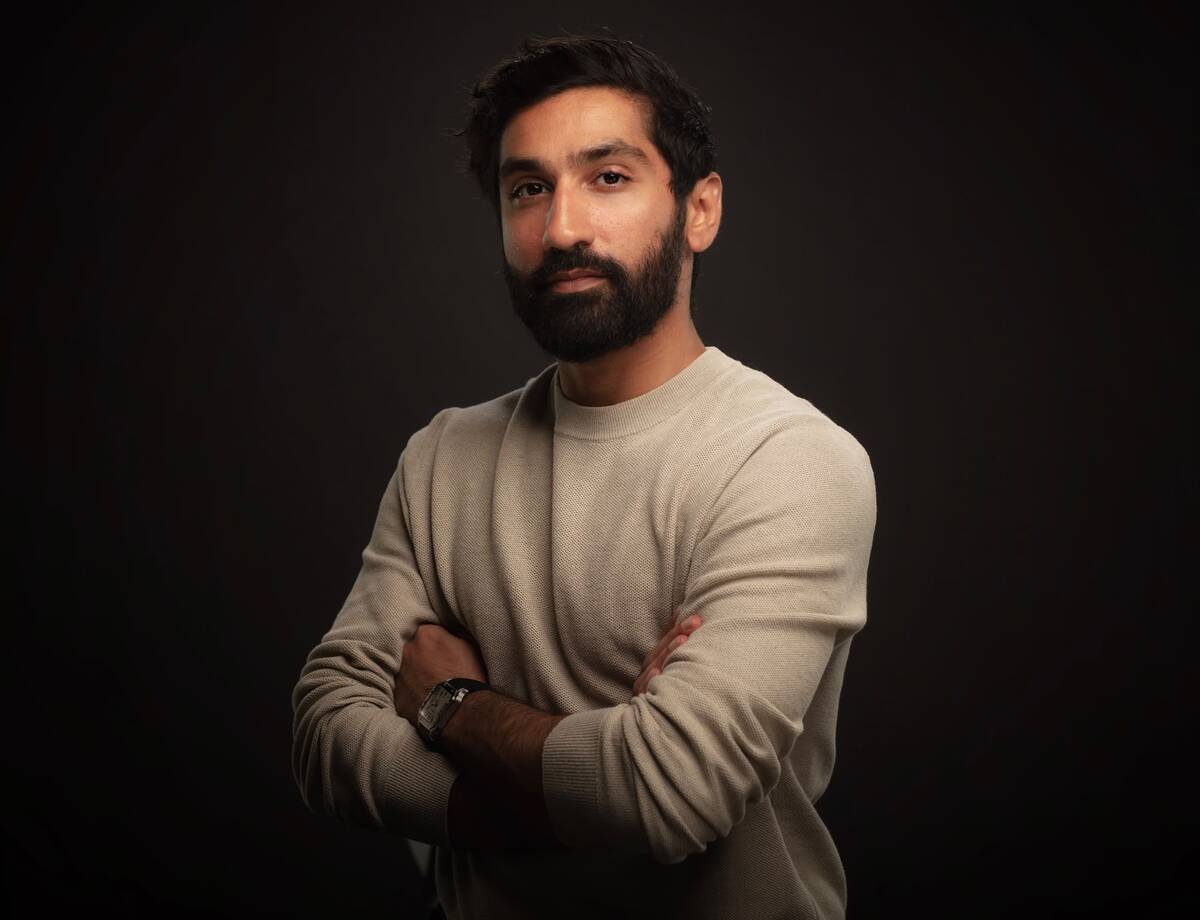
- Shahnawaz Zali is an Oscars Student Academy Award–nominated filmmaker and “Forbes 30 Under 30” honoree based in Doha
DOHA: For much of the modern era, museums were defined by a singular mission: to collect, classify, and determine what was worthy of preservation.
Over time, institutions such as the Louvre, the British Museum, and the Metropolitan Museum of Art drew their authority from the weight of their collections until their narratives came to resemble truth itself. Visitors arrived, and the museum spoke.
The Middle East may have entered this tradition later than others, but that delay has, I would argue, worked very much in our favor. The region’s most ambitious museums did not inherit the Louvre model. They were built in the age of the smartphone, algorithmic content, and generative technologies.
As a result, they have quietly resisted assuming the role of their older counterparts. Rather than asserting their authority over visitors, they have moved toward dialogue with them. The role of the visitor has also changed. No longer simply there to receive knowledge, they have, at times, become part of the debate itself.
If you get the chance to spend an hour inside the Media Majlis Museum in Doha, you will notice something about the way its exhibitions are designed. The museum does not ask you to accept what it presents. It leaves you free to debate it. That was the first impression I had when I began working there.
Its latest exhibition took Gulf Futurism as its starting point. The term, coined more than a decade ago by the Qatari artist Sophia Al-Maria, describes the experience of growing up in a region where pearl divers and satellite operators share the same cultural memory.
More than 20 Gulf artists came together around salt as the exhibition’s central metaphor, drawing on the many meanings it has carried throughout the Arabian Peninsula’s relationship with itself.
Organized around the layers of the atmosphere, the exhibition guided visitors from the troposphere of shopping mall culture to a thermosphere embroidered with satellites. Yet it never attempted to prescribe a singular vision of the Gulf’s future. That, perhaps, is what makes it worth paying attention to.
In little more than a decade, museums across the region have taken a path that looks very different from the conventional model.
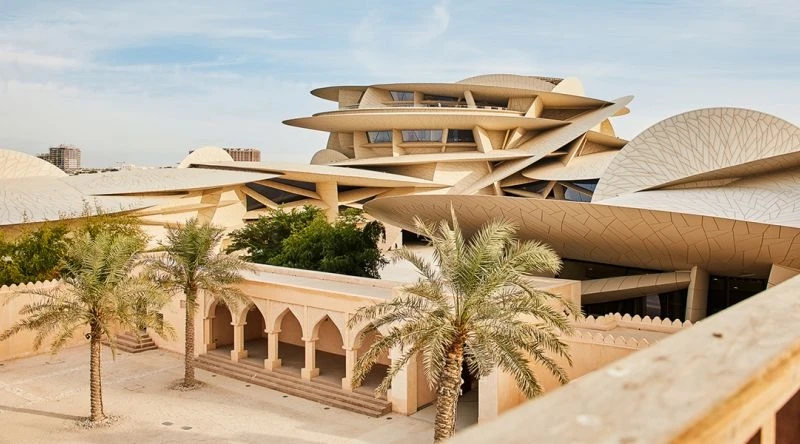
The National Museum of Qatar, designed by Jean Nouvel around Sheikh Saud’s desert rose, offers less of a chronological historical narrative than an immersive experience where architecture, sound, and moving image converge.
Rather than asking visitors to memorize a national story, it invites them to experience it — creating a museum that contributes to dialogue rather than merely recounting history.
Louvre Abu Dhabi offers another example. Its dome, where light filters through in shifting patterns, quietly rejects the civilizational hierarchy long assumed by its Parisian namesake. Here, a Buddha stands beside an icon of the Virgin Mary, without any one object claiming the center of the story.
This is the real impact modern information and communication technologies have had on museums across the region. A museum born in the digital age no longer needs to pretend to speak with a single voice. It can translate.
At the Media Majlis Museum, every exhibition is presented in both Arabic and English. At the National Museum of Qatar, interpretive texts have been designed to be read naturally in both directions. More importantly, these museums can make room for multiple perspectives.
None of this is accidental. It is a direct response to the cultural realities of the region. And that is precisely what gives Middle Eastern museums their distinctive character.
The Middle East has never had a single institutional authority speaking on its behalf, and it has finally stopped behaving as though it needs one. Qatar, the UAE, and Saudi Arabia are each developing their own museological vision.
Technology is what makes that plurality possible. A building made of stone can do many things, but it cannot hold a thousand different narratives at once. A digital archive can. Interactive experiences can present contradictions without being forced to resolve them.
Today, museums around the world are facing a slow crisis of legitimacy. From growing debates over the restitution of collections to declining public trust in institutions and the collapse of the idea of the so-called neutral voice that museums have long claimed to embody, the traditional museum model is increasingly being called into question.
Against this backdrop, the Middle East is undertaking what may be one of the most vibrant and compelling experiments in the contemporary museum world.
The question is no longer whether these institutions will succeed in earning legitimacy according to standards established by the West. Rather, it is whether the West itself may one day find that it has to follow their lead. I believe that is likely.
More than that, I would argue that the conversation has already entered a new phase, one that many have yet to recognize.
Shahnawaz Zali is an Oscars Student Academy Award–nominated filmmaker and “Forbes 30 Under 30” honoree based in Doha.