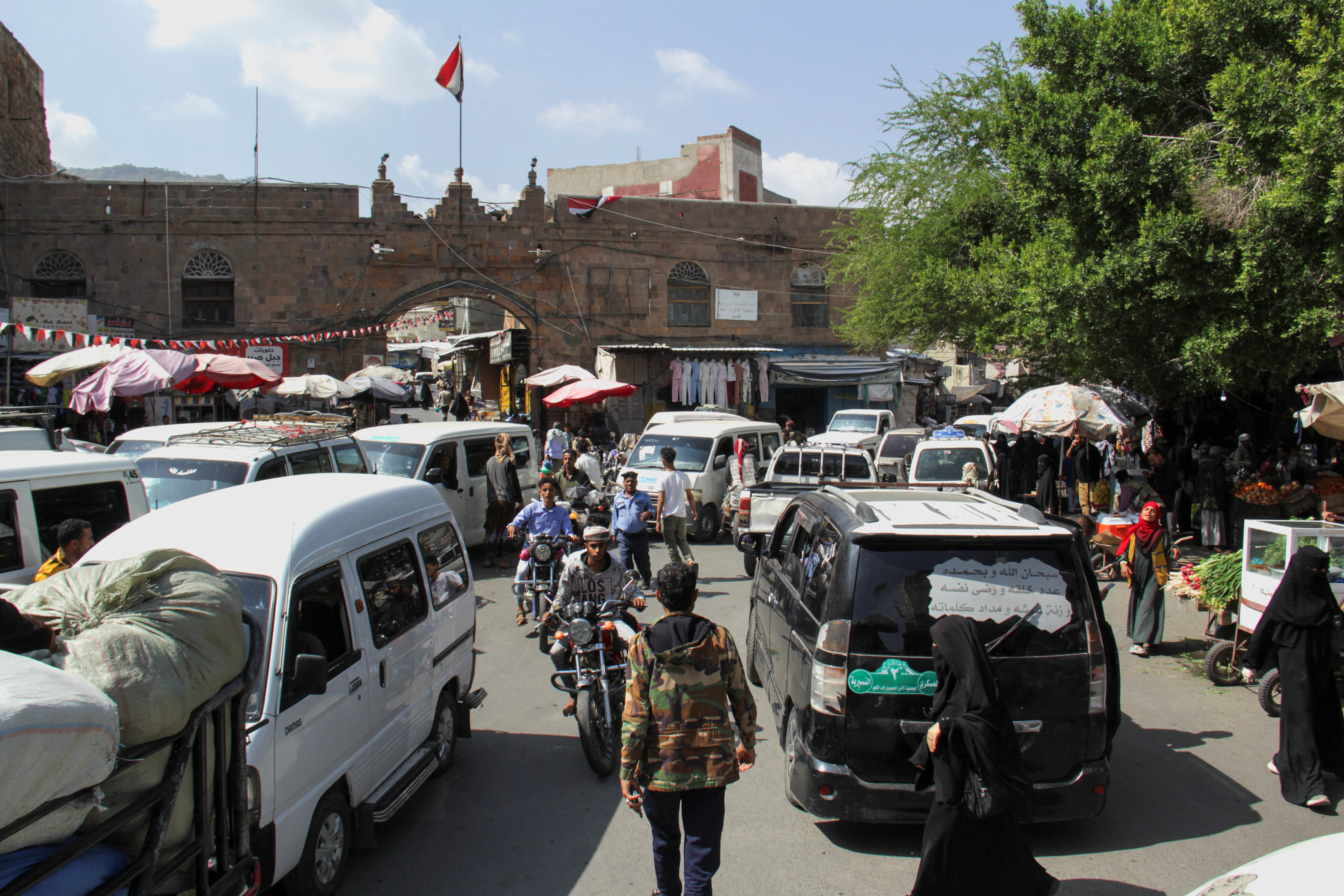
TAIZ: More than 1.3 million people in Yemen’s Taiz face the threat of starvation, severe water shortages and disease as the Iran-backed Houthis tighten their siege of the densely populated city, its governor warned.
Speaking at a press conference in Taiz on Tuesday, Nabil Shamsan said the city’s remaining food stocks could meet barely 10 percent of residents’ needs. Food and medical supplies had fallen by 90 percent because of Houthi restrictions, he added.
Supplies of cooking gas had dropped by more than 97 percent, petrol by 96.3 percent and diesel by 97.2 percent as the Houthis continued to restrict the entry of essential goods.
The shortages had driven food prices up by 60 percent, forcing some residents to skip meals or seek cheaper alternatives. Fuel and cooking-gas prices had risen by more than 300 percent, while transportation costs had quadrupled, Shamsan said.
“What Taiz is enduring today is not a fleeting crisis, but rather a war on the future — waged through the instruments of combat, siege and extortion,” he said.
Early last month, the Houthis seized the last remaining lifeline route connecting Taiz with the southern city of Aden, the seat of Yemen’s internationally recognized government. The move effectively turned the group’s decade-long siege into a near-total blockade.
The Houthis subsequently restricted the flow of food, fuel, cooking gas and drinking water into the city.
The siege has prompted outrage inside and outside Yemen, with local and international organizations calling on the Houthis to lift the blockade and halt military operations around the city.
The group has largely ignored those appeals while intensifying drone and missile attacks and mortar shelling as its ground forces attempt to break through the city’s defenses.
This week, Shamsan said, the Houthis blocked a shipment of life-saving medicines traveling from Aden to Taiz. They diverted it to an area under their control and demanded that traders pay taxes before allowing it to proceed.
“There are life-saving and critically important medicines that merchants went to great lengths to deliver to Taiz province; today, however, they are in areas under the control of the militias,” he said.
Shamsan said the number of medical consultations had fallen from more than 123,000 five weeks ago to about 90,000 as stocks of essential medicines, including insulin and albumin, were depleted.
The shortages had put the lives of 22,000 people with diabetes and other chronic illnesses at risk, he added.
More than 40,000 pregnant women were struggling to access safe childbirth services, while over 79,000 infants under the age of one risked missing essential vaccinations because of dwindling vaccine stocks.
The number of incubators available for newborn babies had also fallen from 160 to 78, further endangering vulnerable infants.
“The rates of moderate and severe stunting among children under the age of five have reached 43 percent — with 17 percent classified as severe stunting,” Shamsan said.
“Furthermore, 70,977 cases of acute diarrhea and 5,847 cases of lower respiratory tract infections have been recorded, amid a deterioration in sanitation services and the burning of trash within residential neighborhoods.”
The governor called for concrete international action to pressure the Houthis to lift restrictions on the movement of people and essential supplies into Taiz.
“We call upon the United Nations, international organizations and donors to provide a response commensurate with the scale of the need, and to translate humanitarian warnings into concrete actions that reach people in their neighborhoods and areas of displacement,” he said.
Shamsan also accused the Houthis of conducting indoctrination campaigns in areas they had recently seized in Taiz and targeting residents, including children, for military recruitment.
The group had stormed schools and mosques to promote its ideology and encourage people to join the fighting, he said.
“The Houthi militia has conducted educational and combat training courses for children, subsequently thrusting them into battles. They have also raided educational institutions to organize sectarian and military-themed lectures,” he added.
On Sunday, Yemeni government forces announced their withdrawal from areas along the Red Sea coast near the Bab Al-Mandab Strait.
They said the redeployment was intended to strengthen defenses in Aden and Lahj and support efforts to break the Houthi siege of Taiz.
Shamsan welcomed the move and expressed hope that it would help end the suffering of the city’s residents.
“From here, in the heart of Taiz, we affirm our confidence in the political leadership and in any political decisions it may issue regarding the repositioning of forces — decisions that will enable troops to reorganize the theater of operations, restructure the front lines, strengthen their cohesion and move toward lifting the siege on Taiz,” he said.