
- Nasser Mashni, president of the Australia Palestine Advocacy Network, warned against restricting access to books dealing with the war in Gaza
- Author condemned the book removal, rejecting suggestions that describing Israel’s actions in Gaza as genocide represented a “fringe” position
SYDNEY: A Palestinian advocacy group has criticized a Sydney library’s decision to remove a book about Israel’s war in Gaza from its shelves, warning that libraries have a responsibility to provide access to works that may “challenge or discomfort” their communities.
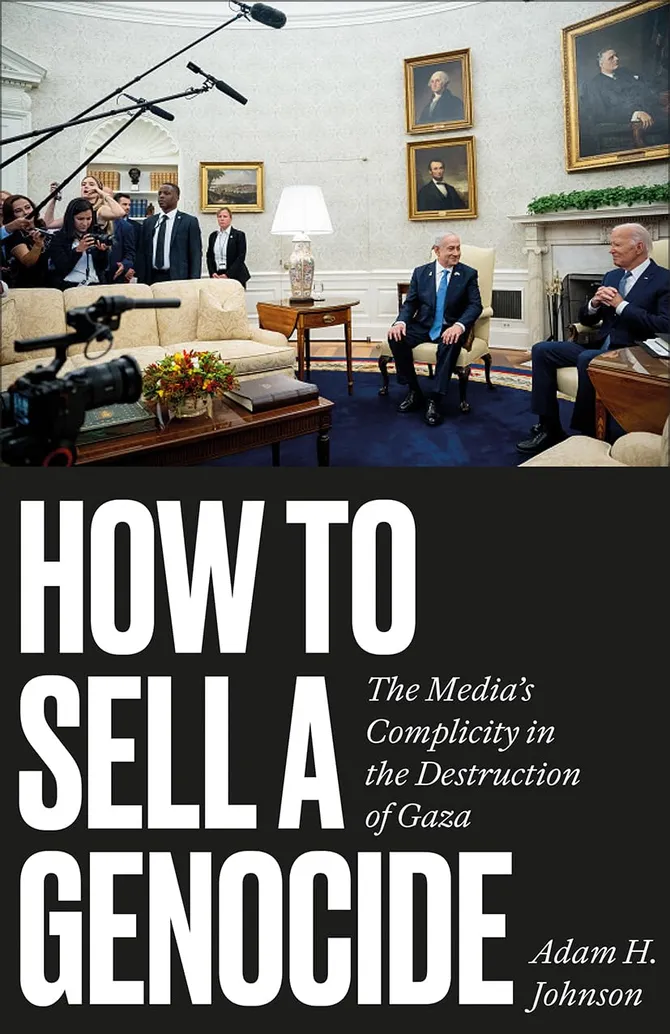
Waverley Library in Bondi Junction withdrew “How to Sell a Genocide” by US media critic Adam Johnson, pending a review after receiving a complaint over the book, The Guardian reported.
Nasser Mashni, president of the Australia Palestine Advocacy Network, condemned the decision and warned against restricting access to books dealing with the war in Gaza.
It was a “library’s duty to provide its community access to a broad range of published works, including those that may challenge or discomfort,” Mashni told The Guardian.
“Hundreds of thousands of Palestinians have been killed, maimed and displaced,” he said, adding that the use of the word “genocide” was intended to describe what Palestinians were experiencing rather than cause offense.
“History has taught us too well what happens when books start getting banned,” he said.
The book, which examines what its publisher describes as US media complicity in Israel’s war in Gaza, was reportedly removed after a survivor of an attack in December that targeted a Jewish festival at Bondi Beach complained about seeing it displayed on the library’s “new release/hot item” shelf.
Fifteen people were killed in the attack.
Waverley Council said that the book had been “removed from library shelves for review” and that it would consider introducing greater oversight of book selection.
Johnson also condemned the decision, rejecting suggestions that describing Israel’s actions in Gaza as genocide represented a “fringe” position.
“That it makes some people upset is unfortunate but reality is often upsetting,” he said.
“But ‘genocide’ is not my word, or my finding. The fact of genocide in Gaza is the overwhelming consensus of the human rights world and it is a wholly mainstream opinion among those tasked with studying and determining such matters.
“Do Sydney officials plan on removing pro-Israel books from their libraries because it potentially upsets these community members?”
Israel has repeatedly rejected accusations that its actions in Gaza constitute genocide.
The library’s decision also drew criticism from the Jewish Council of Australia, whose executive member Bart Shteinman described it as “deeply alarming.”
“Public libraries belong to all of us and should host a range of views and topics,” he said.
The New South Wales government amended the state’s Library Act earlier this year to strengthen protections for public libraries against campaigns seeking to remove books.
Shteinman said that if Waverley Council decided to remove Johnson’s book permanently officials would need to explain how such a decision complied with the amended legislation.
Pluto Press, which published the book, also criticized the removal.
David Shulman, a senior commissioning editor, said public understanding of events in Gaza and how they had been covered by the media was a matter of significant public interest, arguing that the book should be made widely available through public libraries.