- Palestinian American journalist recounts his family’s decades-long struggle to access and reclaim ancestral land
- From Ottoman-era deeds to Israeli bureaucracy, a fight over 33 dunums near Jerusalem and Bethlehem
CHICAGO: It is a great start, but the US Ambassador to Israel Mike Huckabee will have to do more than simply tell settler extremists not to take Palestinian Americans’ land in the West Bank.
Israeli settlers, often with the backing of the Israel Defense Forces, have accelerated the annexation of land throughout the West Bank and occupied East Jerusalem in recent years, targeting Palestinian homes, farms, and water wells, and killing and injuring many Palestinians, including several American citizens.
It was reports of settlers attacking residents of the all-Christian village of Taybeh and burning their homes, cars, farmland, and olive trees that caught Huckabee’s attention.
Huckabee, a Baptist minister and the first evangelical Christian to serve as US ambassador to Israel, declared that settlers found to have taken part in the ongoing siege of homes in the West Bank village of Qusra could face consequences both in Israel and from Washington.
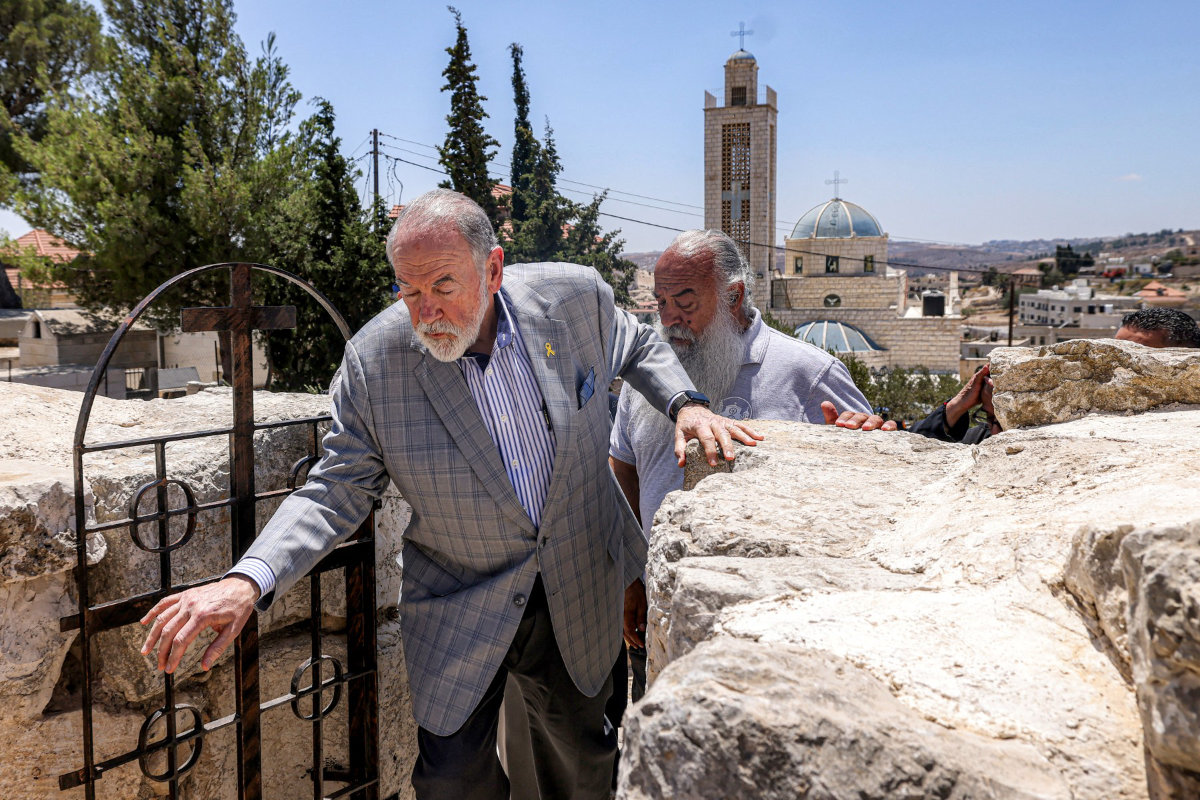
“Thou shalt not steal,” Huckabee told Reuters, citing the Ten Commandments. “You don’t take something that doesn’t belong to you.”
But Huckabee needs to expand his caution to include all of the land Palestinian Americans own, not just in the West Bank but also in East Jerusalem, which was annexed by Israel in July 1980 under the so-called “Jerusalem Law.”
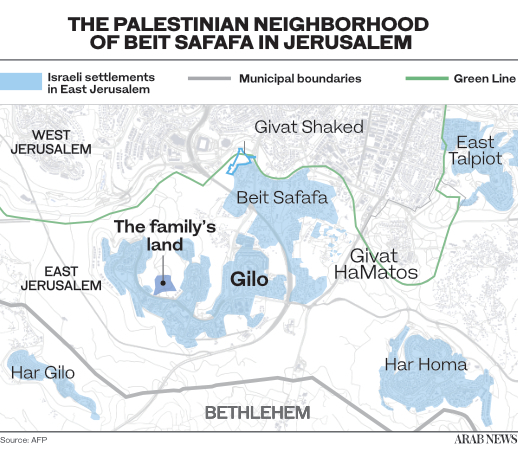
That law put my family’s land, which is adjacent to the small Muslim village of Sharafat near Bethlehem, in a bureaucratic limbo that prevented its development.
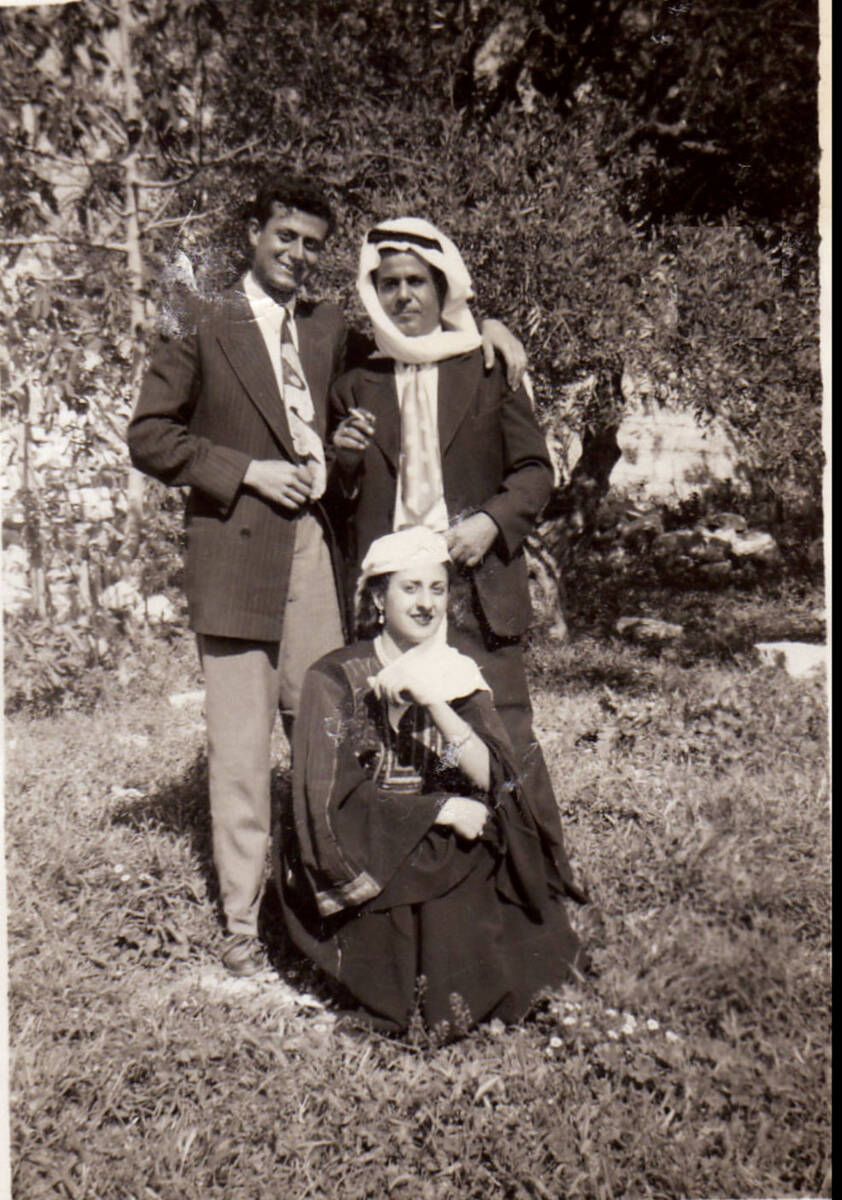
My father’s family and my mother’s family both lost land to Israel. In May 1948, my grandmother, uncles, aunts, and their children were forced to flee their home in West Jerusalem on Jaffa Road in the face of death threats from the Haganah, Israel’s pre-state military.
My father, who came to America in 1926, brought them to Chicago from a Jordanian refugee camp in the early 1950s.
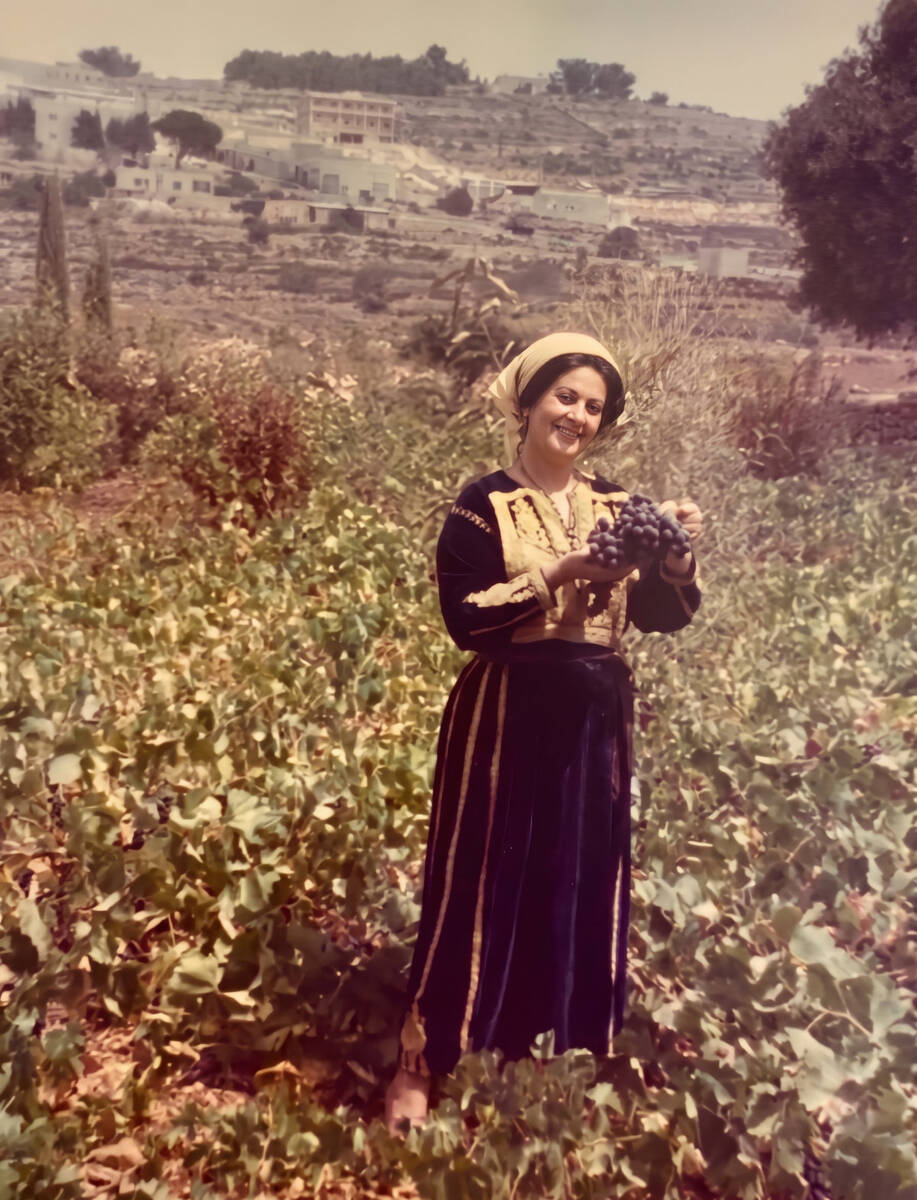
My mother’s family, Christians from Bethlehem, owned 33 dunums (8.25 acres) of land adjacent to a small Muslim village called “Sharafat,” or “Honor” in English. It was purchased under the Ottoman system in the 1890s by her great-uncle.
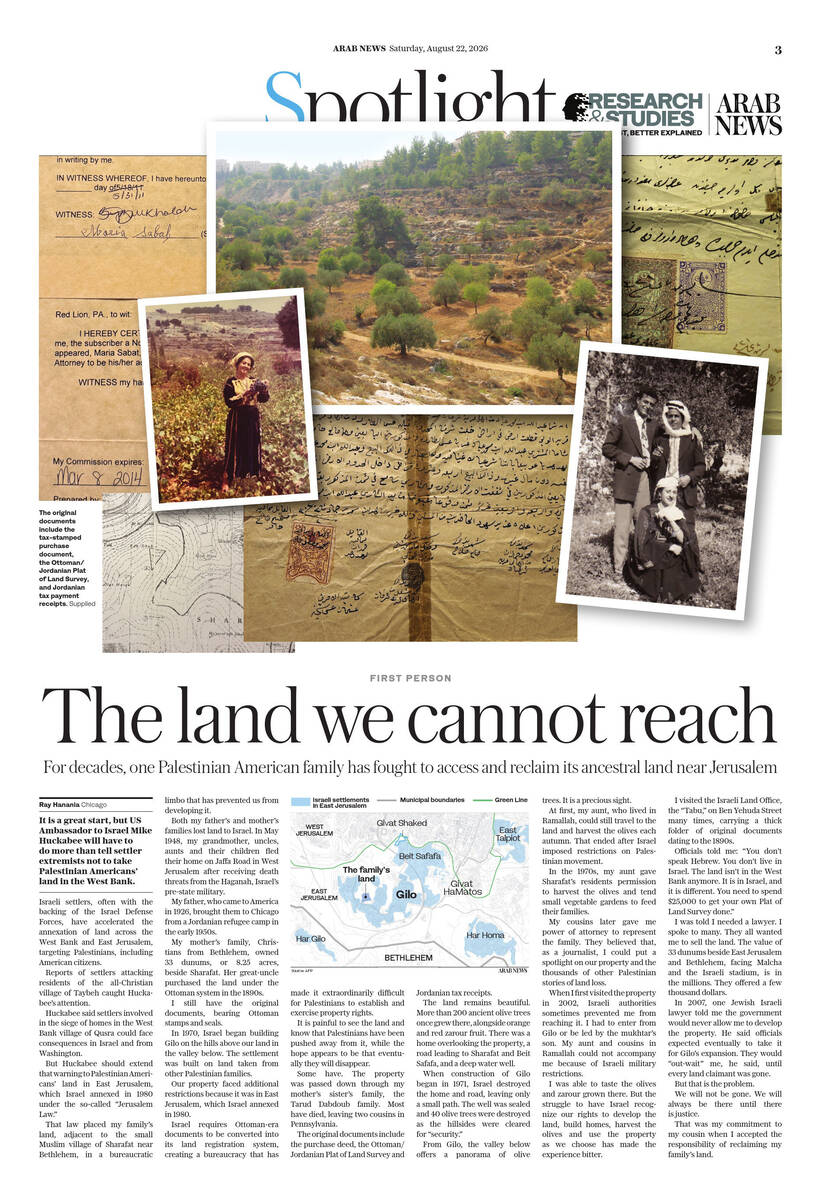
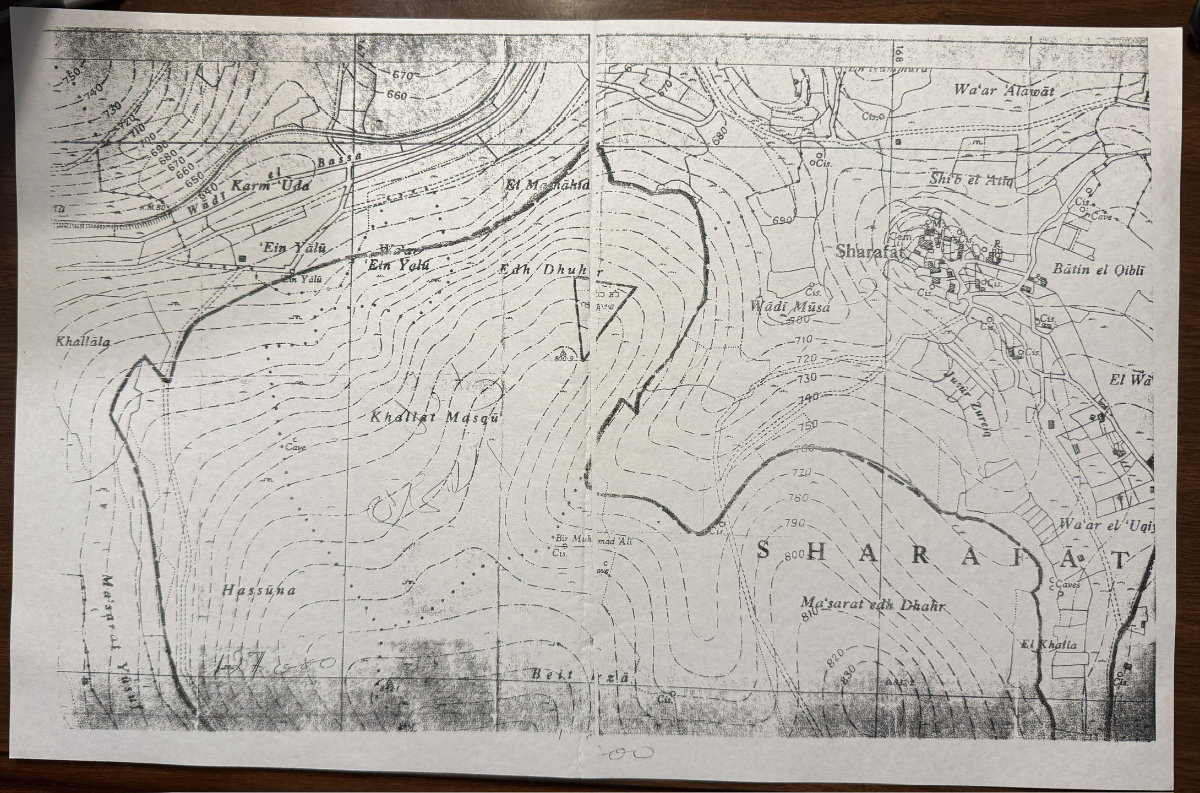
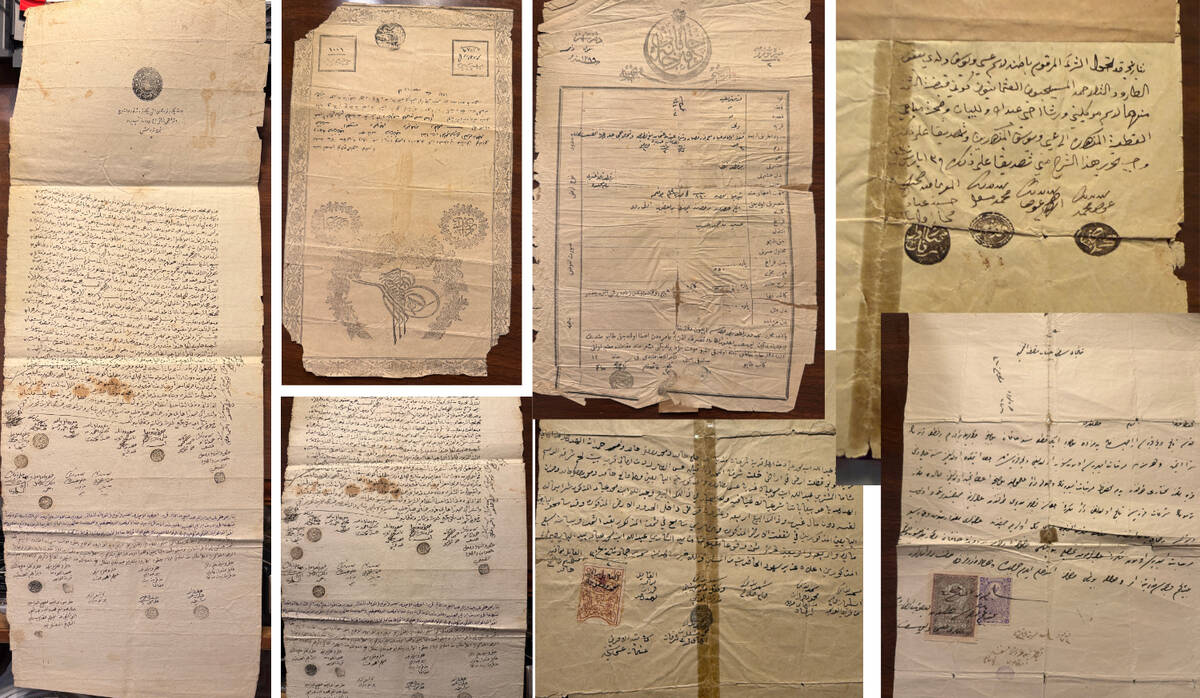
I have all of the purchase and sales documents, with the unique Ottoman stamps and seals on them, that have been handed down in the family. They are old and fragile.
In 1970, Israel began building one of the first illegal settlements, Gilo, on the hillsides above our land, which was nestled in the valley below. Gilo land was taken from other Palestinian families.
My family’s land is treated even more restrictively because it is located in the area of East Jerusalem annexed by Israel in 1980.
Israel has created an insurmountable bureaucracy requiring all Ottoman documents to be converted to the Israeli land system, which favors Jews over Christians and Muslims.
It is painful to see the land, knowing Israel is doing everything to keep Palestinians from it, hoping that one day they will just disappear.
And they have disappeared. The land has been passed down from my mother’s sister’s family (Tarud Dabdoub), with most dying, except for two cousins in Pennsylvania.
The original documents include the tax-stamped purchase document, the Ottoman/Jordanian Plat of Land Survey, and Jordanian tax payment receipts.
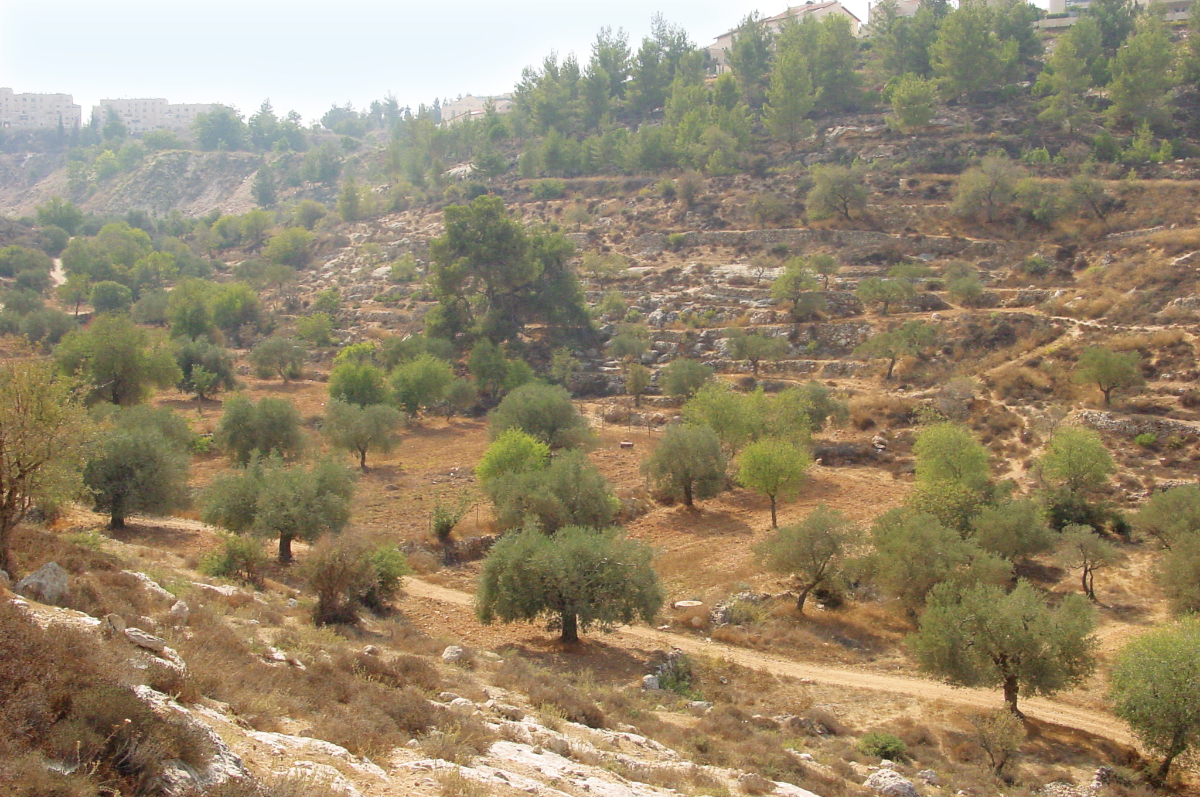
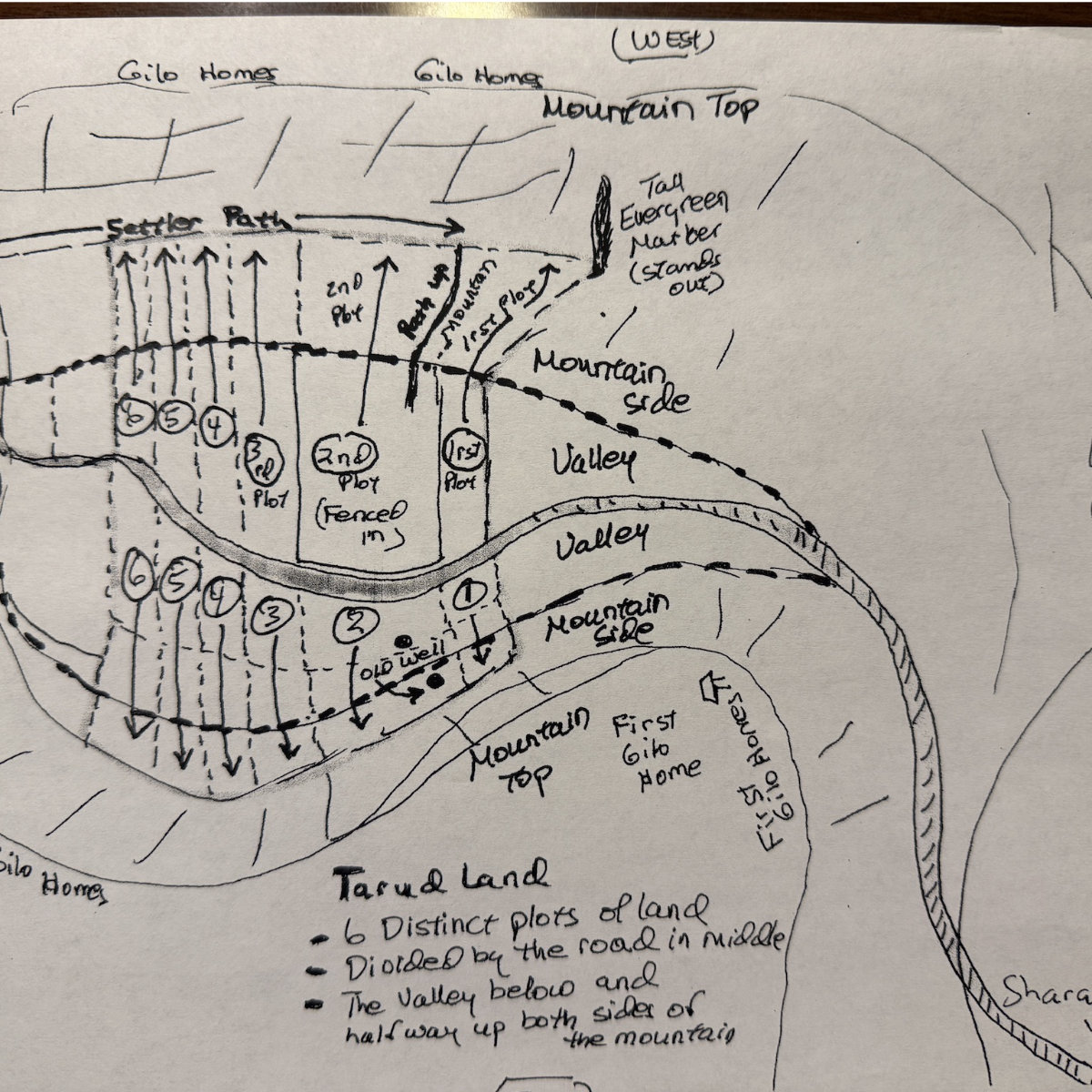
The land is beautiful, despite Israeli efforts to discourage and prevent us from developing it. It had more than 200 ancient olive trees and orange and red zarour fruits growing on it. We had a home there that overlooked the property and a road that led out to the nearby villages of Sharafat and historic Beit Safafa in Jerusalem. It had a deep water well, too.
When they began building Gilo in 1971, Israel immediately destroyed the home and the road, leaving a small path. They sealed the water well on the property, not to divert water to Gilo but to prevent Christians and Muslims from using it. They destroyed 40 olive trees, clearing the sides of the hills for their “security.”
From Gilo, you can see the valley and panorama of olive trees below. It is a precious sight.
In the beginning, my aunt, who lived in Ramallah, could go to the land and harvest the olives in the autumn. But that quickly ended when Israel placed restrictions on Palestinian travel through the West Bank.
In a letter signed with the mukhtar of the village of Sharafat in the 1970s, my aunt gave the Muslim villagers of Sharafat permission to harvest the olives themselves. They also have permission to tend to small vegetable gardens to feed their families.
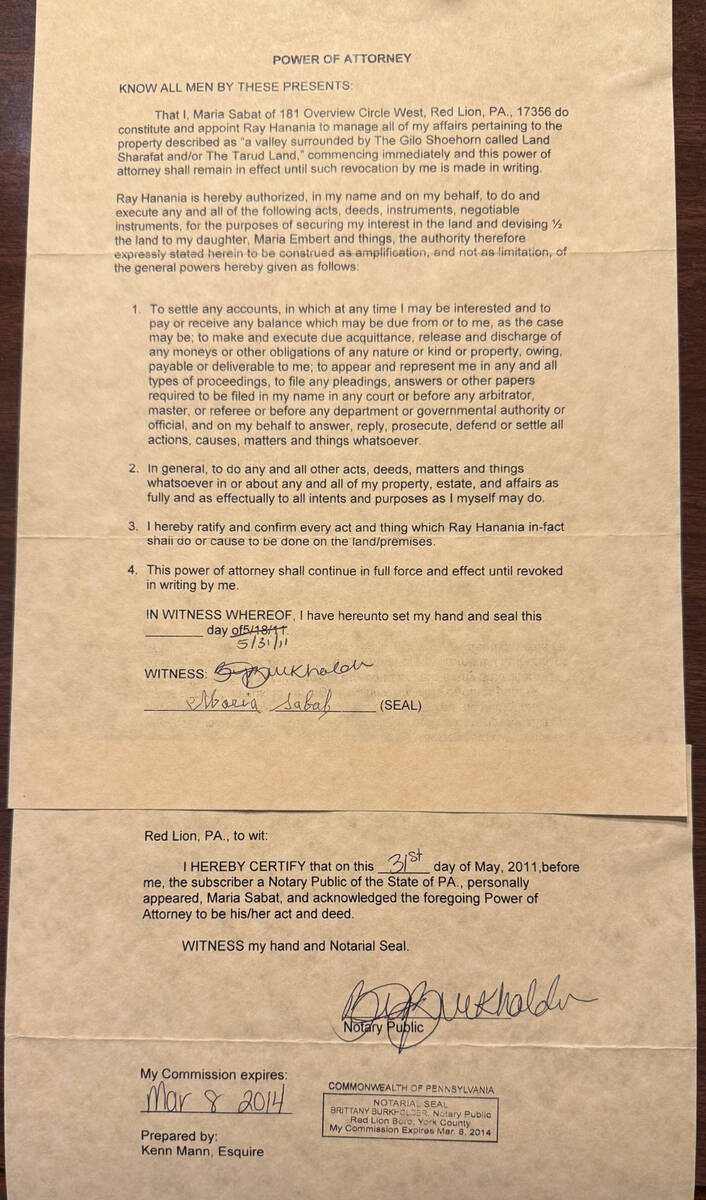
My cousins gave me power of attorney for the family to represent the land, believing that as a journalist I could put a spotlight on the property — an example of the thousands of other stories of land confiscation by Israel.
Once classified as a “settlement,” Gilo has grown so large that it is accepted as a “city,” even though every home has been illegally built on land taken from Christian and Muslim Palestinian landowners.
The Israelis would sometimes prevent me from walking on the land. I had to sneak onto it, entering from Gilo, or be led by the mukhtar’s son when I first visited the land in 2002. My aunt and cousins in Ramallah were unable to accompany me because of IDF military restrictions on Palestinians.
During those few years, I was able to taste the olives and the zarour it produces. But the difficulty in getting Israel to recognize and give my family the right to develop, build homes, harvest the olives officially, and do what we want with our land has made the experience bitter.
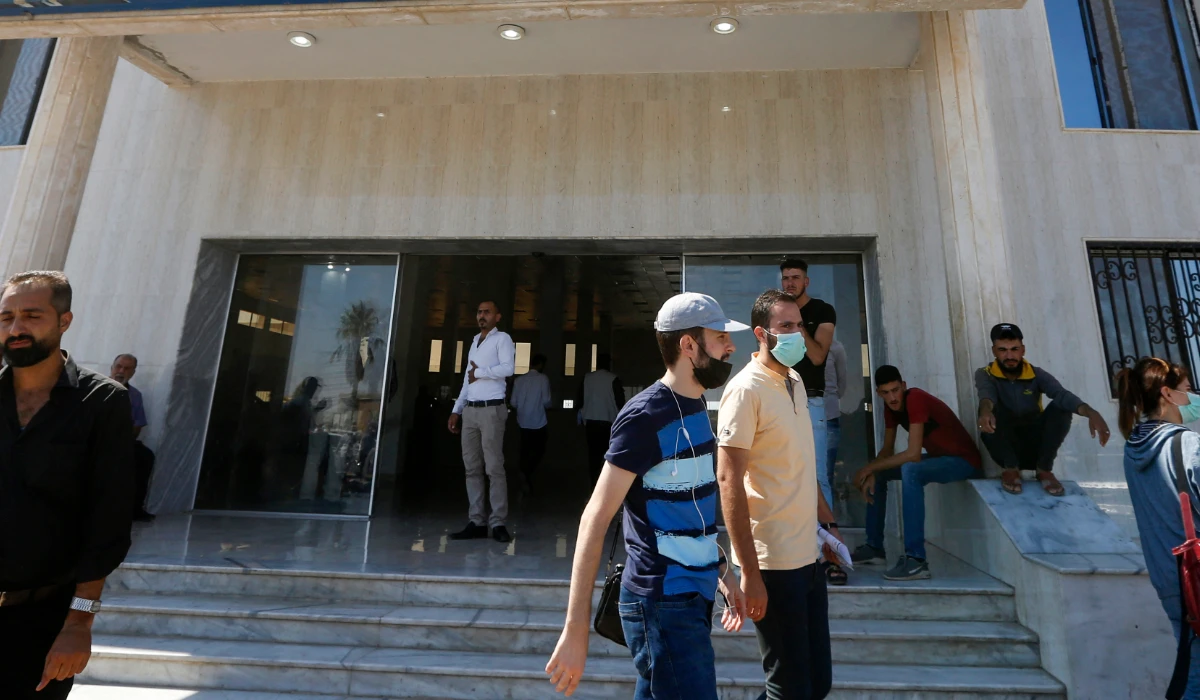
I visited the Israeli Land Office, the “Tabu,” located on Ben Yehuda Street, many times. You have no idea what it is like carrying a fat legal folder filled with the original land documents dating back to the 1890s, trying to get the Israelis to allow me to start a process to claim the land. They stared at me like I was an alien entering a place where I did not belong.
When I got past a clerk to speak with someone with authority, they would brush me off with excuses: “You don’t speak Hebrew. You don’t live in Israel. The land isn’t in the West Bank anymore. It is in Israel, and it is different. You need to spend $25,000 to get your own Plat of Land Survey done,” according to Israeli requirements, replacing the one done by the Ottomans in the late 19th century.
They said I had to get a lawyer to file the process. I spoke to many. They all wanted me to sell it to them. The value of 33 dunums of land adjacent to East Jerusalem and Bethlehem, facing Malcha and the Israeli stadium, is in the millions. They offered a few thousand.
One Jewish Israeli lawyer I met told me in 2007 that the government would never allow me to develop the land, and that they expected to eventually take it for Gilo’s expansion. They would “out-wait” me, he said, until every land claimant was gone.
But that is the problem. We will not be gone. We will always be there until there is justice. That was my commitment to my cousin when I took on this task of reclaiming my family’s land.