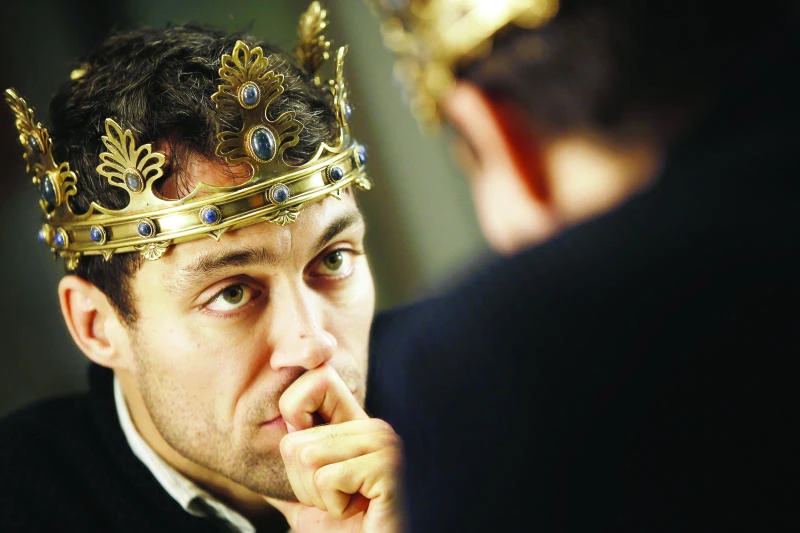
LONDON: Britain’s Royal Shakespeare Company embarks on its first major tour of China in 2016, presenting the Bard’s history plays about bloodshed, honor and kingship in mediaeval England to a new and potentially vast audience.
Marking 400 years since William Shakespeare’s death, the prestigious theater company will take productions of “Henry IV Part I,” “Henry IV Part II” and “Henry V” to Beijing, Shanghai and Hong Kong in February and March.
The trilogy is not well known in China and most in the audience are likely to be seeing the plays for the first time. The romantic tragedy “Romeo and Juliet,” for instance, would probably be more well known.
On the other hand, Shakespeare is enduringly popular among Chinese audiences, and the story lines and colorful characters in the history plays should make for a compelling show, say the organizers.
“The audience will be sitting on the edge of their seats, genuinely wanting to know what happens next,” predicted Joseph Graves, artistic director of Peking University’s Institute of World Theatre and Film.
That is a thrilling prospect for the cast and crew as they seek to bring the courts and bloody battlefields of England and France to life in 21st-century China.
Alex Hassell — who plays the lead role in “Henry V,” currently playing at London’s Barbican Center — said he was excited at the prospect of performing the play in a context “untethered from its theatrical history.”
“The idea that maybe they (the audience) will have no notions at all about what they play is and who the people in it are and what’s going to happen would be very cool,” he said.
Shakespeare was first taken to China in the late 19th Century by British missionaries, while the publication of a translated version of Charles and Mary Lamb’s children’s book “Tales From Shakespeare” in the early 20th Century spread his popularity further.
In the 1930s and 1940s, Chinese scholar Zhu Shenghao translated nearly all of Shakespeare’s plays, but they fell from view under the restrictions of Mao Zedong’s Cultural Revolution in the 1960s and 1970s, Graves said.
Now, though, Shakespeare is widely taught in Chinese universities and the RSC, based in the playwright’s birthplace of Stratford-upon-Avon, is hoping to attract new audiences with its tour.
All the world’s a stage: RSC takes Shakespeare to China