SHANGHAI: Entertainment giant Disney opened a massive theme park in Shanghai on Thursday, hoping to win over communist-ruled China’s growing middle class with the ultimate American cultural export.
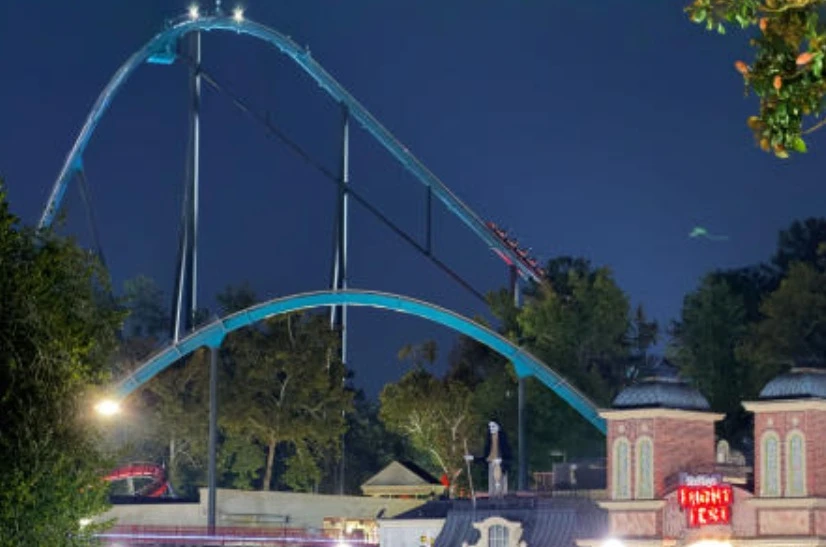
Thousands waited in long lines in the rain-drenched park, hoping to be among the first to ride attractions such as a futuristic rollercoaster based on the “Tron” science fiction films.
The Shanghai resort is the US company’s sixth in the world and the first in mainland China — there is already one in Hong Kong.
Workers broke ground on the project in 2011 and the Shanghai Disney Resort now sprawls over 3.9 square km on the city’s outskirts, with a fairy-tale castle soaring over the horizon.
But the launch of the $5.5-billion resort, representing one of the biggest ever foreign investments in China, comes as growth in the world’s second largest economy slumps to its lowest level in a quarter century.
Still, the world’s most populous country is simply too big to ignore, Disney chairman and chief executive Bob Iger said.
“We wanted to make a strong statement. After all, this is the largest market in the world,” he told journalists before the park opened.
Long lines at some attractions — more than two hours for the film “Soaring Over the Horizon” — dampened the celebratory mood for some.
“It’s not worth waiting for two hours,” said one man from the central province of Henan, who had his two sons in tow. “I want to look for something faster.”
Disney has set the entrance fee at 499 yuan ($76) during peak periods and 370 yuan ($56) for other times, in a country where the average monthly disposable income is just $278.
And there is competition for tourist cash as China builds more theme parks than any other country in the world.
Disney has also had to fend off accusations of cultural imperialism. Days before Shanghai Disney opened, Chinese tycoon Wang Jianlin, who is developing his own entertainment properties, accused the US company of a cultural invasion.
But Disney denies the allegation, saying its philosophy is to integrate local elements throughout, from the Chinese food on the menu to the attractions — even the Disney castle is topped with a traditional peony flower.
Thousands waited in long lines in the rain-drenched park, hoping to be among the first to ride attractions such as a futuristic rollercoaster based on the “Tron” science fiction films.
The Shanghai resort is the US company’s sixth in the world and the first in mainland China — there is already one in Hong Kong.
Workers broke ground on the project in 2011 and the Shanghai Disney Resort now sprawls over 3.9 square km on the city’s outskirts, with a fairy-tale castle soaring over the horizon.
But the launch of the $5.5-billion resort, representing one of the biggest ever foreign investments in China, comes as growth in the world’s second largest economy slumps to its lowest level in a quarter century.
Still, the world’s most populous country is simply too big to ignore, Disney chairman and chief executive Bob Iger said.
“We wanted to make a strong statement. After all, this is the largest market in the world,” he told journalists before the park opened.
Long lines at some attractions — more than two hours for the film “Soaring Over the Horizon” — dampened the celebratory mood for some.
“It’s not worth waiting for two hours,” said one man from the central province of Henan, who had his two sons in tow. “I want to look for something faster.”
Disney has set the entrance fee at 499 yuan ($76) during peak periods and 370 yuan ($56) for other times, in a country where the average monthly disposable income is just $278.
And there is competition for tourist cash as China builds more theme parks than any other country in the world.
Disney has also had to fend off accusations of cultural imperialism. Days before Shanghai Disney opened, Chinese tycoon Wang Jianlin, who is developing his own entertainment properties, accused the US company of a cultural invasion.
But Disney denies the allegation, saying its philosophy is to integrate local elements throughout, from the Chinese food on the menu to the attractions — even the Disney castle is topped with a traditional peony flower.