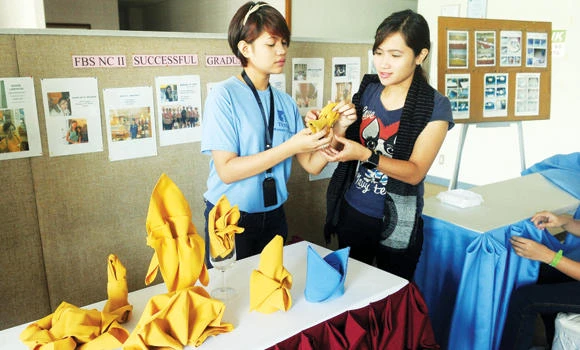
MANILA: If you are holidaying on a Mediterranean cruise ship, or dining with the president of the United States, the chances are a Filipino will be cooking your meal.
Since the 1970s, the Philippines has been known for its mass export of workers, particularly poorly paid maids and construction workers who choose an uncertain life abroad above deep poverty at home.
But in recent years there has been a trend toward higher-skilled and better-paying jobs, and cooking schools in the Philippines are now churning out tens of thousands of chefs a year for kitchens around the world.
“I’ve always been interested in cooking, especially baking, even as a kid,” former bank clerk Rochelle Evaristo told AFP as she took a break from making sandwiches alongside other aspiring cooks at a Manila school. “I also want to work abroad. My cousin is in Canada and he said they need a lot of cooks.”
In her late 20s, she is among the oldest of the class of 39 mostly teenaged students at her government-run school in Manila.
More than 10 million people from the Philippines work overseas and maids, sailors and laborers are still the most common jobs.
However cooks, bakers, and pastry chefs are becoming the most sought-after professions, with ships, hotels, restaurants and casinos the main employers, the school’s deputy director for operations, Teodoro Pascua, told AFP.
Nearly 180,000 Filipinos went to work in ship galleys abroad between 2010-2014, including nearly 72,000 head chefs, with the rest made up of kitchen assistants, waiters and waitresses, according to labor department data. Over the same period, about 65,000 Filipinos went to work in similar catering jobs in hotels and restaurants in foreign countries.
Filipinos are big assets in the global catering industry because of their English proficiency, the ease with which they adapt to the host countries, and a resilience that belies their easy-going nature, according to Pascua.
Philippine cooks take over the world’s kitchens