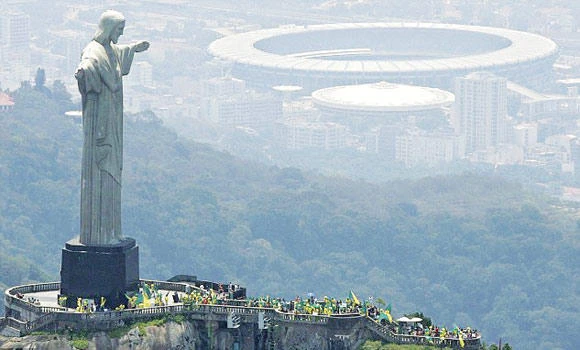
RIO DE JANEIRO: With the World Cup set to kick off six months from now, Brazilian officials see street protests and resurgent criminal violence in some of Rio’s slums as top security concerns.
This Latin American powerhouse is pulling out all the stops to ensure security for the hundreds of thousands of visitors expected for the planet’s most-watched sporting event, the first to be held in Brazil since 1950.
“You can protest over causes which you see as just ... but remember that we are staging an event that is very crucial for our country. So treat visitors well,” Ricardo Trade, head of the World Cup’s Local Organizaing Commitee, said recently.
Brazil is used to organizing mammoth events such as the Rio carnival or Pope Francis’ visit, which drew three million pilgrims on Copacabana beach in July.
But it remains one of the world’s most violent countries, with a murder rate of 27 per 100,000 inhabitants.
Last year, a strategic plan worked out with FIFA, football’s world governing body, spelled out the key areas to protect, coordination between public and private security firms and assessed the main threats from organized crime, terrorist attacks and football hooliganism.
It was activated for the Confederations Cup, a dry run for next year’s Wold Cup, in June. But authorities had not anticipated June’s social unrest when more than one million Brazilians took to the streets nationwide to demand more spending on public transport, health and education.
The demonstrators also railed against the high cost of staging the World Cup and the 2016 Rio Summer Olympics.
The government has announced it was setting up an intelligence task force to thwart and control possible violence during demonstrations.
Authorities also moved to upgrade the police’s crowd control capabilities. French riot police officers were sent to Rio to share their know-how with their Brazilian colleagues.
Another source of concern is a resurgence of criminal violence in some of Rio’s hilltop shantytowns, where beginning in 2008, police restored control by evicting the drug gangs that had held sway for decades.
World Cup: Brazil unrest a top security worry