
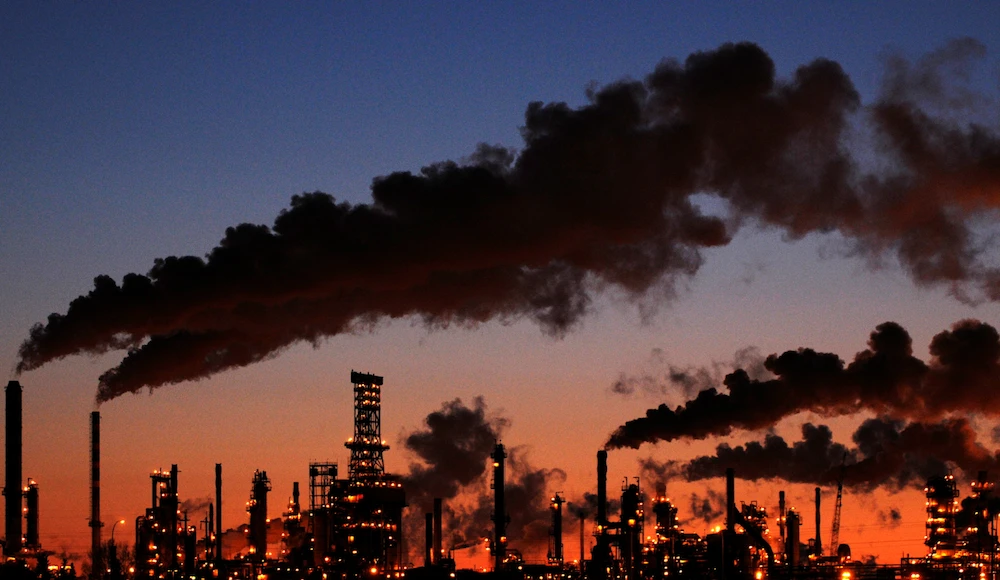

Concentration of atmospheric carbon stood at 427.04 parts per million on April 17 having risen from 424.83 parts per million a year ago and from 413.85 parts per million on April 17, 2019. That means in a span of barely five years, the atmospheric carbon has risen by over 3 percent and by over 5.6 percent from 2015, when the Paris Agreement was signed and when all countries agreed to take steps to cut global carbon emissions by 50 percent by 2030.
However, instead of falling by half, carbon emissions have risen almost every year since then. Hence, the emissions that stood at 35.46 billion tonnes in 2015 have increased to 37.55 billion tonnes, a rise of 2.09 billion tonnes or 6 percent in the past nine years.
Carbon dioxide concentrations are rising mostly because of the fossil fuels that people are burning for energy. Fossil fuels, such as coal and oil, contain carbon that plants pulled out of the atmosphere through photosynthesis over many millions of years; we are returning that carbon to the atmosphere in just a few hundred.
Though no one really expects it to happen, for the world to achieve the global emission target by 2030, emissions should fall to 17.73 billion tonnes by 2030, or exactly half the 2015 figure. And if by some miracle, the world still decides to meet the Paris Agreement target, it means emissions have to fall by 19.82 billion tonnes, or by 52.8 percent in 2023, and within six years.
Unfortunately, for the planet, emissions appear far from plateauing, let alone falling precipitously, in the coming six years. Despite the rise in production of renewable energy and greater efforts toward energy efficiency in order to cut emissions, or at least reduce wasteful consumption of energy, it is pretty much certain that global carbon emissions will continue to rise for at least the next few years, even if not all the way to 2030, by when many experts expect emissions to either plateau or at least be close to levelling off.
Acidification of the oceans has proven to be cataclysmic for many marine species.
Ranvir S. Nayar
What is perhaps most shocking is that the rise in atmospheric carbon has occurred despite efforts by nature to absorb a significant part of the emissions each year through what are called carbon “sinks,” such as oceans or forests.
Though carbon is not the only greenhouse gas, it is by far the most significant one, with NASA estimating that carbon dioxide is responsible for about 67 percent of the global warming impact of emissions caused by human activity.
Excess carbon harms life through global warming of the atmosphere and by trapping heat, but it also harms marine life and corals as carbon dissolves into the ocean, reacting with water molecules to produce carbonic acid, leading to higher acidity levels of seawater. According to scientists, in the past 200 years or so, since the start of the Industrial Revolution, the pH of the ocean’s surface water has dropped from 8.21 to 8.10, making it much more acidic.
This acidification of the oceans has proven to be cataclysmic for many marine species, notably corals, as well as other plant and animal life.
Besides warming up the air, land and sea, higher carbon concentration can also have other harmful impacts on animals. Higher concentrations of carbon lead to rise in photosynthesis by plants, making them grow faster. While that is not totally bad news, rising carbon emissions also lead to poorer nitrogen absorption, potentially reducing plants’ protein content, which can be disastrous for animals and humans that depend, at least to some extent, on plant proteins.
The world seems to be diving headlong into pumping more carbon into the atmosphere.
Ranvir S. Nayar
Besides the absolute amount of carbon in the atmosphere and the annual emissions, which are both much higher today, the world of 2024 is no different to the one prevailing in 2014. Fossil fuel energy companies continue to churn out ever-greater amounts of coal or oil; mining companies keep digging, unmindful of the impact of their pillaging on the world; banks keep on breaking their promises to curb financing of fossil fuel projects; and businesses in most other sectors have been keeping to their old methods, despite clear evidence of the harm that they are causing to the planet.
Many estimates suggest that if global energy demand continues to grow rapidly, and we continue to meet it mostly with fossil fuels, human emissions of carbon dioxide could reach 75 billion tonnes per year or more by the end of the century. Atmospheric carbon dioxide could then be 800 parts per million or higher, producing conditions not seen on Earth for close to 50 million years.
Yet, despite dire warnings of a cataclysmic impact on life on the planet, the world seems to be diving headlong into pumping more carbon into the atmosphere. Not only are we failing to curb the rise in carbon emissions, we do not seem to even deem it necessary to take steps that ultimately in 20-30 years may lead to some reduction.
But that would be far too little and too late for not just a few species of plant and animal life on the planet, but almost every form of life, including humans, who seem fixated on keeping their rendezvous with catastrophe, come what may.
- Ranvir S. Nayar is the managing editor of Media India Group and founder-director of the Europe India Foundation for Excellence.


