
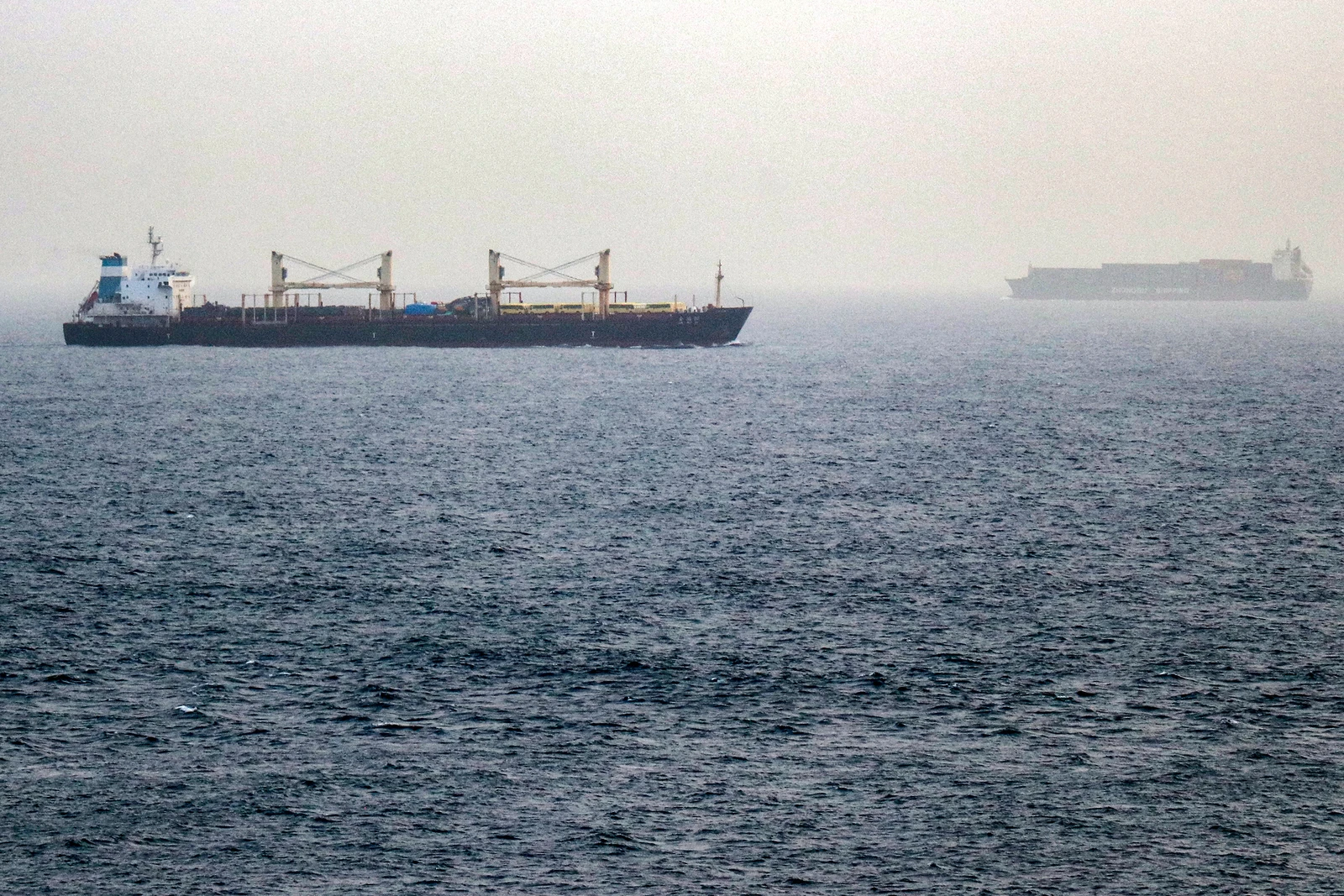

The recent fall of the Yemeni city of Mokha and its strategic port, followed immediately by the Houthi militia’s invasion of Mayun Island in the middle of the Bab Al-Mandab Strait, signal a permanent shift in global maritime security. This coordinated maritime encirclement, cementing its strategic weight across global shipping corridors, directly mirrors the Ottoman fleet’s siege of the Malacca Strait in 1569, which successfully strangled trade with the global empires of Spain, Genoa, Portugal and Venice.
Modern nonstate actors and regional powers have effectively weaponized these waterways, transforming once-free global passageways into tools for the total economic strangulation of distant capitals without ever marching on their borders.
History repeats itself with absolute clarity, confronting the international order with a raw reality that shatters its foundational credibility: maritime geography has permanently shifted from a safe commercial commons into a supreme weapon of political blackmail — a weapon whose asymmetric power completely surpasses conventional military arsenals and renders international maritime laws entirely powerless.
Geopolitical containment across the southern Red Sea now strikes directly at the core of global energy stability. Falling coastal territories along the Yemeni coast have triggered an immediate domino effect, destabilizing Saudi Arabia’s strategic East-West Pipeline network and forcing major state enterprises like Aramco to structurally reroute shipments away from European refineries. This calculated freeze of 3.1 million barrels per day of crude oil and vital derivatives presents a severe threat to Asian and Western energy security alike.
The Houthis’ military placement on Mayun Island secures an absolute physical blockade over the western channel, transforming the sole deep-water artery for intercontinental oil tankers into an active tactical trap where low-cost projectiles and drone networks hold sway.
Ongoing data assessments from the International Institute for Strategic Studies reveal that this crisis has successfully forged a highly fragmented global maritime reality. By physically connecting the flashpoints of the Strait of Hormuz and the Bab Al-Mandab into a single escalatory theater, regional actors have permanently expanded the militarization of the seas into an open, active front.
International maritime laws cannot protect global waterways unless they are backed by a military presence.
Dr. Bader bin Saud
Current developments demonstrate that the pressure around global maritime corridors does not stop at the borders of the Middle East. Analysis from the Center for Strategic and International Studies highlights a mirroring war of nerves actively unfolding across Southeast Asia, focused directly on the waters of the Malacca Strait — the vital economic lifeline of Chinese state stability. This narrow transit corridor handles more than 80 percent of Beijing’s raw crude oil imports, leaving the state highly vulnerable to geographical blackmail while under the constant surveillance of forward-deployed US fleets.
Beijing has attempted to bypass this acute geographical constraint by pouring billions into alternative land corridors across Pakistan and Myanmar, yet these overland routes remain entirely inadequate substitutes for the massive scale of maritime trade.
Joint efforts with Moscow to develop the Northern Sea Route into a functional “Polar Silk Road” remain grounded by severe winter icing and the immense capital cost of icebreaker operations, forcing the Chinese economy straight back into the Malacca vice. Consequently, the Malacca Strait has shifted from a routine merchant transit route into the definitive front line of a cold conflict between Washington and Beijing, where global energy security is held hostage by localized military restrictions deployed from the strategic naval bases of Malaysia and Singapore.
Narrow waterways under active military siege expose a fatal regulatory impasse, signaling the complete erosion of the legal and legislative frameworks that have governed international seas since the mid-20th century. Imposing coastal blockades by raw force has effectively destroyed the operational authority of the 1936 Montreux Convention and the 1982 UN Convention on the Law of the Sea. Treaties explicitly guaranteeing the unrestricted right of passage for commercial fleets have been rendered meaningless.
Existing international regulatory bodies possess zero material or legal deterrent capacity to prevent the militarization of strategic straits by modern militias or regional actors utilizing a policy of the accomplished fact. To put it bluntly, without evasion or euphemisms, international maritime laws cannot protect global waterways unless those laws are backed by a permanent, physical military presence along the coasts. Maintaining obsolete, unreformed agreements simply provides a thin bureaucratic cover that legitimizes and encourages systemic maritime chaos.
Documented historical precedents confirm the severe economic consequences of this regulatory breakdown. During the Tanker War of 1984 to 1988, symmetric attacks on more than 400 commercial ships instantly drove marine insurance premiums from 0.1 percent to a staggering 5 percent of hull value, while the closure of the Suez Canal in 1967 forced global logistics to expand transit distances by a massive 4,800 nautical miles per voyage.
Today, data from the Drewry Global Container Index reveals that the cost of shipping a standard 40-foot container has locked into a high plateau of $4,500 as global carriers bypass the Red Sea entirely to detour round the Cape of Good Hope. Detailed assessments by the UN Conference on Trade and Development confirm that this structural detour has inflated global shipping distances by about 17 percent, extending voyages by 14 days and triggering war risk surcharges exceeding 1.5 percent of vessel hull value. These expanded maritime danger zones impose millions in additional costs per voyage, transforming localized crises into unexpected, systemic price spikes footed entirely by consumer markets in major capitals.
Contemporary maritime security crises are not temporary interruptions; they represent a radical, permanent restructuring of the global map of influence. Maritime geography has officially turned the page on the historical era of free and shared passage, opening a harsh new chapter of fragmented maritime sovereignty in which sea lane access can be prevented by the physical placement of coastal missile and drone batteries.
The absolute inability of Western decision-making capitals to protect these vital chokepoints has redefined the concept of national sovereignty for developing and developed nations alike. In a world where international treaties are disregarded and where coastal enforcement holds absolute sway, whoever wields authority over critical crossings and straits not only controls the physical flow of global wealth but ultimately dictates the survival of the global economy itself.
Dr. Bader bin Saud is a columnist for Al-Riyadh newspaper, a researcher in media and knowledge management, a university professor, an expert in crowd management and strategic planning, and the former deputy commander of the Special Forces for Hajj and Umrah in Saudi Arabia.
X: @BaderbinSaud


