

When I first saw footage of Gaza doctor Munir Al-Bursh and his family kneeling beside the white-shrouded body of his son, surrounded by mourners, I thought it was an old video. It was not.
My conclusion, however, was understandable. In December 2023, only two months after the start of the Israeli genocide in Gaza, the Al-Bursh family was targeted in an Israeli attack. Munir, director-general of Gaza’s Ministry of Health, was wounded. So were other members of his family. His daughter, Jinan, only 13, was killed.
That same day, Gaza’s beloved doctor was back at work, joining the many doctors across the Strip trying to save lives as Israel’s killing machine claimed them by the thousands.
Alas, the latest footage was not old footage resurfacing. It was a new coffin, a new funeral, another child buried by the same family. This time, the attack took place during what some in the media continue to call the “Gaza ceasefire.”
On Sept. 19, an Israeli drone strike killed Al-Bursh’s eldest son, Basir, outside a tent west of Jabaliya refugee camp. “We were together side by side,” the grieving father recalled. Basir had warned him: “The Israelis are targeting both of us.” Moments later, his son stepped outside the tent and was killed.
The scenes emerging today are almost indistinguishable from those that preceded the so-called ceasefire
Dr. Ramzy Baroud
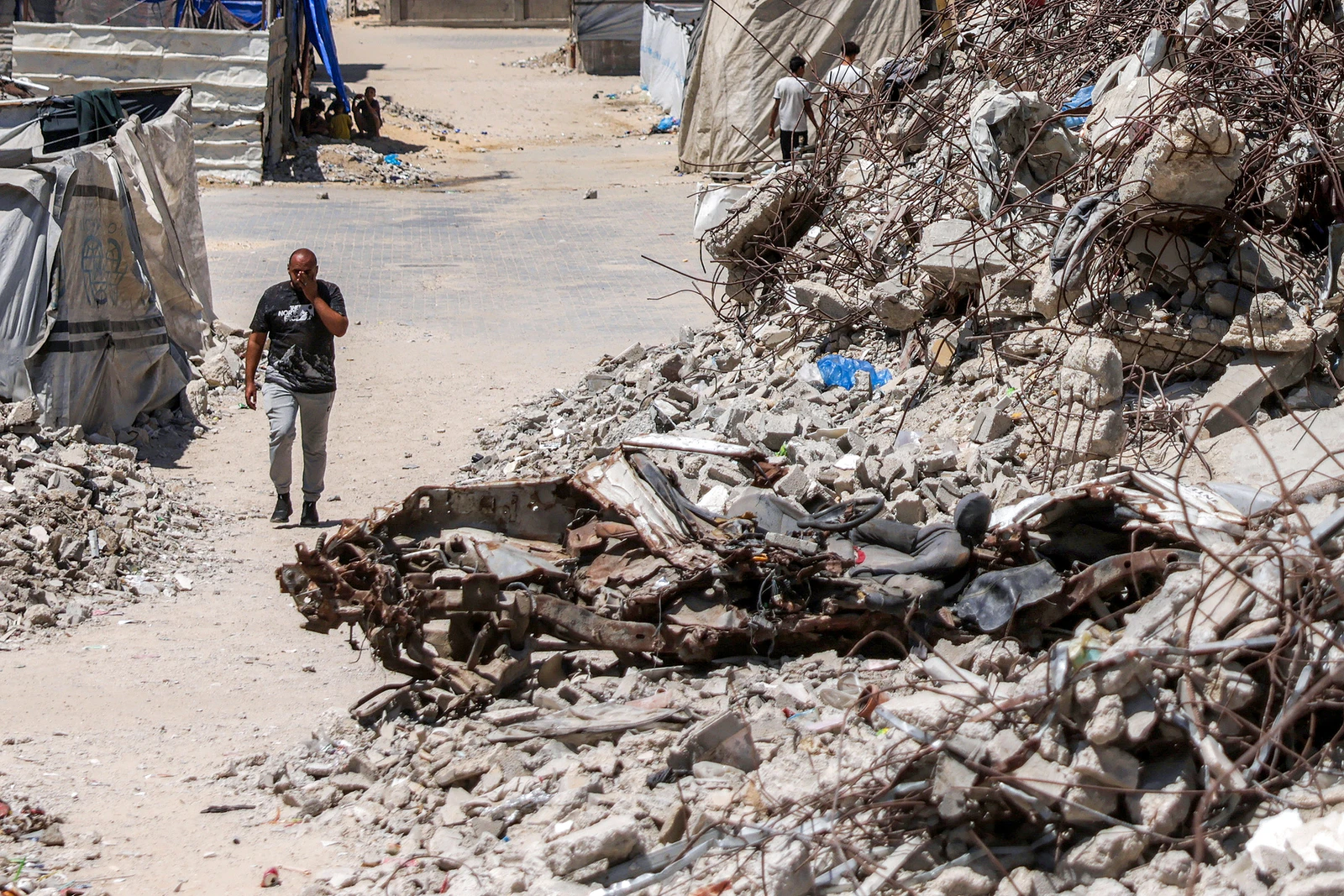
One can be forgiven for confusing Gaza’s present with its recent past. The scenes emerging today are almost indistinguishable from those that preceded the so-called ceasefire of October 2025. The sequence repeats itself with terrible familiarity: Israeli strikes, shelling and sniping; Palestinians killed; and the bereaved carrying their dead through Gaza’s destroyed streets, searching among the ruins for somewhere to bury them.
Al-Bursh’s story is part of this terrible continuum but its significance extends beyond his personal loss. Throughout the genocide, he and other Palestinian doctors have become Gaza’s de facto spokespeople. They have counted the dead and wounded, documented the hunger and destruction, and chronicled the collapse of the medical system from within its hospitals. In the process, they have become Gaza’s highest moral authority, more credible than politicians or self-proclaimed leaders.
And the world listened. Gaza’s doctors forged a bond with global civil society that no political institution could manufacture.
Perhaps that helps explain the staggering price Gaza’s medical community has been made to pay. According to the World Health Organization, more than 1,700 healthcare workers have been killed since 2023, amid at least 920 attacks on healthcare.
Palestine echoed through speech after speech, though this time the language carried a new urgency
Dr. Ramzy Baroud
Dr. Hussam Abu Safiya, like Al-Bursh, became a symbol of that medical resistance. The director of Kamal Adwan Hospital remained at his post through siege and repeated Israeli attacks before Israeli forces detained him in December 2024. He remains imprisoned without charge or trial, amid reports from his lawyer of beatings and deteriorating health.
Al-Bursh, meanwhile, remains steadfast despite repeated blows that would have broken many others. His wife also embodies “sumud,” the Palestinian tradition of steadfastness nurtured at home and passed from one generation to the next.
Even in the immediate aftermath of his son’s killing, Al-Bursh continued warning about Gaza’s collapsing healthcare system. Indeed, hospitals have been forced to suspend scheduled surgeries and outpatient services, while severe shortages of fuel, medicines and equipment continue.
“The limited quantities of fuel reaching the enclave barely keep health facilities alive,” Al-Bursh warned a day after his son’s murder.
His statement came as world leaders gathered thousands of miles away, in New York, for the 81st session of the UN General Assembly. Once again, Palestine echoed through speech after speech, though this time the language carried a new urgency.
Spanish Prime Minister Pedro Sanchez condemned “the genocide that (Israeli Prime Minister Benjamin) Netanyahu continues to perpetrate in Gaza.” UN Secretary-General Antonio Guterres described Israel’s mass extermination as involving “a scale of killing and destruction unlike anything I have witnessed” during his tenure. Even French President Emmanuel Macron called Gaza “a spectacle that shames us all,” asking: “What is our credibility worth if we remain inactive on Gaza?”
Then came Netanyahu. Dozens of delegates walked out as he approached the podium, leaving row upon row of empty seats, while protests continued outside the UN. Netanyahu responded by calling those who departed “moral cowards.”
One might pause here and speak of tides turning, currents changing and a world slowly loosening the decades-long grip of Israel and its American benefactor.
But Gaza does not have the luxury of time. While the words reverberate through the halls of the UN, children are still killed in front of their families. Mass funerals remain part of Gaza’s daily rhythm. About 1.7 million people remain displaced, many with inadequate shelter and without sufficient clean water or sanitation. Hospitals remain crippled. And above this landscape of ruin, the drones still circle.
Between today and the next UNGA lies an entire year — 365 days in which those words can either acquire meaning or become yet another entry in the long archive of speeches on Palestine. However, there is time for rhetoric to become policy — for sanctions to be imposed, boycotts activated, meaningful aid delivered and those responsible for war crimes held accountable.
Until then, Al-Bursh and thousands of other Gazan men and women will continue to hold the fort amid shattered hospitals, destroyed homes and an exhausted population.
Their resilience is extraordinary. But Gaza cannot be expected to endure simply because it has proved capable of enduring.
In New York, Palestine is spoken of from the podium. In Gaza, Palestinians are still being carried to their graves.
It is time to close the distance between words and action, once and for all.
Dr. Ramzy Baroud is a journalist, author and the editor of The Palestine Chronicle. His latest book, “Before the Flood,” was published by Seven Stories Press. His website is ramzybaroud.net. X: @RamzyBaroud


