
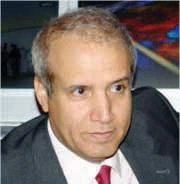

The two most famous men in the history of modern Yemen are Ali Abdullah Saleh, the uneducated former president who grabbed the top position through military power, and Dr. Abdulkarim Al-Iryani, the cultured diplomat who held a Ph.D. in biochemical genetics from the United States, and belonged to a prestigious family, as his uncle was Yemen’s second president.
Just like in the movies, Saleh is an evil character who continues to destroy, fight and sabotage, while Iryani was the good man who, when war erupted in Yemen, left the country and lived in Cairo then moved to Germany. Two days ago Iryani passed away in a hospital in Germany, while Saleh continues to wreak havoc in Yemen.
Iryani has always been a significant figure in Yemen’s modern history. Since Saleh did not have the required competency to manage his diplomatic activities, he depended on Iryani’s patriotism, liberalism and vast knowledge.
Their relation was severed after the revolution against Saleh erupted. Politicians resorted to Iryani, who engineered the ideas for change and for a peaceful transitional plan to prepare for elections and a new constitution. Yemenis then resorted to Iryani after Saleh thwarted the transition plan. Iryani thus called on Saleh to respect the agreement and leave the General People’s Congress party.
However, reality does not resemble the fiction in movies. While Iryani was dying of heart complications in Berlin, Saleh hid in Yemen, rejecting any solution that stipulates conceding governance. Saleh has neither grown tired nor bored, and he is considered one of the longest-serving presidents in the world. All the destruction and bloodshed in Yemen is due to his holding on to power.
Saleh has for many years exploited all respectable men around him. When he was working on a border agreement with Yemen’s neighbor Saudi Arabia 15 years ago, he accused then Prime Minister Iryani of refusing to establish good ties with Riyadh. Saleh prevented him from accompanying him to Saudi Arabia, hinting to Riyadh that he refused to include Iryani in the delegation because he was against the deal.
Years have now passed, and it turned out that Iryani was one of the Yemeni politicians who strongly desired to end foreign tensions and enhance relations with the region’s countries. Domestically, it was he who led north-south Yemeni reconciliation.
When the revolution erupted, Iryani engineered the famous agreement stipulating Saleh’s exit and the transfer of power to whoever the Yemeni people choose. The Gulf countries and the UN special envoy adopted the plan, and forced Saleh to sign it to prevent unrest in the country. This is why Saleh turned against Iryani.
He thus exiled himself to Cairo, but politicians continued to turn to him for solutions to confront the stubbornness of Saleh and his Houthi allies. However, the wise man whom the Yemenis need is now gone.


