
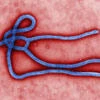

The Ebola virus species that has killed more than 4,000 people in West Africa caught everyone by surprise when it erupted thousands of kilometers from its historical hotbed.
The outbreak, experts say, revealed just how little we know about the deadly agent. What is the virus’ natural range? Are there limits? Can they shift?
“Previously we were under the impression that this problem would be predominantly restricted to central Africa. Clearly, that is not the case,” University of Warwick virology professor Andrew Easton said.
“This outbreak emphasizes that viruses are no respecters of borders.”
Prior to the West African outbreak, the Zaire species of Ebola had killed just under 1,100 people, all of them in the Democratic Republic of Congo (DRC), Congo and Gabon, since the disease was first recorded in 1976.
Zaire is the deadliest of the four African species of Ebola, part of a family of viruses that cause hemorrhagic fever. A fifth, the Reston Ebolavirus, has been recorded in Asia. How the virus found its way into the human population of West Africa remains, for now, a mystery. Fruit bats are believed to be the virus’ natural reservoir in the wild — they do not fall ill from it, but can infect apes and monkeys and small antelopes, even humans directly. Humans become exposed to the virus if they kill and butcher infected animals for food, or bushmeat, a practice that is common in parts of West Africa’s tropical forests.
What seems likely is that last December, a single human caught the virus this way, and then kicked off a transmission chain in Guinea, Liberia and Sierra Leone. But why was a “central African virus” in West Africa?
One theory is it was brought by a migrating bat, or a colony of bats — the animals can fly thousands of kilometers in pursuit of seasonal fruit.
Another idea is that a human contracted the virus in central Africa and carried it west. “However, it is not likely, as the outbreak was in a very isolated area where the local population have almost no access to travel across the distances required and travel over land is certainly unlikely due to the rapidity of the infection,” said Easton. In West Africa, the virus could have passed directly from bats to humans who hunt or eat them, or come into contact with the animals’ excrement in caves, on fruit or under trees — or via infected bushmeat.
Another possibility is that the virus already made its way to West Africa years ago and was simply waiting for conditions to become right for a human outbreak. Or it might have been in West Africa just as long as in central Africa, just waiting for humans to move closer.
The European Centre for Disease Prevention and Control (ECDC) said the reasons for the outbreak are “not fully understood yet.”
But “changes in land use and penetration into previously remote areas of rainforest bringing humans into contact with potential reservoirs might have played a role,” the agency told AFP by email.
“These things are purely chance events,” said University of Nottingham molecular virology professor Jonathan Ball.
“You need the right conditions: You need an infected animal source, you need humans to then come into contact with that animal source.”
A genetic study published in September said the virus responsible for the West African outbreak was a member of the Zaire Ebolavirus family, and may have diverged from central African strains about 10 years ago.
A study last month said more than 22 million people live in parts of Africa where conditions exist for the Ebola virus to jump from animals to humans.
“African states need to prepare a plan for dealing with this and similar viruses” as soon as they emerge, Easton said, urging wealthy nations to lend support.


