
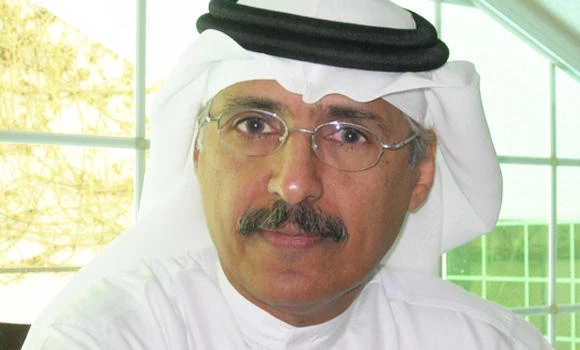

I WRITE this week from Lima, Peru, where the 3rd Arab-South America Summit (ASPA) has just concluded. Peru was able to present itself at this summit as a vibrant promising country with great potential for expanded growth, trade and investment.
On the sidelines of the summit, the GCC and Peru signed a Framework Agreement on Economic, Commercial, Investment and Technical Cooperation. Its objective is to explore the potential of both sides and possible synergies between them.
Other than signing the GCC-Peru Agreement, the summit itself produced few other noticeable results, its 30-page-long final communique notwithstanding.
The first Arab-South America Summit was held in Brasilia in 2005 and the second in Doha in 2009. Saudi Arabia will host the fourth summit, expected in 2015.
These summits were the brainchild of former Brazilian president Lula Da Silva, in his vision for greater South-South cooperation. There is great interest in attending them on the part of South American leaders and business people alike. Culturally, too, South Americans cherish these occasions to celebrate their history which has been intertwined with Arab history for many centuries, as many leaders were happy to point out during this summit.
During the Lima summit this week, Peru put on a great show of art, music, dance, pomp and circumstance. It also organized a parallel business conference that was heavily attended from the South American side. However, the fact that only two Arab heads of state attended the Lima summit highlighted the inability of the Arab League to generate enough interest in the summit among its members. The chaotic organization was also emblematic of its modus operandi.
For a long time, Peru occupied the center of gravity of South America, and as such is a country steeped in history and rich traditions. First, it was as the main center of the Inca Empire, then the seat of Spain’s colonial power in the region.
Although its political fortunes have waned, it has great potential to regain that position. It has abundant natural resources, traditional and renewable energy, as well as capital for investment.
Take minerals, for which Peru is known. Few people know that it is the world’s first producer of silver, second in zinc, third in copper, fourth in lead and fifth in gold. Additionally, it has large deposits of iron, phosphate, tin and manganese. However, only 20 percent of its territory with mining potential has been explored.
Despite all that, Peru, as much of South America, has been unknown territory for us. This is changing, albeit slowly.
In my intervention during the summit, I said that after three Arab-South American summits and countless other meetings between the two sides, it was natural for the public to expect tangible results. Although one could point to a handful of such results since the first meeting in Brasilia in 2005, there is potential for more, much more.
I also pointed out that trade and investment could be the most reliable engines for growth and stronger ties between the two groups. They have to be utilized to translate the substantial potential of the two groups into tangible results.
The combined GDP of the two groups is around seven trillion dollars, which would make it the fourth largest economy in the world, after the European Union, United States and China. A huge market. In addition, there are nearly (770) million people living in ASPA countries, many of them youthful populations rapidly joining the middle class. Great aggregate demand.
Levels of trade and investment are quite limited between the two groups, considering that potential, but they do not have to remain that way. Let us consider one example on how to make a difference. At the first ASPA summit in Brasilia in 2005, the GCC and MERCUSOR (Argentina, Brazil, Paraguay and Uruguay) signed a framework agreement for economic, trade, investment and technical cooperation.
Engagement and trade negotiations between the 10 countries of GCC and MERCUSOR followed, and business to business contacts multiplied. As a result, trade has tripled since the first summit, tripling in value from $ 5 billion in 2005 to $ 15 billion in 2011, much beyond expectations.
The GCC-MERCUSOR is an example that could be replicated almost everywhere in ASPA countries.
When the GCC signed a similar agreement with Peru last Monday, they were hopeful that would lead to similar results to that of the agreement with MERCUSOR.
In fact South American and GCC countries have all the right ingredients for mutually beneficial cooperation: unlimited supplies of natural resources, traditional and renewable energy, financial resources, and youthful populations. Demand is growing from their youthful populations. And they have complementarity. What is needed is initiative and leadership. In addition, Peruvians refer to their skills deficit. They need more skilled workers, managers and entrepreneurs.
GCC countries and Peru need to identify the areas where they can have productive partnerships. Peruvian officials are especially impressed by GCC countries innovations in basic infrastructure and ICT. They have contracted DP World, the Dubai-based, third largest port operator in the world, to run Lima’s port. They would like to attract similar companies to develop badly needed housing in Lima, where the city’s official 8 million population is augmented by several million internal migrants. The city also suffers a critical shortage of hotels as well as entertainment and shopping complexes, on the grand scales that GCC countries have developed over the past decade. Peruvian would like to partner with GCC companies to develop similar infrastructure.
— This article is exclusive to Arab News.


