
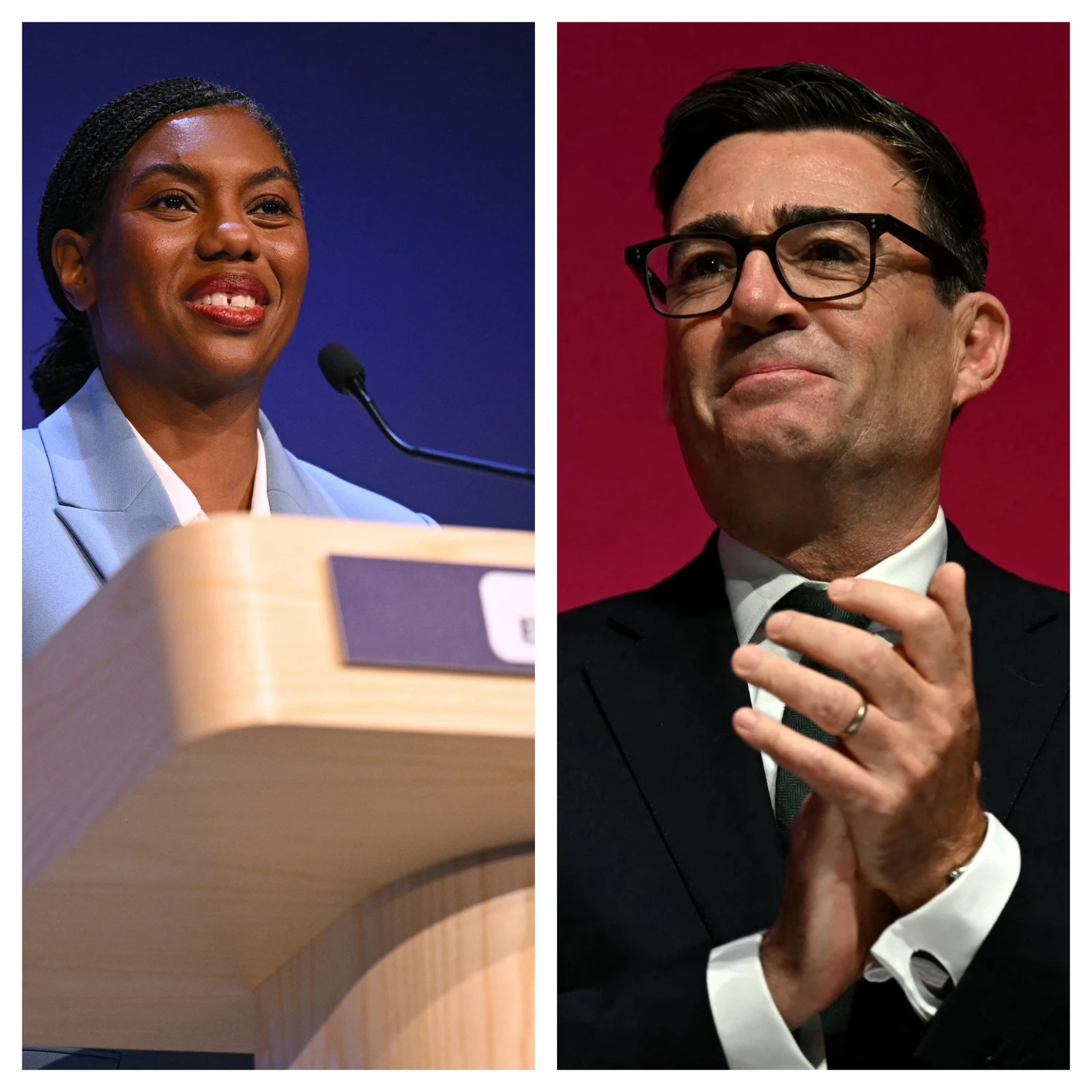

Over the past two weeks, I have had the privilege of attending both the Labour Party and Conservative Party conferences in Liverpool and Birmingham, respectively, and speaking at fringe events on the broader geopolitical situation in the Middle East. What I encountered at both conferences stood in stark contrast to the political mood a year ago.
Both parties appeared more united behind their leaders and the direction in which they want to take their parties and the country. This renewed sense of unity can be attributed, at least in part, to Reform UK’s emergence as a genuine contender for power at the next general election. Its rise has forced both established parties to reassess their positions. In Labour’s case, a leadership change has brought a more transformative figure to the fore. Meanwhile, among the Conservatives, a leader who endured a prolonged shaky start appears to be finding her direction and confidence.
Nothing unites people and focuses the mind quite like a common enemy. For both parties, containing Reform’s surge in the polls has become an overriding priority, especially after significant losses to the right-wing populist party in the May local elections.
For both parties, containing Reform’s surge in the polls has become an overriding priority
Yossi Mekelberg
Yet it was at Labour’s annual conference that delegates seemed most energized, embracing Andy Burnham as their new leader and rallying behind his agenda. There was a palpable sense of renewed momentum, much of it attributable to Burnham’s personality and political style, which differ markedly from those of his predecessor.
Following Labour’s landslide victory over the Conservatives in the 2024 general election, which brought Keir Starmer into Downing Street and left the Conservatives under Kemi Badenoch’s leadership, few would have predicted that Starmer’s position would become so precarious within two years. Nor would many have expected Reform and Nigel Farage to emerge as such serious challengers to the established political order.
It remains difficult to determine whether Reform’s rise in the polls reflects voters’ dissatisfaction with the established parties or a genuine belief that Farage and his party are credible contenders to lead the country. For now, however, some of the novelty surrounding Reform appears to be wearing off as scrutiny of the finances of both the party and its leadership intensifies. Labour, meanwhile, is benefiting from the familiar polling bounce that often follows a new leader’s election.
For the Conservatives, who remain in third place behind Reform but are beginning to close the gap, the challenge has been twofold. The threat from the right has forced the party to reconsider its position. At the same time, Labour’s shift toward a clearer, left-leaning social democratic agenda has given the Conservatives an opportunity to more sharply define the ideological boundaries between the two parties. Not long ago, Badenoch’s position as party leader appeared only a little more secure than Starmer’s. Yet she now seems to be asserting her authority. Her insistence that she will not contemplate any form of alliance with Reform, however loose, appears to be paying dividends, both within the party and among the wider public.
Badenoch may not possess Burnham’s ability to connect with audiences on a personal level but she appears to have steadied the ship
Yossi Mekelberg
In the 21st century, we may have become accustomed to the idea that political leadership can be exercised remotely, with leaders communicating through screens and digital platforms. Yet this year’s party conferences offered a reminder that grassroots activists still value direct, face-to-face engagement with their representatives, without technology or other intermediaries. They want their leaders to offer direction, hope and a sense of purpose, and to do it in person.
Contrary to conventional wisdom, they also value leaders who are willing to express emotion and acknowledge their fears. Above all, they want leaders to respect them by presenting policies that address the issues that matter most to them, rather than relying on hyperbole.
Burnham is a naturally engaging speaker. In his first conference speech as leader, he was unafraid to combine a radical political agenda with deeply personal reflections, striking a balance that may prove harder for a prime minister who has yet to receive a personal mandate from voters at the ballot box. Just weeks after the death of his father, who had contracted Alzheimer’s disease, Burnham spoke candidly about his loss.
It takes courage to reveal such vulnerability in public, allowing the nation to witness the grief of someone who has lost a loved one without concealing his emotions. He also effectively used his personal experience to highlight the need for a universal care system that is accessible and affordable to everyone who needs it.
The connection he drew between his journey from a working-class background and the prospect of reaching 10 Downing Street, on the one hand, and his vision of a different kind of Britain, on the other, was particularly powerful. His radical agenda, grounded in social democratic principles, came across as an honest assessment of what the country needs rather than an exercise in political utopianism, even to many of his political opponents.
Burnham’s willingness to bring Europe back into the public debate and advocate closer relations with Britain’s immediate neighbors was another notable feature of his approach. By leaving open the possibility of rejoining the EU as a full member, without presenting it as the only available option, he demonstrated a readiness to challenge the political consensus of recent years.
Equally striking was his declaration that it was time to move decisively beyond the Margaret Thatcher era. For years, many center-left politicians had been reluctant to break so definitively with Thatcherism. The enthusiastic response from conference delegates suggested many had been waiting for someone to articulate what they had long thought and wanted their leader to express clearly and forcefully.
For Badenoch, the task was more difficult. This was not her first conference as party leader and only a year ago many Conservatives doubted she would still be in the job by the time this year’s conference came around. The defection of senior Conservative politicians to Reform, coupled with the party’s persistently weak polling position, had placed her leadership under intense scrutiny.
Badenoch may not possess Burnham’s ability to connect with audiences on a personal level but for now she appears to have steadied the ship by drawing on her strengths: a clearer agenda, a stronger sense of direction and a more confident presentation of her political convictions. She avoided some of the easy rhetorical points about migration and small boats that have become commonplace in right-wing British politics, projecting a more statesmanlike image. At the same time, she reinforced policies designed to appeal to socially and economically conservative voters, including those who stand to benefit from changes to inheritance tax and childcare policy.
Where Badenoch most clearly distinguished herself and her party from Reform, however, was in rejecting its divisive brand of populism, particularly its questioning of the British identity of people from ethnic minority backgrounds. By drawing attention to her own background and her children’s mixed-race heritage, she made a powerful case for a more inclusive understanding of Britishness.
The party conference season is now over and the two major parties must return to the hard work of politics in Westminster and across the country. Yet one lesson stands out: transformative leadership can rebuild public trust by restoring purpose and convincing people a better future is possible.
Yossi Mekelberg is a professor of international relations and an associate fellow of the MENA Program at Chatham House. X: @YMekelberg


